

BARINGO, Kenya — President William Ruto declared Monday that his administration will transform Kenya into a first-world nation “at any cost,” outlining an ambitious development trajectory modeled after Asian economic success stories and powered by a Ksh 5 trillion infrastructure investment program.
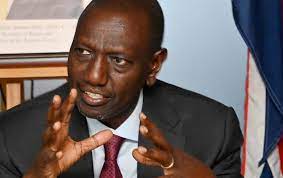
Speaking at the Kimalel goat auction during the Baringo Cultural Festival, the head of state insisted the country’s development journey is “irreversible” and will follow the path taken by Singapore, Malaysia and Hong Kong—nations that successfully transitioned from third-world to first-world economies within a generation.
“This country, Kenya, we are going to do what other countries did, to become first world. We will make Kenya a first-world country, at any cost,” Ruto said, according to Citizen.digital.
The president characterized his Bottom-Up Economic Transformation Agenda not as campaign rhetoric but as a structured blueprint to elevate Kenya from developing nation status to advanced economy standing. “Bottom-Up was not and is not a slogan. It was a plan to uplift Kenya. We have not changed the plan; we are simply implementing it,” he stated.
Ruto’s ambitious pledge comes as Kenya navigates significant economic headwinds including elevated inflation, currency depreciation and a substantial debt burden that has constrained government spending. The president’s insistence on achieving first-world status “at any cost” raises questions about the financial sustainability of proposed programs and the trade-offs required to fund transformative infrastructure while managing fiscal constraints.
The head of state pointed to progress across multiple sectors as evidence that his development agenda is gaining traction. In healthcare, millions of Kenyans have accessed treatment under the Social Health Authority, marking a departure from the previous national health insurance system. Education reforms have eased the transition to Competency-Based Education while new classroom construction and improved learning infrastructure have expanded access.
In agriculture, more than 12 million bags of subsidized fertilizer have been distributed to farmers, with procurement for the next planting season already completed. Ruto cited these interventions as contributing to improved food security across the country.
“We have reinvigorated agriculture, securing Kenya’s place as a food-sufficient nation. Our healthcare system has been revamped to be more inclusive, more affordable, and accessible to every citizen, everywhere,” the president said, as AllAfrica.com corroborated.
Infrastructure development features prominently in Ruto’s vision. The president announced that Baringo County’s road budget has increased to Ksh 3.4 billion, with construction set to begin in February. Nationally, 178 roads will be built next year, he disclosed.
Addressing traffic congestion affecting western Kenya, Ruto pledged to expand the Rironi-Naivasha road to eight lanes. “Take photos of that congestion because it will be the last time you see it,” he told constituents.
Earlier Monday, while commissioning the 132kV Lessos-Kabarnet transmission line project, the president highlighted the Ksh 1.5 billion initiative that will provide stable and affordable power to Baringo and portions of Elgeyo-Marakwet counties. “It will deliver critical services, accelerate employment for our youth, and power our economic growth,” he stated. An additional Ksh 1.3 billion electricity connectivity program is underway, with Ksh 530 million already committed.
During Tobong’u Lore celebrations in Turkana County, Ruto revealed that Kenya will be halfway through the Ksh 5 trillion development plan by next year. Significantly, he stated that large-scale projects under the plan will be funded not through additional taxation or conventional debt, but through a National Infrastructure Fund and a Sovereign Wealth Fund.
“National Infrastructure Fund is a generational strategy to preserve value, mobilising capital, accelerating delivery, and ensuring Kenya becomes stronger, wealthier, and more competitive,” the president explained.
The financing mechanism represents a critical element of Ruto’s development strategy, though details about how these funds will be capitalized and managed remain sparse. Traditional sovereign wealth funds typically require substantial initial endowments derived from natural resource revenues or accumulated fiscal surpluses—resources Kenya has limited access to given its current economic circumstances.
Major infrastructure projects underway include the 60,000-seater Talanta Sports City Stadium, nearing completion and designed to position Kenya as a global sporting destination. Another flagship initiative is the Bomas International Convention Complex, the largest facility of its kind in East and Central Africa, scheduled for completion by April 2026 and intended to accommodate modern international conferences.
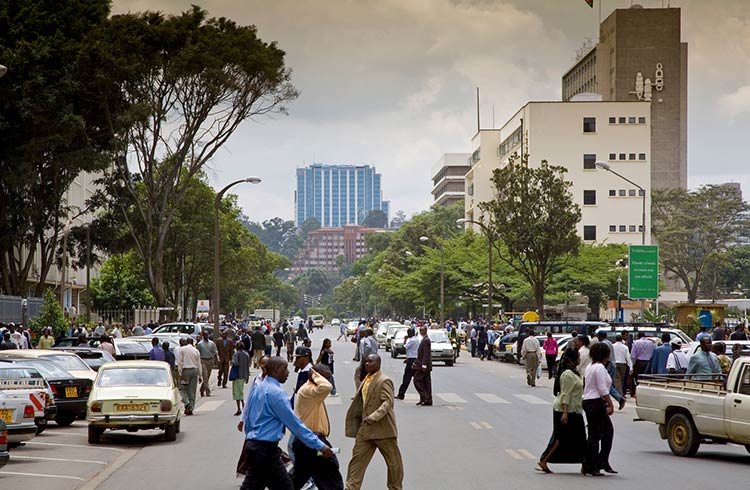
The president highlighted the Affordable Housing Programme as a cornerstone of the administration’s development agenda, claiming it has created over 500,000 jobs for youth, restored dignity to families and renewed hope in communities nationwide.
“We are delivering on our promises. We are moving Kenya decisively toward first-world status. This vision will be realised within our lifetime. It is inevitable. It is irreversible. It is unstoppable,” Ruto declared.
The Kimalel Goat Auction, where Ruto delivered his address, itself reflects modernization efforts. For the first time since its inception in 1992, the sale has integrated digital technology, allowing buyers to participate remotely rather than attending physically. The innovation is expected to broaden markets, increase efficiency and reduce costs for local farmers. This year’s auction anticipated over 4,200 goats changing hands, AllAfrica.com reported.
Beyond livestock trade, the event remains a vibrant cultural and social gathering. Attendees enjoy boat races on Lake Baringo featuring traditional rafts locally known as Kaldich alongside motorboats, offering displays of skill and tradition while fostering community cohesion and celebrating regional cultural heritage.
The late President Daniel arap Moi pioneered the auction in 1992 with a vision to improve livelihoods of Baringo’s pastoral communities by providing dependable markets and better prices for livestock. Over decades, the initiative has helped generations of farmers educate their children, build resilience and sustain communities through livestock wealth.
Ruto’s first-world ambitions echo aspirations voiced by previous Kenyan leaders, though the explicit invocation of Asian development models and the “at any cost” framing represent a more assertive rhetorical approach. Singapore and Malaysia achieved rapid economic transformation through strategic investments in education, infrastructure and governance reforms, combined with advantageous geographic positions facilitating trade and foreign investment.
Whether Kenya can replicate such success trajectories remains uncertain given differing structural conditions. Singapore benefited from its position as a strategic port city with minimal hinterland governance challenges. Malaysia leveraged natural resource wealth and manufacturing-oriented foreign direct investment. Kenya faces different circumstances including larger geographic scale, more diverse ethnic and regional dynamics, limited natural resource endowments and a more challenging regional security environment.
Critics of ambitious development proclamations note that previous Kenyan administrations have announced transformative visions that ultimately fell short of objectives due to implementation challenges, corruption, political instability and inadequate financing. Skepticism about whether current proposals will deliver promised outcomes persists among analysts who point to governance gaps, institutional weaknesses and the gap between policy announcements and ground-level execution.
The president’s emphasis on Bottom-Up Economic Transformation suggests an approach prioritizing grassroots participation and broad-based development over elite-centered or trickle-down models. Whether this translates into tangible improvements in living standards for ordinary Kenyans will determine the agenda’s success and Ruto’s political fortunes as his administration approaches the midpoint of its term.
As Kenya pursues this ambitious development trajectory, questions remain about resource allocation, project prioritization, implementation capacity and the sustainability of proposed financing mechanisms. The coming years will reveal whether Ruto’s first-world vision represents achievable policy objectives backed by effective execution or aspirational rhetoric disconnected from economic realities and institutional capabilities.
Source:Citizendigital/Allafrica




