

BALTIMORE (BN24) — Kilmar Abrego Garcia, whose arrest and fight to stay in the United States has become a flashpoint in President Donald Trump’s immigration crackdown, surrendered Monday morning to U.S. immigration authorities in Baltimore, but a federal court order has temporarily paused efforts by the Trump administration to deport him to Uganda.
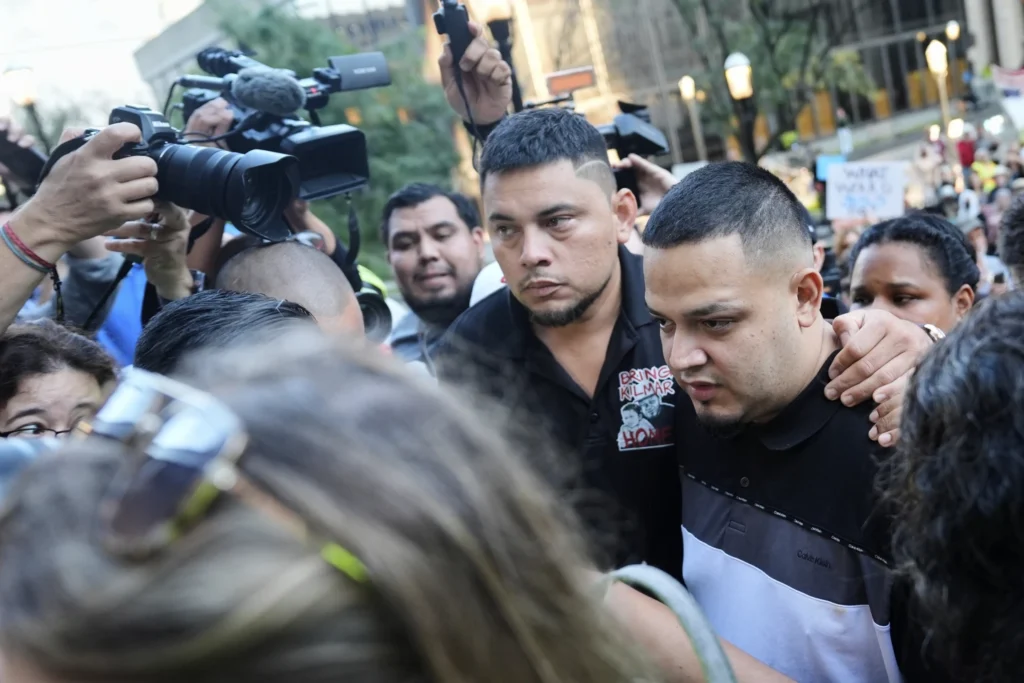
The 30-year-old Salvadoran national was wrongfully deported in March to a notorious prison in his native El Salvador. He was returned to the United States in June, but only to face human smuggling charges that his lawyers call preposterous and vindictive.
The Trump administration has said it is trying to deport Abrego Garcia months before his trial is scheduled in Tennessee, alleging he is a danger to the community and an MS-13 gang member. He denies the gang allegation, pleaded not guilty to smuggling charges and has asked a judge to dismiss the case on grounds of vindictive prosecution.
The court order signed by Chief Judge George Russell III automatically pauses any effort by the Trump administration to immediately deport Abrego Garcia. Any immigrant seeking review of their detention in a Maryland federal court is covered by the order, which blocks their removal from the United States until 4 p.m. on the second business day after their habeas corpus petition is filed.
In June, the administration sued all of Maryland’s 15 federal judges to challenge the standard order that provides automatic protection for detained immigrants pursuing habeas corpus cases.
Abrego Garcia’s attorneys filed a new federal lawsuit shortly after he surrendered to immigration authorities, though the court documents were not immediately publicly available. They filed it in the federal court in Greenbelt, Maryland, where U.S. District Judge Paula Xinis has been presiding over a string of hearings for the original case challenging his wrongful deportation.

Homeland Security Secretary Kristi Noem said Monday that Abrego Garcia is being processed for deportation, but the court order creates a temporary legal barrier to any immediate removal efforts.
Abrego Garcia’s attorney, Simon Sandoval-Moshenberg, confirmed that a lawsuit had been filed in federal district court in Maryland shortly after his client’s detention, seeking an order that he not be deported while his case proceeds.
“I expect there’s going to be a status conference very promptly, and we’re going to ask for an interim order that he not be deported, pending his due process rights to contest deportation to any particular country,” Sandoval-Moshenberg said.
The attorney has previously criticized the government’s deportation plans, saying the administration is attempting to use the immigration system to punish his client by “attempting to send him halfway across the world, to a country with documented human rights abuses and where he does not even speak the language.”
Abrego Garcia has an American wife and children and has lived in Maryland for years. His case became a high-profile example of immigration enforcement under the Trump administration after he was mistakenly sent to El Salvador despite a federal judge’s earlier determination that he faced a “well-founded fear” of violence there.

The human smuggling charges that brought him back into federal custody stem from a 2022 traffic stop in Tennessee for speeding, where officers found nine passengers in his vehicle and discussed their suspicions of smuggling activity among themselves. However, Abrego Garcia was allowed to continue driving with only a warning at the time.
Federal officials have argued that Abrego Garcia can be deported because he entered the United States illegally and because a U.S. immigration judge deemed him eligible for removal in 2019, though not specifically to his native El Salvador. Uganda recently agreed to accept deportees from the United States, provided they do not have criminal records and are not unaccompanied minors.
The case has drawn significant attention from immigration advocates who argue it demonstrates potential abuses within the federal deportation system. Critics contend that the government’s shifting deportation destinations and timing of the criminal charges suggest retaliatory prosecution rather than legitimate law enforcement.
Justice Department spokesperson Chad Gilmartin has defended the prosecution, stating that “a federal grand jury has charged Abrego Garcia with serious federal crimes, underscoring the clear danger this defendant presents to the community.”
The temporary court protection provides Abrego Garcia’s legal team additional time to challenge both the criminal charges and the deportation proceedings while his attorneys argue that their client is being unfairly targeted for having successfully contested his initial wrongful removal to El Salvador.




