

SANDRINGHAM, England — King Charles III led members of the royal family on foot to church Thursday morning, hours before his annual Christmas Day address to the United Kingdom and Commonwealth was scheduled to focus on themes of pilgrimage.
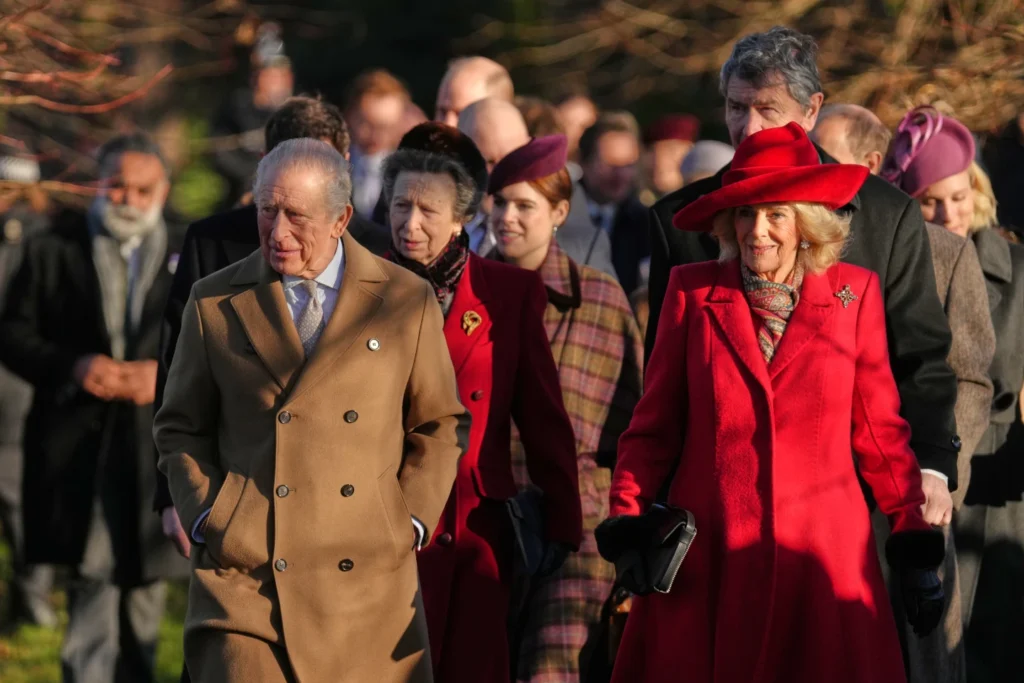
Charles and Queen Camilla, accompanied by the Prince and Princess of Wales, William and Kate, along with their children Princes George and Louis and Princess Charlotte, walked to St. Mary Magdalene Church on the monarch’s private Sandringham Estate. Extended family members also joined the Christmas morning procession.
The estate sits approximately 100 miles north of London, where Charles recorded his address from Westminster Abbey, the landmark renowned for hosting lavish coronations and royal weddings for more than a millennium.
The abbey serves as the focus of an annual pilgrimage to the tomb of Edward the Confessor, which lies at the church’s heart. Edward, a monk-like monarch, was canonized as a saint in 1161.
The monarch’s annual holiday message reaches millions of viewers across the U.K. and throughout the Commonwealth, a voluntary association of 56 independent nations, most with historic ties to Britain. The prerecorded speech airs at 3 p.m., when many families are enjoying their traditional Christmas lunch.
The address represents one of the rare occasions when Charles, 77, can voice his own views without seeking government guidance. It typically features a strong religious framework, reflects current issues, and sometimes draws on the monarch’s personal experiences.
This year’s speech comes just two weeks after Charles made a deeply personal television appearance in which he said “good news” from his doctors meant he would be able to reduce his cancer treatment in the new year.
The king was diagnosed with a still undisclosed form of cancer in early 2024. Buckingham Palace says his treatment is now transitioning to a “precautionary phase” and his condition will be monitored to ensure continued recovery.
Charles recorded last year’s speech at Fitzrovia Chapel, once part of the now demolished Middlesex Hospital. During that address, he honored care workers nationwide and offered special thanks to doctors and nurses who supported him following his cancer diagnosis.
This year’s Christmas speech marks the fourth since Charles ascended to the throne after his mother, Queen Elizabeth II, died in September 2022.
The royal family’s Christmas morning church walk represents a cherished tradition that allows the public glimpses of the monarch and relatives in informal settings. The procession to St. Mary Magdalene Church, a small parish church dating to the 16th century, has become an annual ritual documented by photographers and well-wishers who gather outside the estate gates.
The inclusion of Prince William’s three children—George, 11, Charlotte, 9, and Louis, 6—continues the practice of introducing younger generations to royal duties and public life gradually. Their presence at the Christmas service marks another step in their preparation for future roles, with George as second in line to the throne after his father.
Kate’s participation in the Christmas festivities carries particular significance following her completion of chemotherapy treatment earlier this year. The Princess of Wales revealed in March that she had been diagnosed with cancer following abdominal surgery, announcing in September that she had completed treatment. Her appearance at the Christmas service signals continued recovery and return to public engagements.
The choice of Westminster Abbey for recording this year’s address holds symbolic weight beyond its architectural grandeur. The abbey’s role as pilgrimage destination connects to the speech’s reported theme while emphasizing the monarchy’s deep intertwining with the Church of England, of which the sovereign serves as Supreme Governor.
Edward the Confessor’s tomb at the abbey’s heart represents a focal point for Christian pilgrimage in England. The Anglo-Saxon king, who reigned from 1042 to 1066, commissioned the first stone church on the Westminster site. His reputation for piety and the miracles attributed to him led to his canonization, making him one of England’s few royal saints.
The pilgrimage theme resonates with Charles’s own journey through a challenging year marked by his cancer diagnosis, treatment, and gradual return to full duties. The metaphor of pilgrimage—a spiritual journey involving hardship and ultimate transformation—aligns with the King’s experience navigating serious illness while maintaining ceremonial and constitutional responsibilities.
Charles’s ability to voice personal views in the Christmas address, unbound by ministerial advice that constrains his other public statements, allows him to speak more directly to subjects’ lives and concerns. This freedom makes the annual speech particularly valuable as a window into the monarch’s thinking and values.
The religious framework Charles typically employs reflects both constitutional duty as Church of England’s head and his long-held interest in interfaith dialogue and environmental stewardship. His speeches often weave spiritual principles with contemporary challenges, seeking common ground across diverse beliefs.
The 3 p.m. broadcast time slots the address into the rhythm of Christmas Day celebrations when families gather around television sets after or during traditional meals. This scheduling ensures maximum viewership while making the monarch’s message part of the holiday experience for millions.
The Commonwealth audience extends the speech’s reach far beyond Britain to nations spanning six continents. While many Commonwealth countries have moved toward republican systems or reduced royal ceremonial roles, the Christmas message maintains tradition of shared identity among diverse nations united by historical and cultural ties.
As Charles delivers his fourth Christmas address as monarch, he continues establishing his reign’s character distinct from his mother’s 70-year tenure. Elizabeth’s Christmas speeches became beloved institutions, and Charles faces the challenge of honoring that legacy while imprinting his own personality and concerns on the annual tradition.
The cancer diagnosis and treatment that dominated much of Charles’s first full year as king inevitably shapes how he approaches the role and what messages he chooses to emphasize. His focus on healthcare workers in last year’s speech and this year’s pilgrimage theme suggest a monarch drawing on adversity to connect with subjects facing their own health challenges and life journeys.
As the royal family emerged from St. Mary Magdalene Church after the Christmas morning service and returned to Sandringham House for private celebrations, the images transmitted worldwide reinforced continuity and stability the monarchy represents—an institution adapting to contemporary challenges while maintaining centuries-old traditions.
An AP story




