

LAGOS, Nigeria — Firefighters battled a blaze Saturday at the Amuwo Odofin Industrial Estate in the Mile 2 area of Lagos State, Nigeria, with emergency officials urging residents and business owners to remain calm as crews worked to bring the fire under control.
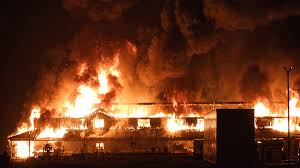
Margaret Adeseye, Controller General of the Lagos State Fire and Rescue Service, confirmed the incident in a brief statement Saturday, saying firefighters had deployed to the scene and were actively combating the flames.
“The Lagos State Fire and Rescue Service is currently attending to a fire outbreak at Amuwo Odofin Industrial Estate, Mile 2, Lagos,” the statement read.
Adeseye assured the public that emergency responders had the situation under control, urging residents not to panic. “We’re assuring the public that we’re currently on top of the situation as the public need not to exercise fear,” she said.
The Guardian Nigeria conveyed the fire service’s response, with officials emphasizing that emergency operations were ongoing at the industrial complex.
The cause of the fire and the extent of damage had not been determined as of Saturday evening, officials said. Information about potential casualties or the number of structures affected remained unavailable as firefighters continued operations.
Industrial fires in Lagos, Nigeria’s commercial capital and most populous city, frequently pose significant challenges due to dense development, limited access routes for emergency vehicles and the presence of flammable materials in manufacturing and storage facilities.
The Amuwo Odofin Industrial Estate houses numerous businesses and manufacturing operations, creating potential for substantial economic losses when fires occur in such concentrated commercial zones. The Mile 2 area represents a key industrial corridor for Lagos, with factories, warehouses and distribution centers supporting the city’s economy.
Emergency response to industrial fires requires substantial water supplies, specialized equipment for chemical or electrical fires and coordination among multiple agencies to ensure public safety while protecting property. Whether the Amuwo Odofin fire involved hazardous materials or posed risks beyond immediate flame and smoke dangers remained unclear from initial official statements.
Lagos State Fire and Rescue Service has faced recurring challenges responding to fires across the sprawling metropolis of over 20 million people, where rapid urbanization and industrial development often outpace emergency service capacity and infrastructure development.
The service’s assurance that responders were “on top of the situation” suggests confidence in containing the blaze before it spread to adjacent structures or caused catastrophic damage, though the absence of specific information about fire scope or intensity left uncertainty about the incident’s severity.
For business owners operating in the industrial estate, the fire represents potential inventory losses, equipment damage and business interruption that could prove devastating particularly for smaller enterprises lacking comprehensive insurance coverage or financial reserves to absorb unexpected disasters.
Neighboring businesses face smoke damage risks, water damage from firefighting operations and potential structural impacts if the fire generated sufficient heat to affect adjacent buildings. Industrial areas’ typically shared walls or close proximity create conditions where individual fires can rapidly become multi-structure conflagrations without aggressive intervention.
As emergency operations continued Saturday evening, authorities had not disclosed whether evacuations of surrounding areas were necessary, whether major roadways near the industrial estate required closure or whether the fire posed environmental hazards from burning chemicals or materials.
The limited information available in initial statements reflects common patterns in developing fire incidents where emergency services prioritize operational response over public information, with detailed assessments typically emerging only after fires are extinguished and damage surveys completed.
For Lagos residents and business community, the incident serves as another reminder of fire risks inherent in densely developed urban and industrial areas where electrical infrastructure strain, inadequate fire safety systems and emergency response challenges create ongoing vulnerabilities that periodic disasters expose.
Punchng/Guardingngr




