

LAGOS, Nigeria — The Lagos State Police Command has ordered a comprehensive investigation into Pastor Chris Okafor, senior pastor of Mountain of Liberation and Miracles Ministries, following a series of sexual misconduct allegations that have circulated widely on social media and triggered public outrage over clergy abuse in Nigeria’s influential evangelical Christian community.
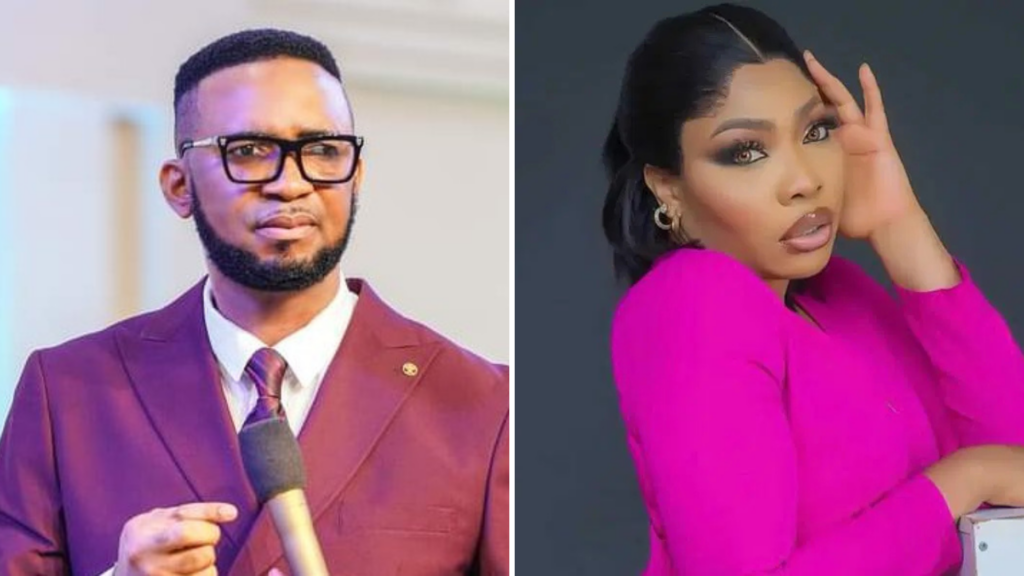
Commissioner of Police CP Olohundare Jimoh directed the State Criminal Investigation Department (SCID) at Panti to invite Okafor for questioning and summon alleged victims and witnesses for interviews, according to Lagos Police Public Relations Officer Abimbola Adebisi. The directive represents an unusual intervention given that no formal complaint had been filed when the commissioner ordered the investigation.
“The CP has directed the SCID to invite the pastor for investigation, despite the fact that no one has formally come forward to report,” Adebisi stated, explaining that the probe stemmed from public concern and extensive media coverage rather than victim-initiated complaints. She added that witnesses will be brought forward to provide statements assisting the investigation into allegations spanning nearly a decade.
The investigation comes after escalating public fury following emotional Instagram videos posted December 14, 2025, by actress Doris Ogala, who accused Okafor of sexual misconduct beginning in 2017 and continuing for nine years. Ogala alleged that her relationship with the prominent cleric included repeated broken promises of marriage, sharing of explicit photos and videos without her consent, and behavior that contributed to the breakdown of her previous marriage.
In the Instagram posts that triggered the scandal, Ogala detailed what she characterized as manipulation and deception by the pastor, who she claimed maintained their sexual relationship for nearly a decade while assuring her he would marry her. She alleged that Okafor ultimately married another woman, identified as Pearl, on December 16, 2025, in a ceremony attended by prominent clerics, just two days after her public accusations emerged.
Ogala shared screenshots of alleged conversations and bedroom photographs as evidence supporting her claims. She further alleged that Okafor attempted to pay her $10,000 to withdraw her accusations and instead blame a rival cleric for orchestrating the scandal, suggesting the pastor sought to deflect controversy by implicating competitors in Nigeria’s competitive evangelical landscape.
Through her lawyers, Ogala subsequently issued a legal notice demanding N1 billion (approximately $615,000 USD) in damages, citing alleged threats, intimidation, arrest, and detention following her public disclosures. The substantial financial demand reflected both the severity of harms she claimed to have suffered and Nigerian legal practices where plaintiffs in civil cases often seek substantial monetary compensation for reputational damage and emotional distress.
During a church service last Sunday, Okafor publicly apologized to Ogala in a dramatic scene where he knelt on the pulpit admitting to past “mistakes” and asking for forgiveness. According to DAILY POST, the public apology came weeks after his marriage to Pearl, suggesting the pastor attempted damage control as the scandal intensified and threatened his ministry’s reputation and financial viability.
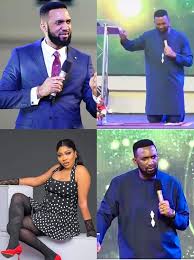
The kneeling apology represented a significant public humiliation for a religious leader who commands substantial influence and maintains a large congregation. However, critics questioned whether the apology constituted genuine acknowledgment of wrongdoing or calculated public relations maneuvering designed to appease congregants while minimizing legal liability by characterizing serious allegations as mere “mistakes.”
Initially, the Lagos State Police Command stated it could not take action against Okafor because no formal complaint had been submitted by alleged victims, despite the allegations trending extensively across Nigerian social media platforms. Adebisi explained Friday that police were unaware of any official petition, reflecting standard Nigerian police practice of typically requiring formal complaints before initiating investigations into non-violent crimes.
However, following renewed inquiries and direct communication with Commissioner Jimoh on Saturday night, Adebisi confirmed Sunday that the commissioner had ordered SCID to investigate the pastor even in the absence of formal petitions. The decision to proceed without victim-initiated complaints represented unusual police initiative, suggesting either that the scandal’s visibility created political pressure for action or that authorities recognized the power dynamics that might prevent victims from filing formal complaints against an influential religious figure.
According to Adebisi, the commissioner directed that Okafor be investigated while potential witnesses and complainants are summoned to provide statements aiding the inquiry. The proactive summons of witnesses rather than waiting for victims to come forward acknowledged that women who have relationships with powerful religious figures often face social stigma, economic pressure, and threats that discourage formal complaints.
Adebisi disclosed that she personally contacted a YouTuber who had interviewed some alleged victims to obtain direct access to individuals willing to cooperate with investigators. The use of social media intermediaries to reach potential witnesses reflected both the digital nature of how the scandal unfolded and recognition that victims might trust media personalities more than police authorities given Nigerian law enforcement’s mixed reputation on handling sexual misconduct cases.
As the controversy expanded beyond Ogala’s initial accusations, additional women came forward with separate allegations of sexual misconduct, manipulation, and infidelity against the cleric. The pattern of multiple accusers making similar claims strengthened credibility of the allegations while suggesting systematic rather than isolated behavior.
Among those who came forward was Okafor’s former wife, Bessem Okafor, who accused him of deception, repeated infidelity, and physical abuse during their marriage. The ex-wife’s allegations added domestic violence to sexual misconduct claims, painting a picture of a religious leader whose private behavior contradicted the moral teachings he preached from the pulpit.
The former wife’s willingness to speak publicly despite potential social consequences demonstrated the depth of anger the scandal generated among women who felt victimized by the pastor. In Nigerian evangelical circles, divorce carries significant stigma, and women who leave marriages—particularly to prominent pastors—often face blame and ostracism regardless of the circumstances prompting separation.
Despite the mounting allegations, several members of Mountain of Liberation and Miracles Ministries have defended Okafor, describing the claims as attempts to extort money from the pastor. Church loyalists suggested that accusers fabricated or exaggerated complaints to extract financial settlements, a common defense strategy in Nigerian clergy misconduct cases where supporters characterize allegations as attacks on God’s anointed servants.
The defense narrative reflected broader dynamics in Nigerian evangelical Christianity where pastors command intense loyalty from congregants who view religious leaders as divinely appointed and therefore beyond criticism. This culture of deference creates environments where clergy sexual misconduct can persist for years before victims feel empowered to come forward, and even then face disbelief and hostility from believers invested in their pastor’s reputation.
Reports indicated that Okafor stepped aside from pastoral responsibilities on New Year’s Day as the controversy intensified, though it remained unclear whether the decision represented voluntary action, church leadership pressure, or tactical retreat while legal matters unfolded. Stepping aside potentially served dual purposes of appearing responsive to concerns while removing the pastor from daily church operations where his presence might trigger confrontations or further allegations.
The Lagos SCID is expected to issue updates as Okafor is invited for questioning and witnesses provide statements, signaling the seriousness with which authorities are approaching the case. The involvement of SCID, Lagos State’s premier criminal investigation unit, rather than local police stations suggested authorities recognized the case’s high profile and potential for generating public attention that could embarrass the police if mishandled.
The investigation occurs against broader context of sexual misconduct scandals periodically erupting in Nigeria’s massive evangelical Christian sector, where charismatic pastors wield enormous influence, command substantial wealth, and operate ministries with limited accountability structures. The decentralized nature of Nigerian evangelicalism means that individual pastors face few institutional constraints beyond their own church boards, which often consist of loyalists unlikely to challenge the leader who elevated them.

Nigerian law provides criminal penalties for sexual assault and rape, but prosecutions prove difficult when relationships involve adults where consent becomes disputed. The Okafor case illustrates challenges prosecutors face when alleged victims had consensual relationships with accused perpetrators, even if those relationships involved manipulation, broken promises, or exploitation of power differentials that complicated genuine consent.
The sharing of explicit images without consent—one of Ogala’s specific allegations—violates Nigerian laws against distributing intimate images, potentially providing clearer criminal liability than allegations about the relationship’s nature. If prosecutors can establish that Okafor distributed private photos without permission, such charges might prove easier to sustain than claims about manipulation or broken marriage promises that involve more subjective interpretation.
The case has generated intense discussion across Nigerian social media about clergy accountability, the exploitation of women by religious leaders, and whether Nigeria’s justice system adequately addresses sexual misconduct by powerful individuals. Feminist activists and women’s rights organizations have seized on the scandal to advocate for stronger protections for women in religious contexts and better police responsiveness to sexual misconduct allegations regardless of perpetrators’ social status.
The investigation’s outcome will likely influence how Nigerian police and prosecutors approach future clergy misconduct cases, either demonstrating that powerful religious figures face accountability for alleged abuse or confirming skeptics’ views that influential individuals evade consequences regardless of evidence. The high-profile nature of the case means that authorities face scrutiny from both those demanding justice for alleged victims and Okafor’s supporters who view the investigation as persecution of a man of God.
For Mountain of Liberation and Miracles Ministries, the scandal threatens both reputation and finances as members question whether to continue supporting a church whose leader faces serious allegations. Nigerian mega-churches depend heavily on tithes and offerings from congregants, making membership retention crucial for maintaining operations. If significant numbers of members leave or reduce financial contributions, the ministry could face severe economic pressure regardless of whether criminal charges ultimately result.
The case also highlights vulnerabilities facing women who enter relationships with religious leaders, where spiritual authority, economic power, and social influence create dynamics that can facilitate exploitation even when relationships begin consensually. The allegations against Okafor, if substantiated, would demonstrate how pastors can leverage their positions to maintain relationships through promises of marriage, threats about reputation, and manipulation of women who believe in their spiritual authority.
DailyPost/Punchng




