

Fifty-three migrants including two infants perished or remain missing after a rubber boat carrying 55 people capsized off the Libyan coast Friday, leaving only two Nigerian women survivors who lost their husbands and children in the latest Mediterranean tragedy, the International Organization for Migration disclosed Monday.
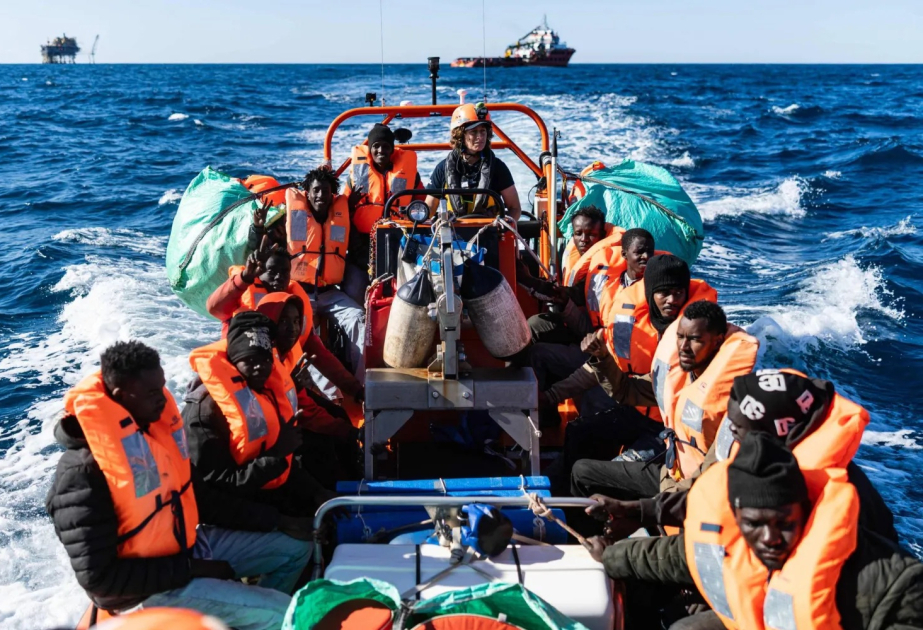
The vessel departed from Zawiya on Thursday evening before overturning north of Zuwara on Friday, the IOM revealed in a statement citing accounts from the rescued women. Zawiya and Zuwara are coastal municipalities west of the Libyan capital Tripoli, serving as frequent departure points for desperate migrants attempting the perilous Central Mediterranean crossing toward Europe.
“Only two Nigerian women were rescued during a search-and-rescue operation by Libyan authorities,” the Geneva-based agency confirmed. “One survivor reported losing her husband, while the other said she lost her two babies in the tragedy,” the organization added, highlighting the catastrophic human toll on the two families.
IOM teams provided the survivors with emergency medical care upon disembarkation from rescue vessels. Survivor testimonies revealed that the boat—transporting migrants and refugees of African nationalities—departed from Al-Zawiya around 11 p.m. on February 5. Approximately six hours into the journey, it capsized after taking on water in conditions that proved fatal for nearly everyone aboard.
“IOM mourns the loss of life in yet another deadly incident along the Central Mediterranean route,” the agency stated, expressing grief over a disaster that has become tragically routine as migration flows continue despite mounting death tolls.
The latest catastrophe elevates the number of migrants confirmed dead or missing on the Central Mediterranean route in 2026 to at least 484, underscoring the relentless human cost of irregular migration across one of the world’s deadliest maritime passages. More than 1,300 migrants have vanished in the Central Mediterranean throughout 2025, the U.N. agency documented.
January alone witnessed at least 375 migrants confirmed dead or missing in the area following multiple “invisible” shipwrecks amid extreme weather conditions, with humanitarian organizations believing hundreds more deaths escaped documentation entirely. These unrecorded casualties reflect the reality that many vessels sink without witnesses, distress signals or survivors to report the disasters.
The Central Mediterranean route connecting North Africa with southern Europe has claimed more than 33,000 migrant lives or resulted in disappearances between the start of 2014 and the end of 2025, the IOM’s Missing Migrants Project calculated. Last year, the organization recorded 1,873 individuals missing or dead in the Mediterranean, including 1,342 on the central route specifically.
Libya has evolved into a primary transit corridor for migrants fleeing conflict and poverty across Africa and the Middle East, seeking passage to Europe via treacherous routes across the Sahara Desert and over the Mediterranean Sea. This migration pattern intensified following the 2011 NATO-backed uprising that toppled longtime dictator Muammar Gaddafi, creating power vacuums and security gaps that criminal networks exploited.
The IOM emphasized that trafficking and smuggling networks systematically exploit migrants along the route from North Africa to southern Europe, profiting from dangerous crossings in unseaworthy vessels while exposing desperate people to “severe abuse.” These criminal enterprises operate with relative impunity amid Libya’s fragmented governance and limited state capacity to control coastal areas.
The agency called for stronger international cooperation to dismantle smuggling networks alongside establishment of safe and regular migration pathways designed to reduce risks and save lives. This appeal reflects recognition that enforcement measures alone cannot eliminate migration driven by war, persecution, poverty and climate disruption in origin countries.
A European Commission spokesperson acknowledged Brussels was attempting to address root causes of irregular migration and promote legal, safe and orderly pathways to the European Union. “These tragic events once again underline the need to intensify joint efforts with our partners, including Libya, to prevent such dangerous journeys and to combat the criminal networks of migrant smugglers that put lives at risk,” the spokesperson told Agence France-Presse.
This diplomatic language acknowledges European Union complicity in migration policies that effectively funnel desperate people toward dangerous irregular routes by restricting legal asylum and labor migration channels. The absence of safe pathways forces migrants into the hands of smugglers operating unseaworthy vessels with minimal safety equipment.
The IOM fears that hundreds of people have died since January attempting Mediterranean crossings amid harsh winter weather conditions that make the inherently dangerous journey even more lethal. Cold temperatures, high waves and storms increase capsizing risks while reducing survival time for those thrown into frigid waters.
The humanitarian crisis in Libya extends beyond maritime disasters to include widespread abuse of migrants detained in official and clandestine facilities. In mid-January, at least 21 bodies of migrants were discovered in a mass grave in eastern Libya, with up to 10 survivors in the group bearing signs of torture before being freed from captivity, two security sources disclosed.
Days afterward, Libyan security authorities liberated more than 200 migrants from what they characterized as a secret prison in the southeastern town of Kufra after captives were held in inhuman conditions, two additional security sources confirmed. These incidents illuminate the systematic violence and exploitation migrants endure while transiting through Libya.
Several nations including Britain, Spain, Norway and Sierra Leone urged Libya at a November U.N. meeting in Geneva to close detention centers where human rights organizations document systematic torture, abuse and killings of migrants and refugees. These facilities operate with minimal oversight and have become synonymous with brutality against vulnerable populations.
The detention centers often serve as extortion sites where smuggling networks and corrupt officials demand additional payments from migrants or their families before releasing them to continue journeys. Those unable to pay face indefinite detention under horrific conditions, forced labor or being sold to other criminal groups.
The February 5 capsizing reflects broader patterns where smugglers overcrowd flimsy rubber boats designed for far fewer passengers, provide inadequate fuel and navigation equipment, and launch vessels regardless of weather forecasts. These calculated decisions maximize smuggler profits while transferring all risks onto migrants who often cannot swim and lack life jackets.
The presence of two infants among the dead underscores how entire families undertake these perilous journeys despite obvious dangers. Parents make agonizing calculations that potential European asylum and economic opportunities outweigh known risks of drowning, suggesting conditions in origin countries or Libyan detention have become unbearable.
The two Nigerian women survivors now face traumatic grief compounded by uncertainty about their immigration status and future prospects. Having lost their families in pursuit of safety and opportunity, they must navigate complex asylum processes while processing catastrophic loss and probable survivor’s guilt.
Nigeria ranks among the top source countries for migrants attempting the Central Mediterranean crossing, driven by factors including economic instability, unemployment, insecurity from Boko Haram and other armed groups, and limited domestic opportunities. Many Nigerians transit through Niger and Libya before attempting sea crossings, enduring multiple dangers across thousands of kilometers.
The IOM’s emergency medical care provision represents immediate humanitarian response, but survivors require extensive psychological support, legal assistance navigating asylum procedures, and potential family reunification or repatriation services. The organization’s capacity to provide comprehensive support faces resource constraints amid overwhelming demand.
European Union migration policies emphasize border enforcement and cooperation with North African transit countries to prevent irregular arrivals, an approach critics characterize as externalizing borders and outsourcing migration management to nations with poor human rights records. These policies arguably increase migrant vulnerability while doing little to address underlying displacement drivers.
The tragedy also exposes limitations of search-and-rescue operations in the Central Mediterranean. Many shipwrecks occur beyond areas where rescue assets patrol regularly, while coordination between Libyan authorities, European coast guards and NGO rescue vessels remains complicated by political tensions and jurisdictional disputes.
Survivors’ accounts of boats capsizing after taking on water suggest structural failures common with overloaded rubber craft that cannot withstand Mediterranean wave action. Smugglers typically provide minimal instruction on boat operation and safety procedures, leaving migrants ill-equipped to respond when emergencies occur.
The disaster’s timing—occurring six hours into the journey—suggests the vessel may have traveled beyond Libyan territorial waters into international waters where rescue coordination becomes more complex. Determining which authority bears responsibility for search-and-rescue operations in specific Mediterranean zones has generated political controversy as European nations seek to limit obligations.
As the two Nigerian survivors begin processing their losses and confronting uncertain futures, the broader migration crisis continues unabated. Without fundamental changes addressing conflict, poverty and climate disruption in origin countries, combined with expanded legal migration pathways and effective dismantling of smuggling networks, the Mediterranean will continue claiming thousands of lives annually in one of the 21st century’s most persistent humanitarian catastrophes.
Reuters/Guardian




