

U.S. Secretary of State Marco Rubio confirmed Saturday that American personnel arrested Venezuelan President Nicolás Maduro to stand trial in the United States on narco-terrorism charges, with military strikes deployed to protect those executing the arrest warrant, according to Senator Mike Lee who spoke with the nation’s top diplomat following predawn operations in Venezuela.
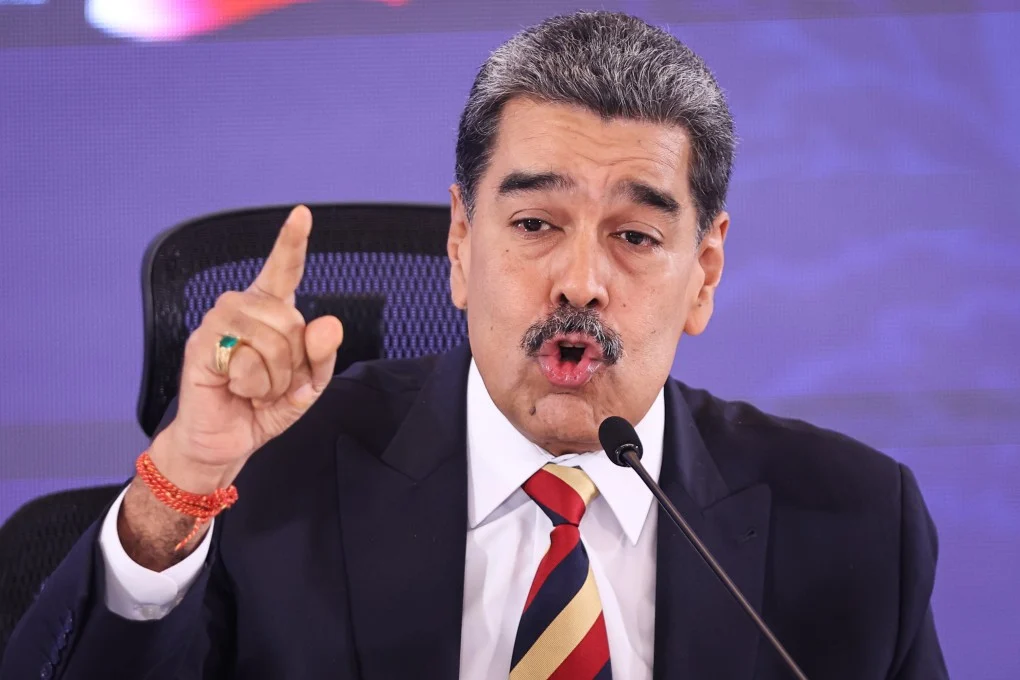
“He informed me that Nicolás Maduro has been arrested by U.S. personnel to stand trial on criminal charges in the United States, and that the kinetic action we saw tonight was deployed to protect and defend those executing the arrest warrant,” Utah Republican Senator Mike Lee posted on X early Saturday after his phone conversation with Rubio.
Lee, who had earlier raised constitutional concerns about the military action, subsequently stated that “this action likely falls within the president’s inherent authority under Article II of the Constitution to protect U.S. personnel from an actual or imminent attack.” The senator added that Rubio “anticipates no further action in Venezuela now that Maduro is in U.S. custody,” suggesting the administration views the operation as complete with Maduro’s capture accomplished.
The confirmation from Rubio provided the first official State Department acknowledgment of Maduro’s arrest following President Trump’s early morning Truth Social announcement claiming U.S. forces had captured the Venezuelan leader and removed him from the country. CNN reached out to the State Department for additional comment but had not received formal responses by Saturday afternoon.
Deputy Secretary of State Christopher Landau declared on X that the administration’s operation brought “a new dawn for Venezuela.” According to CNN, Landau wrote: “The tyrant is gone. He will now — finally — face justice for his crimes,” characterizing Maduro’s removal as liberation rather than regime change through military intervention.
The Trump administration has pursued Maduro’s prosecution through the U.S. legal system for years. In 2020, during Trump’s first presidential term, federal prosecutors in the Southern District of New York indicted Maduro on charges of “narco-terrorism,” conspiracy to import cocaine, and related offenses alleging he conspired with Colombian guerrilla group FARC to flood the United States with cocaine.
The Trump administration initially offered a $15 million bounty for information leading to Maduro’s arrest. That reward was increased to $25 million in the waning days of the Biden administration in early January 2025, then escalated to $50 million in August 2025 after Trump began his second term and designated Cartel de los Soles as a foreign terrorist organization. The administration has claimed Maduro leads that organization, which U.S. officials describe as a criminal enterprise masquerading as government.
“This allegation, this claim, that the Maduro regime is a narcoterrorist organization is not on the basis of political talk or speculation. It is on the basis of evidence provided to a grand jury in the Southern District of New York that returned an indictment,” Secretary of State Rubio stated at a press conference last month, emphasizing that charges rest on evidence prosecutors presented to grand jurors rather than political characterizations.
Senator Lee’s initial response to news of the strikes reflected concerns about constitutional authorization for military action. “I look forward to learning what, if anything, might constitutionally justify this action in the absence of a declaration of war or authorization for the use of military force,” Lee wrote on X early Saturday morning before his conversation with Rubio.
However, following the secretary of state’s explanation that strikes protected personnel executing an arrest warrant, Lee appeared satisfied that the operation fell within presidential constitutional authority. His invocation of Article II powers suggested acceptance of executive branch arguments that protecting American personnel from attack justifies military force even without congressional war declarations or authorizations for use of military force.
The legal theory that Article II grants presidents authority to use military strikes to protect law enforcement personnel executing arrest warrants in foreign countries represents controversial constitutional territory that legal scholars will likely debate extensively. Critics argue such interpretations could justify military interventions worldwide without congressional oversight, fundamentally undermining legislative war powers.
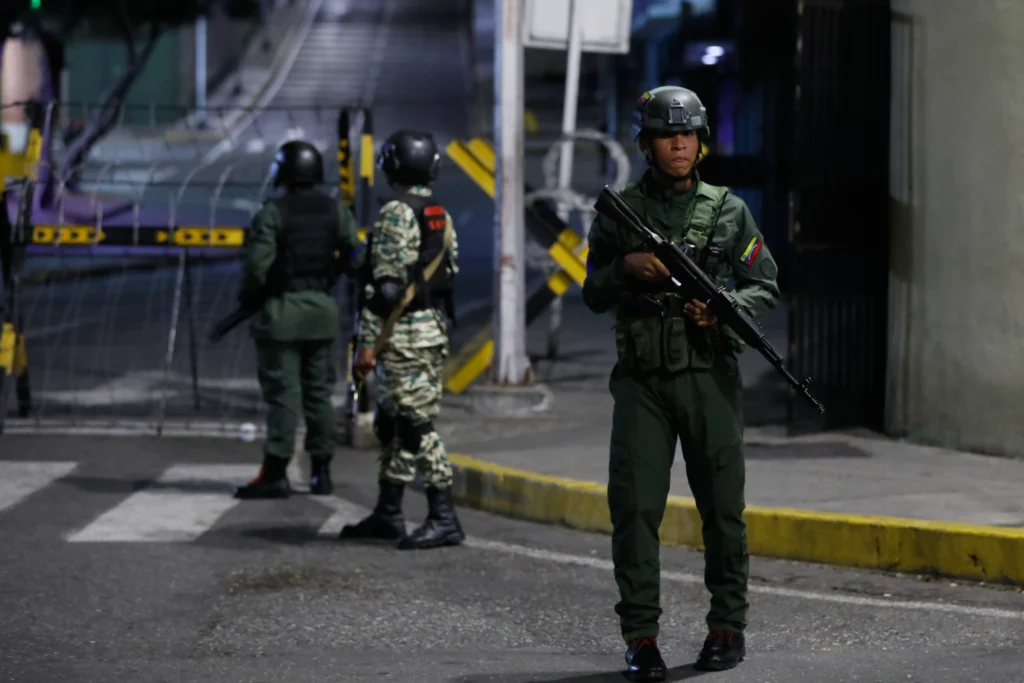
Venezuela responded to the strikes and Maduro’s reported capture by requesting an urgent United Nations Security Council meeting. Foreign Minister Yván Gil Pinto shared the letter sent to the UN on Telegram, declaring: “No cowardly attack will prevail against the strength of this people, who will emerge victorious.” The request for Security Council intervention positioned Venezuela as a victim of aggression seeking international community protection against what it characterizes as illegal U.S. military action.
Venezuelan Vice President for Policy, Citizen Security and Peace Diosdado Cabello struck a defiant tone while addressing security forces, claiming the U.S. only “partially” achieved its objectives. “What they tried to achieve with the bombs and missiles they launched, they only partially succeeded in doing. And I say partially because they expected the people to perhaps run wildly, cowardly. No,” Cabello stated, insisting the country remains calm and knows what it must do moving forward.
However, Vice President Delcy Rodríguez painted a more uncertain picture, stating in an audio call to state-run VTV Venezuela that “we do not know the whereabouts of President Nicolás Maduro and First Lady Cilia Flores.” According to CNN, Rodríguez demanded “immediate proof of life from the government of President Donald Trump regarding the lives of President Maduro and the first lady,” directly challenging U.S. claims about Maduro’s capture and condition.
Rodríguez added that the U.S. attack “has cost the lives of officials, military personnel and civilians across the country,” providing the first Venezuelan government acknowledgment of casualties from the strikes. However, officials have not released specific death tolls or injury figures, leaving the operation’s human cost uncertain as families across Venezuela seek information about loved ones who may have been near targeted facilities.
Russia condemned what its Foreign Ministry called an “act of armed aggression against Venezuela” by the United States, characterizing any excuses justifying such actions as “untenable.” According to CNN, the ministry stated: “We reaffirm our solidarity with the Venezuelan people and our support for the Bolivarian leadership’s course of action aimed at protecting the country’s national interests and sovereignty.”
The Russian Foreign Ministry added that Latin America must “remain a zone of peace” and called for preventing further escalation through dialogue. “Venezuela must be guaranteed the right to determine its own destiny without any destructive, let alone military, interference from outside,” the statement declared. The Russian Embassy in Caracas continues operating normally with no reports of Russian citizens affected by the strikes.
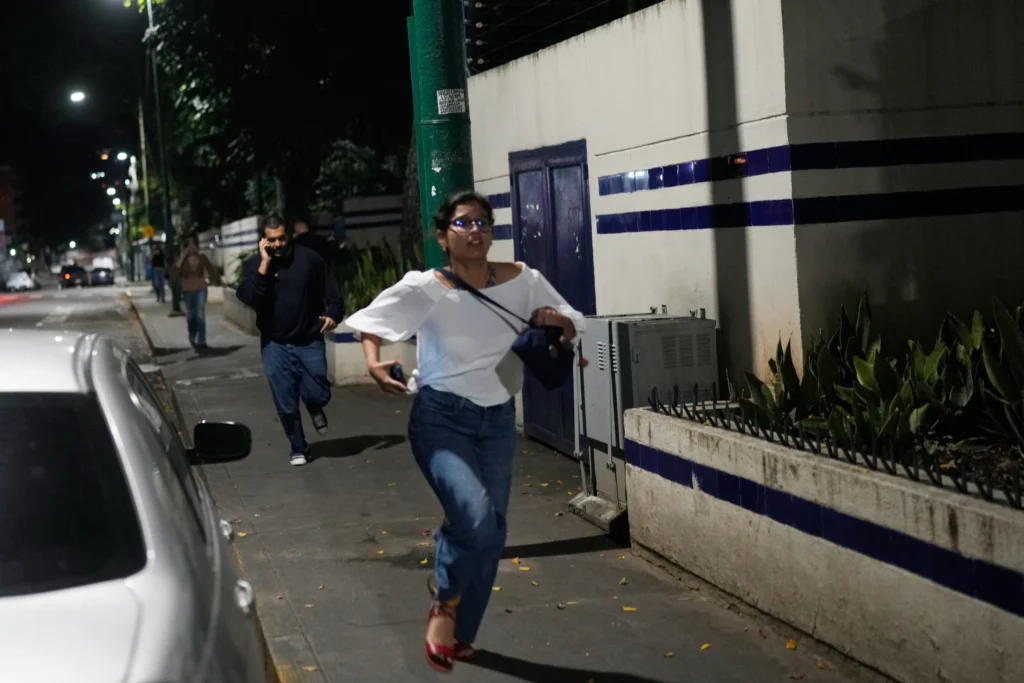
CNN correspondent Mary Mena reported from Caracas that the capital remained calm Saturday morning despite earlier explosions and military aircraft activity. “We listened to many airplanes and helicopters passing by, but right now the city remains quiet, for the past two hours,” Mena stated, noting that citizens appeared to be staying home awaiting additional news rather than taking to streets as the Venezuelan government had urged.
Defense Minister Vladimir Padrino López called for “massive deployment” of military forces across Venezuela, according to information from the ministry of defense. State television repeatedly broadcast messages urging citizens to remain calm while promising military deployment throughout the country, though the purpose of such mobilization remained unclear given that U.S. officials indicated no further military action was anticipated.
Several blasts could be heard across Caracas around 2 a.m. local time Saturday morning, Mena reported, but “right now, the capital city is in silence.” The absence of widespread civilian mobilization or violent resistance suggested either that government control mechanisms prevented organized response or that many Venezuelans remained uncertain how to react to the unprecedented situation.
Maduro served as Venezuelan president for twelve contentious years after succeeding populist leader Hugo Chávez, who died of cancer in 2013. The former bus driver and union leader never commanded the popular support or charisma that Chávez possessed, with his 2013 electoral victory contested by opposition groups from the outset, according to CNN’s Tim Lister.
During Maduro’s tenure, Venezuela experienced severe economic crisis, bouts of civil unrest, and growing international isolation amid U.S. sanctions and mismanagement of the country’s critical oil industry. In 2017, Maduro sought to expand presidential powers to bypass the opposition-controlled National Assembly amid weeks of street protests in Caracas. His 2018 reelection was widely denounced by the international community as illegitimate, with opposition leaders and foreign governments refusing to recognize the results.
The first Trump administration charged Maduro with narco-terrorism in 2020. Then-Attorney General William Barr stated that the Venezuelan regime “remains plagued by criminality and corruption,” alleging that “for more than 20 years, Maduro and a number of high-ranking colleagues allegedly conspired with the [Colombian guerilla group] FARC, causing tons of cocaine to enter and devastate American communities.” Maduro responded by calling Trump a “racist cowboy.”
Further accusations of electoral fraud emerged when Maduro declared victory in the July 2024 presidential contest. Opposition groups and international observers characterized the election as stolen, triggering protests that resulted in thousands of arrests. Maduro was sworn in for another term in January 2025 despite widespread international skepticism about the election’s legitimacy.
The Trump administration escalated economic and military pressure throughout 2025. On August 7, U.S. Attorney General Pamela Bondi announced the $50 million reward for information leading to Maduro’s arrest—the highest bounty the U.S. government has offered for a sitting head of state. The reward increase from $15 million to $50 million within months signaled intensifying commitment to Maduro’s removal.
Maduro’s wife, Cilia Adela Flores de Maduro, is a lawyer who has served as a deputy in the National Assembly for ten years. Trump’s announcement indicated she was captured alongside her husband, though her specific legal status and whether she faces U.S. criminal charges remained unclear. The joint detention of a president and first lady represented an unprecedented scenario in modern U.S. law enforcement operations against foreign leaders.
If Maduro is prosecuted in the Southern District of New York as officials indicated, he would face trial before a jury on charges carrying potential life imprisonment. However, the circumstances of his capture through military strikes killing Venezuelan officials, soldiers, and civilians could generate complex legal challenges regarding whether evidence obtained through such means would be admissible and whether the prosecution itself violates international law.
The operation’s success or failure will ultimately be judged not just by whether Maduro faces trial but by what follows in Venezuela, where power vacuums in countries with weak institutions and armed factions have historically triggered instability, violence, and humanitarian crises that can persist for years regardless of whether deposed leaders face justice.
CNN




