

(AP) — Deposed Venezuelan President Nicolas Maduro urged a federal judge Thursday to throw out a sweeping U.S. narcotics indictment, contending that American sanctions have prevented him from accessing Venezuelan government funds to pay for his legal defense, thereby violating his constitutional rights.
In papers filed in Manhattan federal court, defense attorney Barry Pollack argued that the U.S. government has deprived Maduro of due process by blocking payments that, under Venezuelan law and custom, should cover the legal costs of a sitting head of state. The filing asserts that Maduro cannot afford private counsel and has relied on the expectation that the Venezuelan government would finance his defense.
“Mr. Maduro, as Venezuela’s head of state, has both a right and an expectation to have legal fees associated with these charges funded by the government of Venezuela,” Pollack wrote.
The submission included a sworn declaration signed “President Nicolas Maduro Moros,” in which Maduro stated that Venezuelan legal practices entitle him to state-funded representation. “I have relied on this expectation and cannot afford to pay for my own legal defense,” he said.
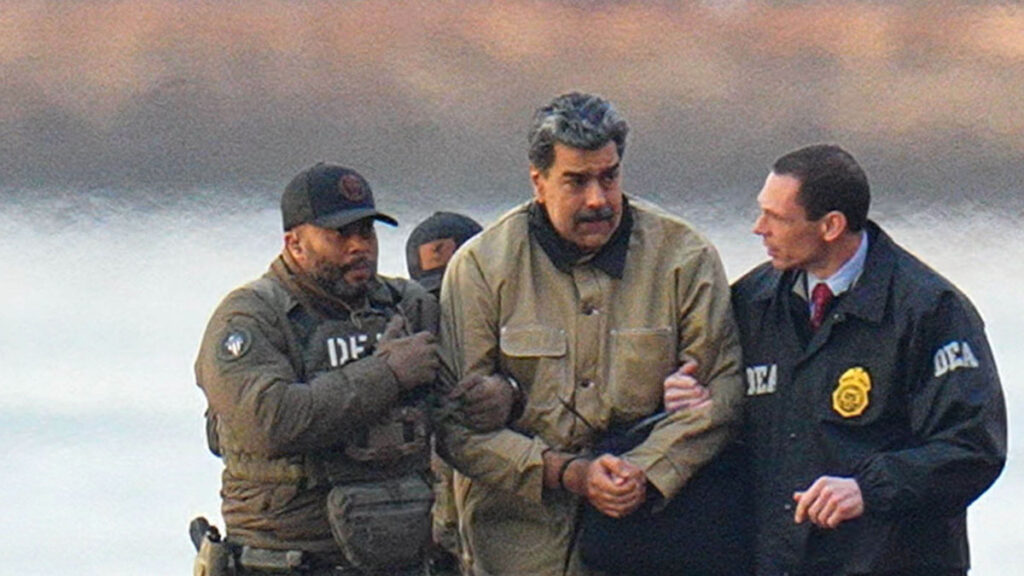
Maduro and his wife, Cilia Flores, have been held in New York since early January, when U.S. authorities seized them from their home in Venezuela during a covert nighttime operation. Both have entered not guilty pleas.
The 25-page indictment accuses Maduro and several associates of collaborating with drug trafficking organizations and elements of the Venezuelan military to funnel thousands of tons of cocaine into the United States. Prosecutors allege that the conspiracy included acts of violence, including kidnappings, beatings and killings tied to drug debts. If convicted, Maduro and Flores face potential life sentences.
Pollack indicated in correspondence to the court that the U.S. Treasury Department’s Office of Foreign Assets Control (OFAC), which administers sanctions involving Venezuela, initially authorized payment of legal fees from the Venezuelan government on Jan. 9. He asserted that the authorization was rescinded less than three hours later without explanation.
According to the filing, OFAC has permitted legal payments for Flores’ defense while withholding approval for Maduro’s representation.
“The conduct of the United States government not only undermines Mr. Maduro’s rights but also this Court’s mandate to provide a fair trial to all defendants,” Pollack argued, adding that proceeding under such constraints would produce a trial that could later be deemed constitutionally defective.
Pollack further stated that if the court declines to dismiss the indictment, he intends to seek withdrawal from the case so that court-appointed counsel can assume Maduro’s defense.
The Justice Department has not publicly responded to the latest motion. The case is unfolding amid longstanding diplomatic tensions between Washington and Caracas. The Trump administration severed ties with Maduro’s government in 2019 and recognized opposition leadership as Venezuela’s legitimate authority, a policy that continued under President Joe Biden.
Maduro’s motion places the intersection of criminal law and U.S. foreign policy squarely before a federal court. By framing the dispute as a constitutional issue tied to the Sixth Amendment right to counsel and Fifth Amendment due process protections, his legal team is challenging the operational impact of sanctions in a criminal proceeding.
Sanctions administered through OFAC are typically designed to limit financial flows and commercial transactions with targeted governments or individuals. However, courts have historically scrutinized whether such restrictions impede a defendant’s ability to mount an adequate defense. The uneven authorization described in the filing — permitting payment for Flores while withholding it for Maduro — could draw judicial inquiry into consistency and procedural fairness.
At the same time, dismissing a high-profile indictment on constitutional grounds would be extraordinary. Federal judges often explore narrower remedies, such as appointing counsel under the Criminal Justice Act or crafting limited financial authorizations that preserve both sanctions policy and defendants’ rights.
The case also raises broader geopolitical implications. Maduro continues to refer to himself as Venezuela’s head of state in court filings, underscoring unresolved questions about diplomatic recognition and sovereignty. Whether a U.S. court gives weight to that designation could subtly reflect or reinforce executive-branch foreign policy positions.
For now, the dispute centers on access to legal funds. Yet its resolution could clarify how sanctions regimes interact with criminal prosecutions involving foreign leaders — and whether financial restrictions can withstand constitutional scrutiny when liberty, and potentially life imprisonment, are at stake.




