

A U.S. military aircraft carrying captured Venezuelan President Nicolás Maduro and his wife, Cilia Flores, arrived in New York on Saturday, a federal official told The Associated Press, marking a dramatic escalation in Washington’s long-running confrontation with the South American leader and setting the stage for a high-profile federal prosecution.
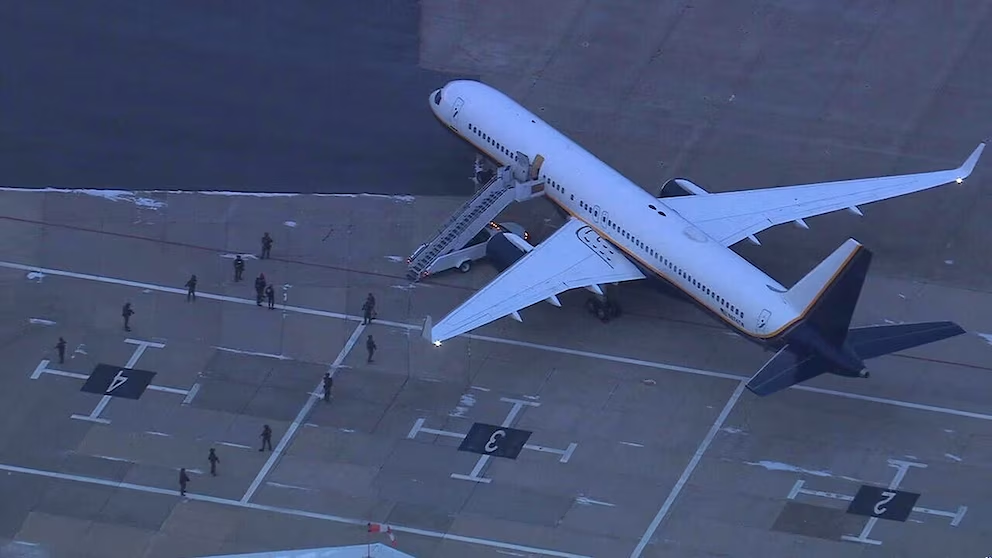
The plane landed at Stewart Air National Guard Base in Newburgh, north of New York City, hours after Maduro and Flores were seized during an overnight U.S. military operation in Caracas, the official said. CNN, NBC News and CBS News independently confirmed the arrival, citing U.S. officials familiar with the matter.
Maduro is expected to be brought before Manhattan federal court as early as next week to face long-standing drug and weapons charges, CNN reported. Two people familiar with the plans told CBS News that Maduro and Flores are likely to be transferred to the Metropolitan Detention Center in Brooklyn, a federal facility that houses high-profile defendants.
The U.S. Department of Justice on Saturday unsealed a superseding indictment against Maduro, Flores and other members of Venezuela’s leadership, reviving and expanding a criminal case first filed in 2020. The indictment accuses Maduro of conspiring to commit narco-terrorism, importing cocaine into the United States and possessing and conspiring to possess machine guns and destructive devices.
“They will soon face the full wrath of American justice on American soil in American courts,” Attorney General Pam Bondi said in announcing the charges.
The filing, prepared by New York U.S. Attorney Jay Clayton, alleges that for more than two decades Venezuela’s leadership corrupted state institutions to facilitate large-scale cocaine trafficking. The indictment asserts that Maduro “is at the forefront of that corruption,” accusing him of using his authority and control over government agencies to move thousands of tons of cocaine toward the United States.
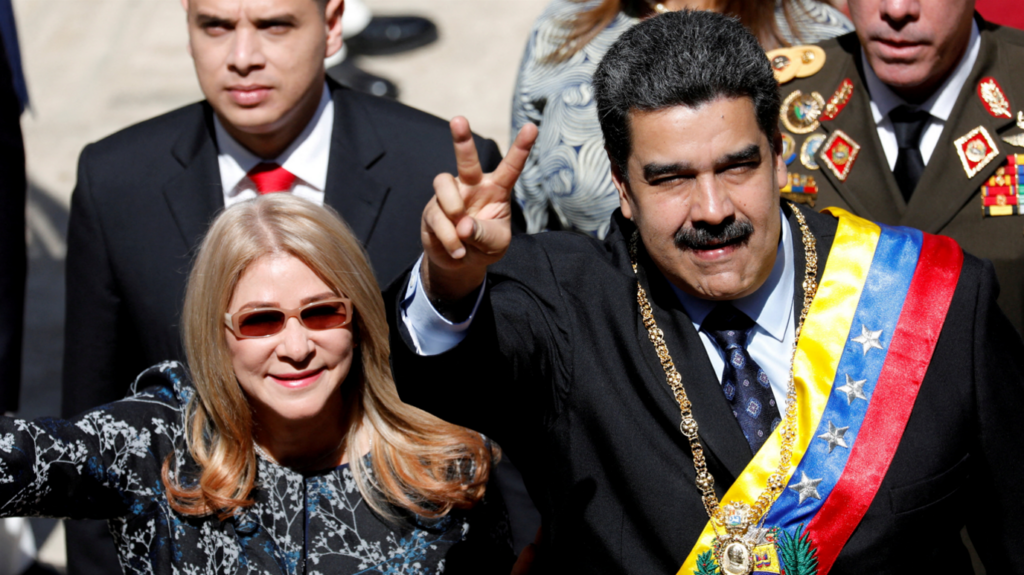
Federal prosecutors also allege that Flores played an active role in the conspiracy. According to the indictment, she is accused of brokering a meeting between a major drug trafficker and the head of Venezuela’s National Anti-Drug Office, Néstor Reverol Torres, and of accepting hundreds of thousands of dollars in bribes in 2007. Prosecutors allege that the trafficker arranged payments of $100,000 per flight to Reverol Torres to facilitate cocaine shipments. Reverol Torres was indicted by U.S. prosecutors in New York in 2015.
The allegations echo those in the original 2020 indictment, which accused Maduro and senior Venezuelan officials of collaborating with Colombia’s leftist guerrilla group Fuerzas Armadas Revolucionarias de Colombia, or FARC, to traffic drugs and weapons. Maduro has repeatedly denied the accusations, dismissing them as politically motivated.
Details of the operation that brought Maduro to U.S. custody continued to emerge throughout Saturday. U.S. officials said Maduro and Flores were taken from their residence in Caracas during what President Donald Trump described as a large-scale, coordinated military action. CBS News reported that the couple was transported first to the USS Iwo Jima before being flown to New York.
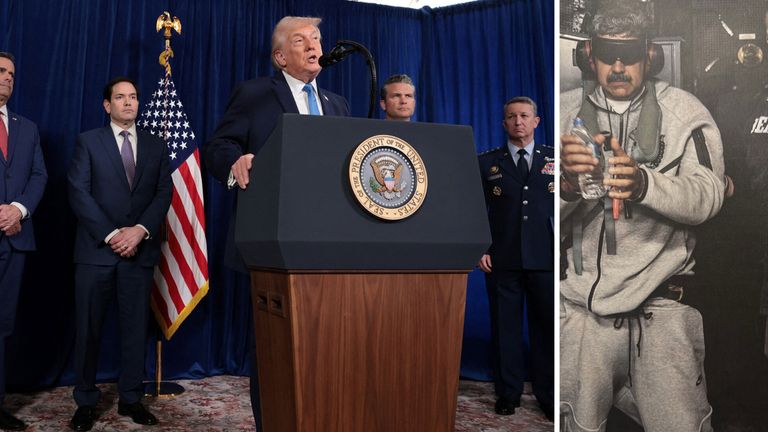
Trump, speaking earlier in remarks reported by the Associated Press, said Maduro had been heavily protected inside a fortified presidential complex in the Venezuelan capital and nearly reached a reinforced safe room before U.S. forces intercepted him. In an interview later Saturday on Fox News’ “Fox & Friends Weekend,” Trump said American personnel were prepared to breach steel walls if necessary.
“It had what they call a safety space, where it’s solid steel all around,” Trump said. “He didn’t get that space closed. He was trying to get into it, but he got bum-rushed right so fast that he didn’t get into that. We were prepared.”
The capture and transfer of a sitting head of state to U.S. custody is almost without precedent in modern Latin American history and carries profound legal and geopolitical implications. Legal experts note that while U.S. courts have previously prosecuted foreign leaders after they left office, the forced removal of an incumbent president raises questions about international law, sovereignty and the limits of U.S. executive power.
From Washington’s perspective, the case represents the culmination of years of pressure on Maduro, whom successive U.S. administrations have accused of turning Venezuela into a hub for drug trafficking and transnational crime. From Caracas, however, Maduro’s supporters have long framed the charges as part of a broader campaign to overthrow his government and seize control of the country’s vast oil reserves.
Those tensions were underscored by Trump’s comments hours after the operation, when he said the United States would run Venezuela at least temporarily and tap its oil resources for sale to other nations. The remarks signaled that the arrest of Maduro could mark not only a legal turning point but also a potential realignment of political power in the crisis-stricken nation.
Markets, diplomats and regional leaders were closely watching developments as news of Maduro’s arrival in New York spread. Analysts said the case could reshape U.S. relations across Latin America, where memories of past U.S. interventions remain potent. At the same time, supporters of the prosecution argue that the charges demonstrate Washington’s willingness to pursue alleged corruption and narcotics trafficking at the highest levels of foreign governments.
Maduro last appeared publicly on Venezuelan state television on Friday. Venezuelan authorities have not issued an official statement acknowledging his capture or confirming who is exercising executive power in his absence. Under Venezuela’s constitution, the vice president would assume authority if the presidency is declared vacant, though no such declaration has been announced.
As Maduro prepares to face U.S. prosecutors, the case is expected to move quickly, with federal judges in Manhattan overseeing proceedings that could test the reach of U.S. criminal law and redefine the boundaries between diplomacy, military force and justice. For Venezuela, already mired in political instability and economic collapse, the consequences of its leader’s sudden arrival in a New York military base are likely to reverberate for years to come.
CBS/AP/CNN




