

A man long linked to the killing of Colombian soccer star Andrés Escobar following the 1994 World Cup has been shot dead in Mexico, Colombian President Gustavo Petro said Friday, reopening painful memories of one of the darkest episodes in the nation’s sporting and criminal history.
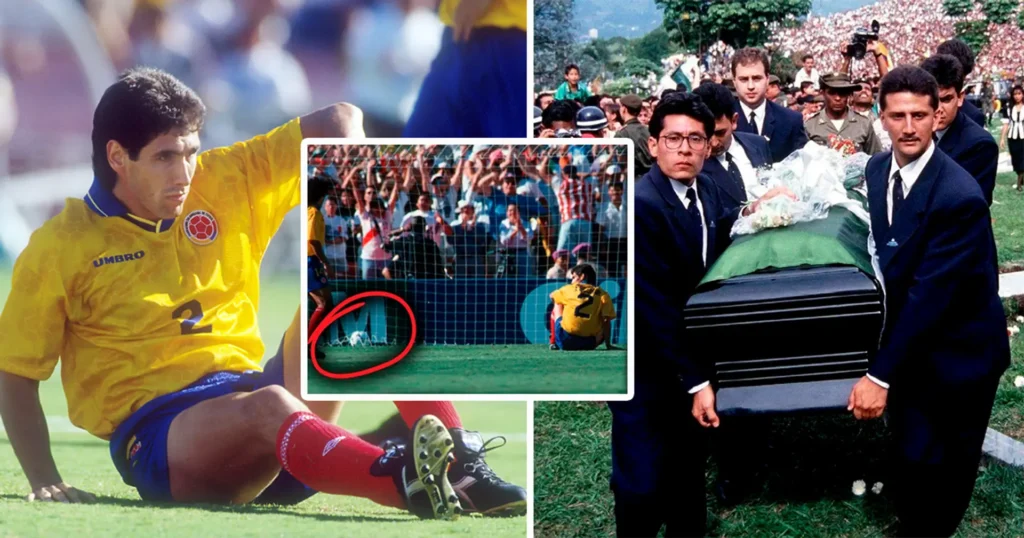
Petro said the man, identified as Santiago Gallón, was killed this week in central Mexico. Gallón, whom Colombian authorities have described as a drug trafficker and financier of right-wing paramilitary groups, was never formally convicted in the murder of Escobar but has been repeatedly cited in judicial and media accounts as being connected to the crime.
In a message posted on X, Petro said Gallón was allegedly responsible for Escobar’s killing, calling it an act that “destroyed the country’s international image” at a moment when Colombia was already grappling with widespread violence tied to drug trafficking and armed groups.
Mexican authorities have not publicly detailed the circumstances of the killing. However, the state prosecutor’s office for the State of Mexico, which encircles Mexico City on three sides, confirmed that a body believed to be Gallón’s was discovered Wednesday in the municipality of Huixquilucan. Officials said forensic tests were underway to verify the victim’s identity and determine the cause of death.
Escobar’s killing remains one of the most notorious crimes in the history of international soccer. The Colombian defender, known for his composure on and off the field and nicknamed “The Gentleman of Football,” was shot multiple times outside a nightclub in Medellín on July 2, 1994, just days after Colombia’s stunning elimination from the World Cup in the United States.
During that tournament, Colombia entered as one of the favorites to advance deep into the competition. But hopes collapsed after a shocking 2-1 loss to the U.S., a match in which Escobar accidentally deflected the ball into his own net. The goal became symbolic of Colombia’s early exit and, in the charged atmosphere of the time, a focal point for rage fueled by massive gambling losses tied to drug money.
Authorities later arrested Humberto Muñoz Castro, identified as Gallón’s driver, for the killing. Investigators said Muñoz shot Escobar following an argument in which the player was mocked over the own goal. Muñoz confessed to the crime but refused to identify or testify against higher-ranking figures who may have ordered or encouraged the attack.
Muñoz was convicted and initially sentenced to 43 years in prison. He served just 11 years before being released, a development that drew renewed criticism of Colombia’s justice system and underscored the power wielded by criminal networks at the time.
Gallón himself was later convicted in a separate case. In 2010, Colombian courts sentenced him to prison for financing paramilitary organizations, armed groups responsible for massacres, forced displacement and widespread human rights abuses during Colombia’s decades-long internal conflict. He served part of that sentence before leaving the country.
The news of Gallón’s death has resonated deeply in Colombia, where Escobar’s killing remains a national trauma. Memorials, murals and annual tributes continue to honor the defender, who has come to symbolize the innocence lost during an era when drug cartels exerted enormous influence over sports, politics and daily life.
Gallón’s killing in Mexico, if confirmed, highlights how figures linked to Colombia’s violent past continue to surface across borders decades later. Analysts say it also reflects the transnational nature of organized crime in Latin America, where traffickers and financiers often relocate to avoid prosecution but remain vulnerable to rivalries, retribution or criminal feuds.
While Petro’s comments revived allegations tying Gallón directly to Escobar’s murder, legal experts note that no court ruling ever established Gallón as the mastermind. Still, his name has long been associated with the environment of intimidation and impunity that surrounded the crime. For many Colombians, the symbolic weight of his death lies less in legal closure and more in its emotional resonance.
The Escobar case marked a turning point in how Colombia viewed the intersection of sports and organized crime. In the early 1990s, drug cartels funneled vast sums into soccer clubs, both as money-laundering vehicles and as sources of prestige. Players often found themselves caught between adoration and danger, celebrated as national heroes yet exposed to the wrath of powerful criminal interests.
The killing also reshaped global perceptions of Colombia. Internationally, it reinforced stereotypes of a country gripped by violence, overshadowing efforts to present a different image during the World Cup. Domestically, it prompted soul-searching about the cost of allowing criminal groups to dominate cultural institutions.
President Petro’s framing of the killing as having damaged Colombia’s reputation reflects a broader political narrative aimed at confronting the legacy of the drug war. Petro, a former guerrilla who has pushed for sweeping reforms, has repeatedly argued that decades of prohibition-fueled violence corrupted state institutions and left deep scars that persist today.
In Mexico, Gallón’s apparent killing adds to a grim pattern of high-profile assassinations linked to organized crime. The State of Mexico has seen rising violence tied to criminal groups battling for territory and influence, even as federal authorities emphasize security crackdowns.
Whether Gallón’s death will lead to renewed investigations into Escobar’s murder remains unclear. Prosecutors in Colombia have not announced any new legal action, and key witnesses and suspects are either dead or long removed from public view. Yet the episode has revived calls from victims’ advocates and historians for a fuller accounting of the crime and the networks that enabled it.
Nearly three decades after Escobar was gunned down, his legacy endures as a reminder of both sporting excellence and the devastating reach of criminal violence. The reported death of a man long linked to that night does little to erase the loss, but it has reopened a chapter that Colombia continues to grapple with — one defined by grief, impunity and an ongoing search for reckoning.




