

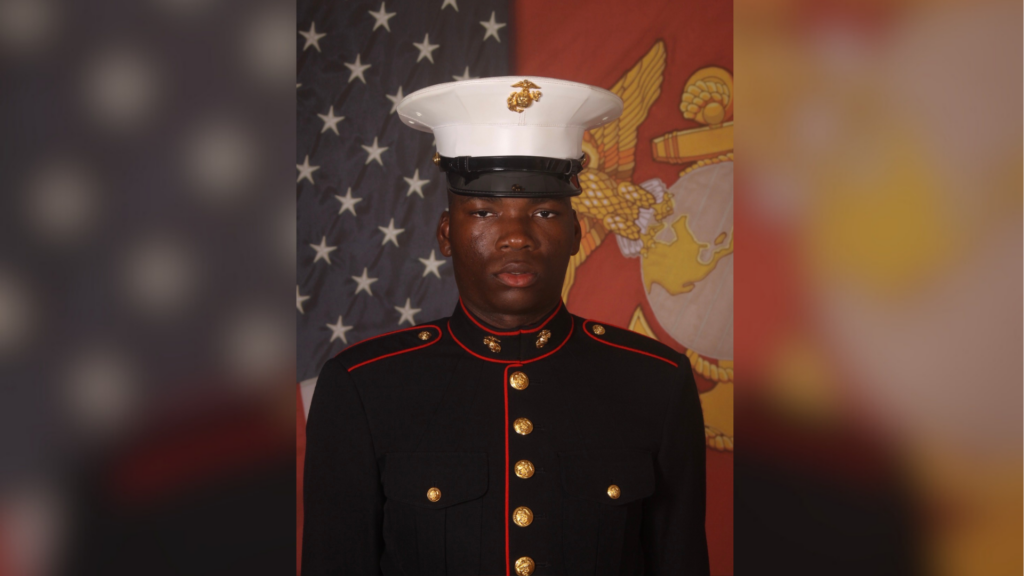
The United States Marine Corps has confirmed the death of Lance Cpl. Chukwuemeka E. Oforah, a 21-year-old infantry rifleman who disappeared after falling from the amphibious assault ship USS Iwo Jima while conducting operations in the Caribbean Sea, marking the first American military fatality connected to Operation Southern Spear.
Oforah, a Nigerian-born Marine from Florida, went missing on February 7, 2026, triggering an intensive three-day search and rescue effort involving substantial naval and air assets. Military officials declared him deceased on Tuesday following the exhaustive but unsuccessful recovery operation that concluded February 10.
The Marine Corps announced the tragedy Thursday, revealing that five U.S. Navy vessels, one rigid-hull inflatable boat, and ten aircraft from the Navy, Marine Corps, and Air Force participated in the 72-hour search spanning Caribbean waters. Despite the extensive resources deployed and favorable search conditions, rescue teams failed to locate the young serviceman.
“We are all grieving alongside the Oforah family,” Col. Tom Trimble, commanding officer of the 22nd Marine Expeditionary Unit (Special Operations Capable), said in a statement. “The loss of Lance Cpl. Oforah is deeply felt across the entire Navy-Marine Corps team. He will be profoundly missed, and his dedicated service will not be forgotten.”
Military authorities have launched an investigation into the circumstances surrounding how Oforah fell overboard, though officials have not disclosed details about the incident. The Marine Corps statement provided no information regarding whether the fall occurred during routine shipboard activities, training exercises, or operational tasks, leaving critical questions unanswered about the safety protocols in place at the time.
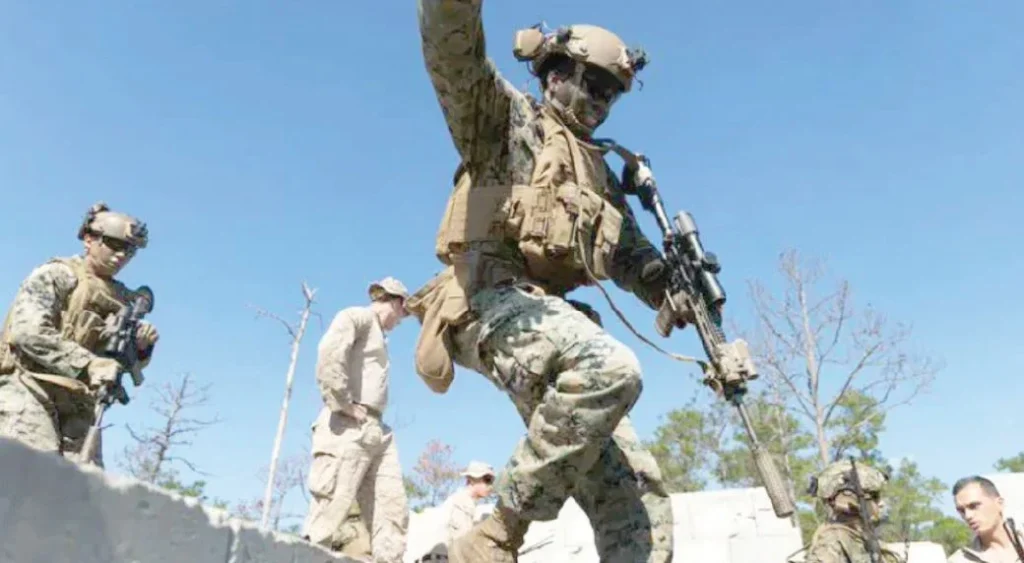
Oforah enlisted in the Marine Corps in October 2023, beginning his military service during a period of renewed focus on Western Hemisphere security operations. He completed recruit training at Marine Corps Recruit Depot, Parris Island in February 2024, then advanced through the School of Infantry at Camp Lejeune, North Carolina, where he earned his designation as an infantry rifleman—one of the Corps’ most fundamental combat roles.
Following his infantry training, Oforah received assignment to 3rd Battalion, 6th Marine Regiment, a storied infantry unit based at Camp Lejeune with extensive combat deployments throughout its history. At the time of his death, he was serving with Battalion Landing Team 3/6, 22nd Marine Expeditionary Unit aboard the USS Iwo Jima.
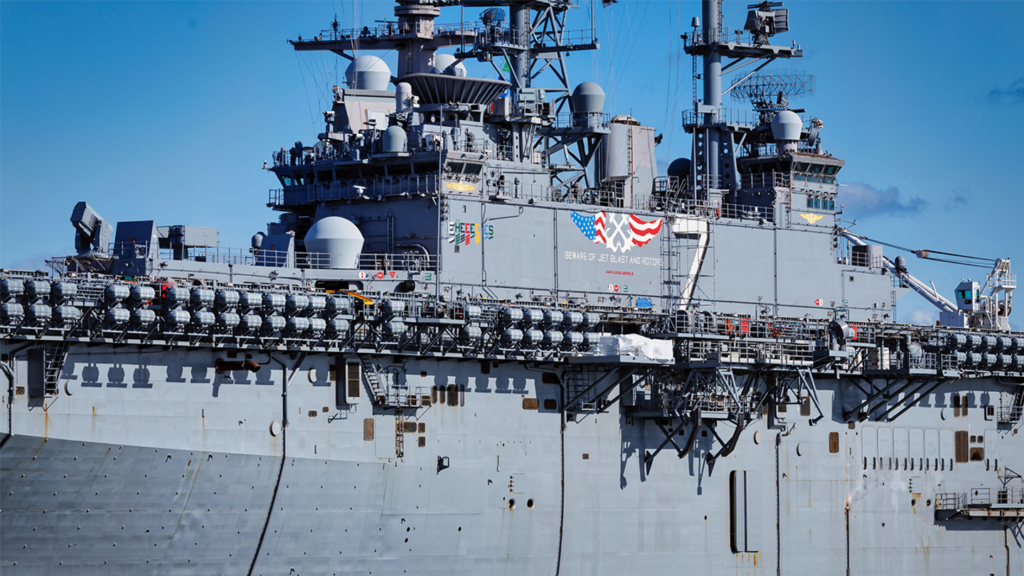
The USS Iwo Jima occupies a central position in Operation Southern Spear, President Donald Trump’s military initiative targeting drug trafficking networks and what the administration characterizes as malign actors throughout the Caribbean basin and Pacific Ocean approaches. The operation has conducted 38 lethal strikes against suspected drug transport vessels since its September launch, representing a dramatic escalation in U.S. military engagement with transnational criminal organizations.
The amphibious assault ship gained particular prominence in January when it served as the initial detention facility for Venezuelan President Nicolás Maduro and his wife following their capture during a controversial U.S. military raid. The couple was transported by helicopter to the Iwo Jima immediately after their apprehension before subsequently being transferred to the United States to face criminal charges.
Operation Southern Spear represents a significant shift in American military doctrine, applying combat capabilities traditionally reserved for conventional warfare against non-state criminal networks. The operation’s aggressive rules of engagement—authorizing lethal force against drug trafficking vessels—have drawn both praise from law enforcement advocates and criticism from human rights organizations concerned about due process and proportional response.
Oforah’s death as the first U.S. military casualty associated with Operation Southern Spear adds a somber dimension to the mission’s record. While the operation has been promoted by the Trump administration as a major success in disrupting drug flows and projecting American power in the Western Hemisphere, the loss of a young Marine highlights the inherent risks accompanying military deployments regardless of their stated objectives.
The circumstances of non-combat deaths aboard naval vessels frequently raise questions about safety procedures, training adequacy, and operational tempo. Modern warships operate as complex, dangerous environments where personnel work around heavy machinery, aircraft, weapons systems, and the constant hazards presented by ocean conditions. Falls overboard, while relatively rare, represent a persistent risk that naval services work continuously to mitigate through training, safety equipment, and watchstanding procedures.
The Marine Corps maintains rigorous investigation protocols for all service member deaths, particularly those occurring in operational contexts. Investigators will likely examine whether Oforah was wearing required safety equipment, what activities he was engaged in when he fell, whether lighting and weather conditions contributed to the incident, and whether watch personnel followed proper procedures for detecting and responding to man-overboard situations.
The extensive search operation’s failure to recover Oforah despite deploying significant resources reflects the Caribbean Sea’s challenging search and rescue environment. Ocean currents, water temperature, visibility conditions, and the time elapsed between the fall and search initiation all affect recovery prospects. Even with modern sensor technology and coordinated air and sea assets, locating an individual in open ocean remains extraordinarily difficult.
For Oforah’s family, the loss carries particular poignancy given his immigrant background and achievement of military service. Nigerian immigrants to the United States have demonstrated high rates of educational attainment and professional success, with many families viewing military service as both an expression of patriotism and a pathway to citizenship and opportunity. Oforah’s choice to serve in the Marine Corps infantry—among the military’s most demanding career fields—reflected significant dedication and courage.
The 22nd Marine Expeditionary Unit, Oforah’s parent command, specializes in rapid-response operations and maintains constant readiness for crisis response throughout its area of responsibility. The unit routinely deploys aboard amphibious vessels like the Iwo Jima, training for scenarios ranging from humanitarian assistance to combat operations. For the young Marines comprising these units, deployments involve long separations from family, demanding training schedules, and exposure to various hazards.
Military officials have not indicated whether Oforah’s remains might eventually be recovered or whether the family will receive support for memorial services without physical recovery. The Marine Corps maintains robust casualty assistance programs designed to support families through the complex practical and emotional challenges following a service member’s death, regardless of circumstances.
The incident underscores broader questions about the human costs of expanded military operations in the Caribbean region. While Operation Southern Spear has avoided the combat casualties that might accompany conventional military campaigns, the inherent dangers of naval operations persist regardless of whether forces engage in combat. Young service members like Oforah face risks from training accidents, equipment failures, weather conditions, and the constant hazards of shipboard life.
As military investigators work to determine exactly what happened aboard the Iwo Jima on February 7, Oforah’s family, fellow Marines, and the broader military community confront the reality that every deployment—combat or otherwise—carries potential for tragedy. The 21-year-old’s brief military career, spanning just over two years from enlistment to his death, represents both the promise of military service and its ultimate costs.
The Marine Corps has not announced plans for memorial services or indicated whether Oforah will receive any posthumous recognition. His name will likely be added to memorials honoring Marines who died in service to the nation, ensuring his sacrifice receives lasting acknowledgment even as the circumstances of his death remain under investigation.
Foxnews/Punchng/ABC7




