

PETROPAVLOVSK-KAMCHATSKY, Russia (BN24) — A powerful 8.8 magnitude earthquake struck off the coast of Russia’s Kamchatka Peninsula on Wednesday, triggering widespread tsunami warnings across the Pacific and sparking evacuations from Japan to Hawaii to French Polynesia. The tremor, which scientists say was the strongest in the region since 1952, was followed hours later by an eruption from Kamchatka’s most active volcano.
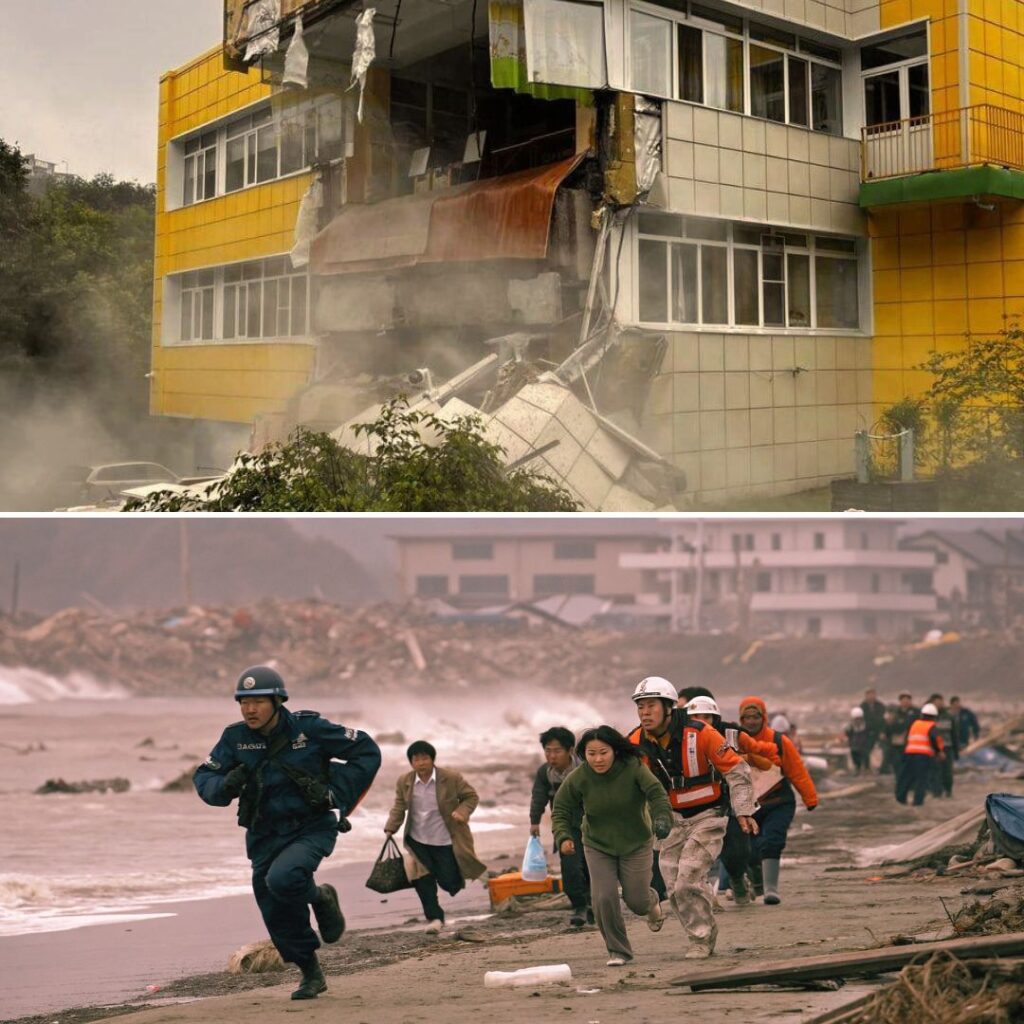
The shallow quake, centered about 74 miles (119 kilometers) east-southeast of Petropavlovsk-Kamchatsky at a depth of just 12 miles (19.3 kilometers), damaged buildings and left several people injured in Russia’s remote Far East. Although no deaths were reported, tsunami waves measuring more than 16 feet (5 meters) struck the town of Severo-Kurilsk in the Kuril Islands, submerging parts of the shoreline and damaging a port and fish processing facility.
Evacuation orders were issued along Japan’s eastern seaboard, still haunted by memories of the 2011 tsunami disaster. In Hawaii, waves up to 5.5 feet (1.7 meters) were recorded, prompting temporary airport closures in Honolulu. Tsunami advisories stretched as far as Chile, California, and French Polynesia.
By late evening, officials in Russia, Japan, and Hawaii had downgraded most alerts. But authorities in French Polynesia maintained warnings for the remote Marquesas Islands, where waves of up to 8 feet (2.5 meters) were expected. Initial surges hit Nuku Hiva, the largest of the Marquesas, with more waves forecast in the hours ahead.
Video footage from Russia’s Kamchatka health ministry showed doctors continuing surgery as the quake rocked an operating room in Petropavlovsk-Kamchatsky, the region’s capital of 165,000. “It felt like the walls could collapse at any moment,” said Yaroslav, a 25-year-old resident. “The shaking didn’t stop for three minutes.”
The tremor was powerful enough to be detected across the Pacific. In California, wave surges of nearly 1.5 feet (0.5 meters) were recorded, while parts of British Columbia and Alaska also reported minor impacts before advisories were lifted.
The U.S. Geological Survey said the earthquake occurred along a megathrust fault, where the dense Pacific Plate is sliding beneath the lighter North American Plate — a common source of seismic activity along the Pacific Ring of Fire.
Adding to the chaos, the Klyuchevskoy volcano — one of the tallest and most active volcanoes in the world — began erupting hours after the quake. Located about 280 miles (450 kilometers) north of Petropavlovsk-Kamchatsky, the eruption sent hot lava down its western slope and lit up the night sky with glowing explosions, the Russian Academy of Sciences reported.
In Japan, tsunami sirens blared and evacuations were ordered in several coastal communities. Workers at the crippled Fukushima nuclear plant were evacuated as a precaution, though officials said no abnormalities were detected.
Authorities in Ecuador’s Galapagos Islands also ordered evacuations from low-lying areas, while tsunami alerts prompted similar precautions in Chile and other parts of South America.
Despite the magnitude of the event, Kremlin spokesman Dmitry Peskov said the absence of fatalities in Russia was due to “strong building construction and effective early warning systems.”
As aftershocks continue and volcanic activity intensifies, seismologists warn that further quakes could strike the region in the coming days.




