

Nearly 30 migrants are feared dead after a boat traveling from Libya overturned south of the Greek island of Crete, authorities said Monday, as the United Nations warned that 2026 is already shaping up to be the deadliest year in the Mediterranean since record-keeping began.
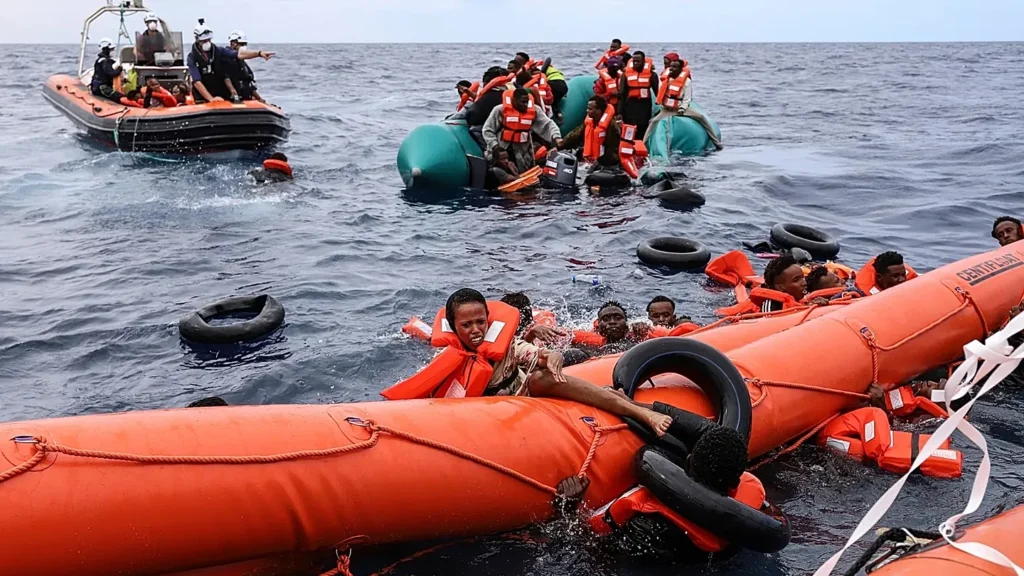
Greek officials and the United Nations’ International Organization for Migration confirmed that the vessel, carrying about 50 people, capsized Saturday roughly 20 nautical miles off Kali Limenes, a port near Crete’s southern tip.
Three men were recovered dead on the day of the incident, and the body of a woman was located floating at sea Sunday. No additional survivors or victims have been found since then.
A spokesperson for the Greek coast guard told The Associated Press that passing commercial ships continue to sweep the area in coordination with maritime authorities. High winds were recorded in the region at the time of the accident, complicating rescue efforts.
Survivors informed authorities that the boat had departed Thursday from Tobruk, Libya, a known launching point for migrants attempting the perilous Mediterranean crossing toward Europe.
Greek officials have detained two Sudanese men, ages 25 and 19, on suspicion of organizing the voyage. They are being investigated as alleged traffickers.
The tragedy adds to an escalating toll across the Mediterranean migration corridor.
In a statement issued Monday, the International Organization for Migration said that at least 606 migrants have been reported dead or missing along the Mediterranean route in the first two months of 2026 alone, citing data from its Missing Migrants Project.
The agency described the figure as the deadliest start to a year in the Mediterranean since it began compiling such records in 2014.
“IOM warns that trafficking and smuggling networks continue to exploit migrants along the Central Mediterranean route, profiting from dangerous crossings in unseaworthy boats while exposing people to severe abuse and protection risks,” the statement said.
The U.N. agency urged governments to strengthen cross-border cooperation and adopt protection-centered strategies aimed at dismantling criminal networks while expanding safe and lawful migration pathways.
“Stronger international cooperation and protection-centered responses are key to tackling these criminal networks and expanding safe and regular pathways to reduce risks and save lives,” the organization added.
The Central Mediterranean route, stretching from North Africa to Italy and Greece, remains one of the world’s most dangerous migration corridors. Many boats departing from Libya are overcrowded and poorly equipped, often lacking adequate life jackets, navigation systems or seaworthy hulls.
The incident off Crete underscores a troubling shift in migration patterns. While the majority of crossings traditionally head toward Italy’s southern coast, traffickers appear increasingly willing to attempt longer and riskier routes toward Greece as European patrols intensify in other sectors. The distance from Tobruk to southern Crete is substantial, and in winter conditions, the risks multiply significantly.
The early spike in fatalities in 2026 may reflect several intersecting pressures. Ongoing instability in parts of North Africa, economic hardship and tightened border enforcement across Europe have left migrants with fewer safe options. As legal migration channels remain limited, smugglers continue to fill the vacuum, offering desperate individuals passage on unsafe vessels.
Maritime conditions during winter months also amplify danger. High winds and rough seas can overwhelm small craft within minutes, leaving passengers little chance of survival, particularly if rescue operations are delayed by weather or distance from shore.
The arrests of the two Sudanese suspects may represent an attempt by Greek authorities to disrupt smuggling rings operating out of eastern Libya. However, experts note that dismantling trafficking networks requires sustained international coordination that addresses both supply and demand. Arrests at sea or upon arrival often capture low-level facilitators rather than the transnational organizers who finance and direct operations.
The mounting death toll also renews debate within the European Union about burden-sharing and migration policy. Southern member states such as Greece and Italy have long argued that frontline countries cannot shoulder rescue and reception responsibilities alone.
As search vessels continue scanning the waters south of Crete, the fate of dozens remains uncertain. With no additional survivors located since Sunday, authorities increasingly fear the worst.
The disaster marks another grim chapter in the Mediterranean migration crisis — one that, according to U.N. data, is accelerating rather than receding in 2026.
AP




