

MINNEAPOLIS — Federal agents fanned out across Minnesota neighborhoods Monday, executing door-to-door investigations into what authorities characterize as a sprawling network of fraudulent childcare operations that allegedly siphoned millions from taxpayer-funded assistance programs.
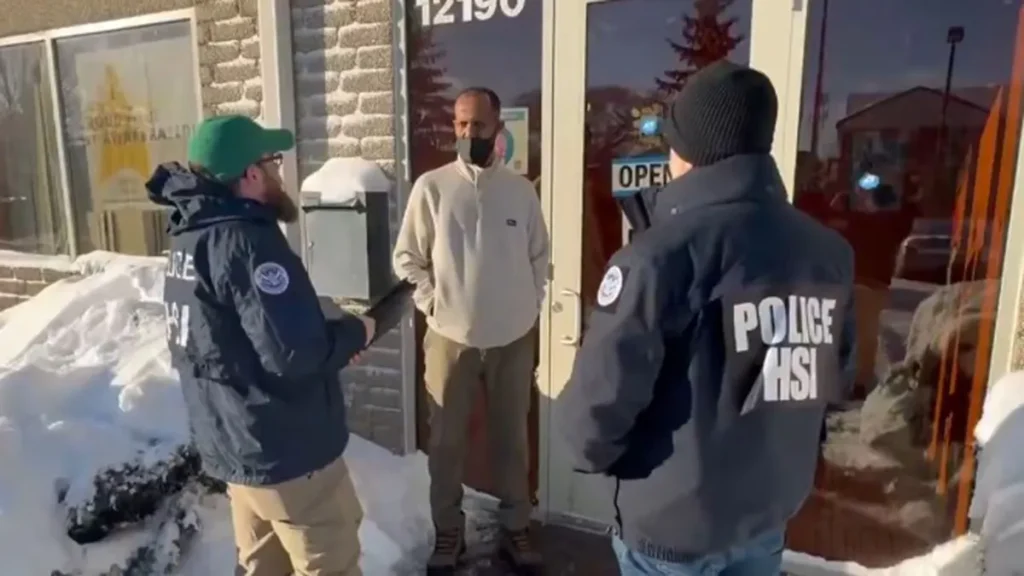
Homeland Security Investigations initiated the coordinated enforcement action targeting facilities implicated in schemes involving the state’s Child Care Assistance Program. The intensified scrutiny follows independent investigative videos by journalist Nick Shirley that documented what appeared to be non-operational daycare centers continuing to receive substantial government payments. One facility featured in the videos, Sweet Angel Child Care, collected $1.26 million in public funds despite showing no signs of active operation and listing a contact number that reportedly connected to Minnesota Governor Tim Walz’s office.
FBI Director Kash Patel announced Sunday that his agency has deployed additional investigative personnel and resources to Minnesota, marking an escalation in federal scrutiny of potential fraud within the state’s social service programs. “Recent social media reports in Minnesota” prompted the bureau’s heightened response, Patel indicated in a statement posted to social media platform X, though he declined to provide specifics about the investigations’ scope or targets.
The director’s announcement came two days after Shirley’s video documentation gained widespread attention on social media. U.S. Representative Tom Emmer, a Minnesota Republican, amplified the footage Friday in a public appeal demanding answers from Walz’s administration. Vice President JD Vance subsequently shared the investigative report with his social media followers Saturday, further elevating national attention on the allegations.
The FBI has not elaborated on operational details regarding the investigation. Walz’s office did not respond to inquiries seeking comment on the federal enforcement actions or the allegations surrounding the phone number connection.
These latest allegations emerge against the backdrop of Minnesota’s largest-ever fraud prosecution, which concluded with 59 individuals convicted of orchestrating a scheme that diverted more than $250 million from federal child nutrition programs. That case, which unfolded over several years, involved elaborate networks of shell companies and fraudulent billing practices that exploited pandemic-era emergency funding mechanisms designed to feed children in need.
The current investigations signal potentially broader systemic vulnerabilities. State audits have identified as much as $9 billion in questionable billing patterns across multiple government service programs, with preliminary findings suggesting the involvement of shell companies and fictitious service providers similar to those used in the nutrition fraud cases.
According to CBS News, which cited information from the U.S. Attorney’s Office for Minnesota, the majority of defendants charged in recently announced major fraud cases are of Somali descent. This demographic pattern has sparked tension between federal prosecutors and state officials over investigative approaches and priorities, as documented by the Minnesota Star Tribune’s reporting on the jurisdictional disputes.
Immigrant advocacy organizations have raised concerns that the fraud investigations disproportionately focus on Minnesota’s Somali community, one of the largest concentrations of Somali immigrants in the United States. These advocates argue that federal authorities are leveraging legitimate fraud concerns as justification for broader targeting of immigrant populations, creating an atmosphere of suspicion and fear within Somali neighborhoods.
President Donald Trump has repeatedly referenced the Minnesota fraud investigations in public statements critical of both the Somali diaspora and Walz, who served as the Democratic vice presidential nominee in the 2024 election. The president’s rhetoric has intensified debate about whether the enforcement actions represent appropriate prosecution of criminal activity or reflect discriminatory application of investigative resources.
Congressional Republicans have demanded that the Walz administration produce comprehensive records related to oversight of the Child Care Assistance Program and other social service initiatives. These lawmakers contend that state-level failures in program monitoring and verification created conditions enabling fraud to flourish unchecked.
The investigation’s expansion raises fundamental questions about oversight mechanisms governing billions in public assistance funding distributed through state programs but financed substantially by federal dollars. Child care assistance programs operate through complex reimbursement systems that rely heavily on provider self-reporting and limited state capacity for physical verification of services claimed.
Minnesota’s experience may foreshadow vulnerabilities in similar programs nationwide, where rapid expansion of social service funding during the pandemic outpaced development of adequate fraud prevention systems. Federal authorities have signaled intentions to apply lessons learned from Minnesota investigations to enhance monitoring protocols across other states with significant refugee and immigrant populations participating in assistance programs.
The demographic concentration of charges has created profound community impact beyond those directly accused. Somali community leaders report increased anxiety among legitimate childcare providers who fear becoming subjects of investigation based on ethnicity rather than evidence of wrongdoing. This chilling effect potentially threatens access to culturally appropriate childcare services for families who depend on providers familiar with their language and customs.
As federal agents continue methodical examinations of daycare facilities and financial records, the investigations test competing priorities of aggressive fraud prosecution and protection of immigrant communities from discriminatory enforcement. How authorities navigate these tensions will likely influence both the recovery of allegedly stolen public funds and the broader national conversation about immigration, integration and equal application of criminal justice.
The full scope of potential fraud within Minnesota’s childcare assistance system remains undetermined as investigators work through financial records spanning multiple years. Whether the cases represent isolated criminal networks or systemic program failures will shape future policy responses and oversight structures designed to protect public resources while maintaining access to vital services for vulnerable populations.




