

CAIRO (BN24) — More than 100 charity kitchen workers have been killed since Sudan’s civil war erupted in April 2023, according to accounts gathered by The Associated Press and data compiled by the Aid Workers Security database, which monitors major incidents affecting humanitarian personnel worldwide.
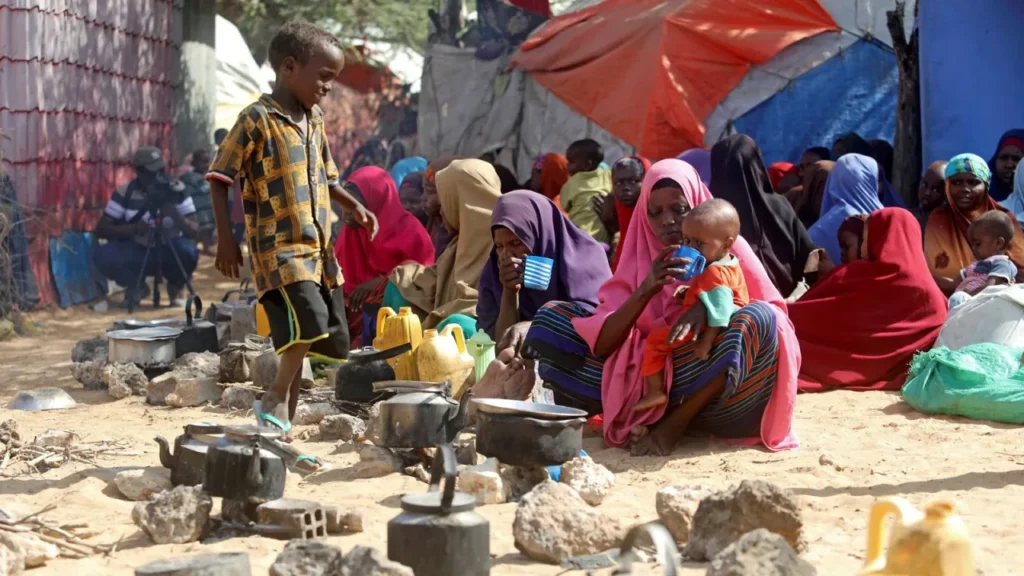
The toll highlights the growing risks faced by civilians running community-led food programs in a conflict that has devastated much of the country and pushed parts of the western Darfur region toward famine.
Enas Abab, 19, said her father was among those killed in the North Darfur capital of al-Fasher. She recounted that after fighters from the paramilitary Rapid Support Forces seized control of the city in October, they detained him and demanded ransom.
When relatives said they were unable to pay, the family was later informed that he had been killed.
“He worked at the charity kitchen from the beginning of the war,” Abab said. “He distributed food and drink to people in the camps and gave medicine to those with high blood pressure and diabetes.”
The RSF has been battling Sudan’s military since April 2023 in a power struggle that has fractured the country. Al-Fasher became a focal point of intense fighting as the RSF laid siege to the city, restricting supplies before storming it.
United Nations officials have indicated that only about 40% of al-Fasher’s 260,000 residents managed to escape the assault alive, with thousands wounded. The fate of many others remains unclear.
Abab said she still does not know where her father’s body is. A month after his death, her husband vanished. Fearing for her safety, she fled north with her young son and sought refuge in Egypt.
Farouk Abkar, 60, also worked at a community kitchen in al-Fasher, distributing sacks of grain at Zam Zam camp, roughly 15 kilometers (9 miles) south of the city. He described surviving drone strikes and armed raids before fleeing.
He recounted an attack by RSF fighters on the camp kitchen. “One of them started hitting me,” Abkar said. “When I tried to run, he grabbed me and punched me in the face. Some of my teeth were knocked out.”
Abkar said he escaped under cover of darkness, walking for 10 days with his daughter until they reached safety. Now living in Egypt, he shares a cramped apartment with at least 10 other Sudanese refugees and says he cannot afford medical treatment.
The Aid Workers Security database, which tracks serious incidents involving humanitarian personnel globally, has documented the mounting toll on those working in Sudan’s grassroots relief networks. While precise figures are difficult to verify in conflict zones, the database and interviews with affected families indicate that more than 100 kitchen workers have been killed since the war began.
In Darfur and other areas experiencing heavy fighting, food shortages have intensified. Markets have collapsed, farmland has been abandoned and supply routes have been cut off. Famine conditions are spreading in some districts, according to humanitarian agencies.
Community-run kitchens have become critical lifelines, often providing the only reliable source of meals. Operated by volunteers and funded through local donations or diaspora support, they serve displaced families sheltering in camps and neighborhoods shattered by shelling.
Yet the very visibility of the kitchens has exposed workers to danger. Aid volunteers have been abducted, robbed, detained, beaten and killed. Ransom demands, often ranging between $2,000 and $5,000, have been imposed on families, with sums sometimes escalating after partial payments are made, activists and relatives said.
The United Nations has stated that it remains unclear whether kitchen workers are targeted specifically because of their humanitarian roles or because of perceived ties to one of the warring factions.
Activists say the prominence of kitchen volunteers in their communities may make them conspicuous targets. Their work, which requires organizing food distribution and interacting with large numbers of displaced residents, can draw scrutiny in areas controlled by armed groups.
Despite the threats, many kitchens continue operating. For communities cut off from formal aid channels, they represent not only sustenance but also solidarity places where neighbors share information, pool resources and offer emotional support.
Sudan’s civil war, pitting the RSF against the national army, has produced one of the world’s gravest humanitarian crises. Millions have been displaced internally or across borders. Infrastructure has crumbled, hospitals have closed and agricultural cycles have been disrupted.
The targeting deliberate or incidental of grassroots relief workers underscores a broader erosion of civilian protection. International humanitarian law affords safeguards to aid personnel, but enforcement mechanisms are limited in fragmented conflicts.
The deaths of kitchen workers also illustrate how modern warfare increasingly engulfs informal civilian networks. Unlike international aid agencies, community kitchens operate without armored vehicles, security escorts or global visibility. Their volunteers are neighbors — teachers, farmers, parents — who step into relief roles out of necessity.
The impact extends beyond immediate casualties. Each killing can shutter a food distribution point, depriving hundreds of families of daily meals. In famine-prone areas, the loss of even one kitchen can accelerate malnutrition rates, especially among children and the elderly.
For refugees who have fled to countries like Egypt, trauma compounds economic hardship. Survivors often arrive with untreated injuries and limited means to access healthcare. Host countries, already facing resource constraints, struggle to accommodate the influx.
Diplomatic efforts to broker a ceasefire between Sudan’s warring factions have repeatedly faltered. Without sustained humanitarian corridors and security guarantees, civilian-led relief initiatives will remain vulnerable.
The resilience of Sudan’s community kitchens, however, reflects a broader pattern of local self-organization in times of state collapse. Even amid bombardment and siege, volunteers continue to cook, distribute supplies and care for the sick.
Whether the international community can translate concern into effective protection remains uncertain. For families like Abab’s and Abkar’s, the cost of inaction is already measured in lives lost and in kitchens that have fallen silent where meals were once shared.





