

Devastating floods ravaging Mozambique have driven crocodiles from rivers into submerged towns, killing at least three people as authorities warned residents in heavily affected areas about heightened wildlife dangers while more than 700,000 people face a deepening humanitarian crisis.
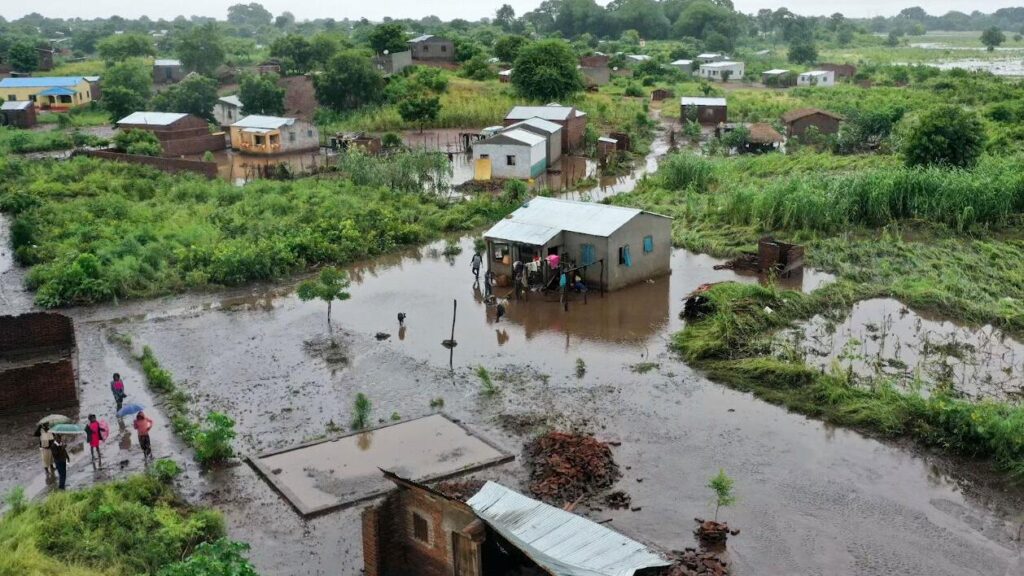
In Xai-Xai, the provincial capital of Gaza province and one of the worst-affected areas in the country’s south, authorities have cautioned residents about elevated crocodile risks as floodwaters spread and evacuations to higher ground continue.
Of the 13 people who have died from floods in Mozambique, three were killed by crocodiles, authorities disclosed. The wildlife threat compounds an already catastrophic situation where torrential rains and severe flooding across southern Africa over the past month have killed more than 100 people in Mozambique, South Africa and Zimbabwe, destroying thousands of homes and damaging critical infrastructure including roads, bridges, schools and health facilities.
“The river levels are rising and are reaching urban areas or heavily populated areas,” Paola Emerson, head of the U.N. Office for the Coordination of Humanitarian Affairs in Mozambique, said this week after visiting the town. “So the crocodiles that are in the Limpopo river in this case are able to get into populated areas that are now submerged under water and that is the concern.”
The Limpopo River flows from South Africa through Mozambique on its route into the Indian Ocean, creating a natural corridor for wildlife displacement during flooding events.
Two people were killed in an attack that left three others injured in the Gaza region earlier this month. A man was “swallowed” by a crocodile in Moamba, a small town in Maputo province, local media quoted Henriques Bongece, the province’s secretary, as saying this week. Maputo serves as the impoverished country’s capital.
Authorities in Maputo indicated the crocodiles appeared to have been driven into the area by floodwaters from a park in neighboring South Africa, illustrating how the disaster’s effects cross international boundaries as river systems connect ecosystems across the region.
“We want to urge everyone not to approach still waters because crocodiles are drifting in these waters. The rivers have connected with all areas where there is water,” local media quoted Bongece as saying this week.
Beyond the immediate danger posed by wildlife, the floods have triggered a catastrophic humanitarian emergency affecting more than 700,000 people, more than half of them children, according to humanitarian organizations including the World Food Program and UNICEF. Weeks of heavy rainfall, compounded by dam releases to prevent structural failures, have left a trail of destruction across vast agricultural land.
The Associated Press conveyed that more than 300,000 people have been displaced by flooding in Gaza province alone, with Governor Margarida Mapandzene Chongo saying approximately 327,000 people were housed in dozens of temporary shelters including schools and churches. They had fled or been evacuated from flooded or flood-threatened areas of the southern province, which has a population of about 1.4 million.
Humanitarian organizations had anticipated earlier this month that around 200,000 people would be impacted by extreme weather in Mozambique, but conditions have exceeded those projections. Inocencio Impissa, a Cabinet minister and government spokesperson, said nearly 600,000 people had been affected in Gaza and neighboring Maputo provinces.
Chongo disclosed that authorities were calling for evacuation of everyone from lower portions of Xai-Xai as additional flooding threatens the city of approximately 115,000 people situated next to the Limpopo River. Streets in Xai-Xai resembled rivers as floodwater surged through parts of the city, videos on the city’s official Facebook page showed.
Images from the nearby town of Chokwe, site of earlier evacuations, show floodwater almost entirely covering houses and other buildings, with only the tips of some roofs visible above the inundation.
The World Health Organization warned Friday of severe disruptions to health services in Gaza and Maputo provinces following destruction of at least 44 health facilities, leaving tens of thousands without access to medical care. The U.N. agency said damage to critical infrastructure has interrupted service delivery, while more than 50,000 people forced to relocate to temporary shelters face limited or nonexistent basic health services.
WHO emphasized that displaced people requiring long-term medication face life-threatening interruptions and that urgent action is needed to restore essential services, deploy mobile health teams and ensure continuity of care for people with chronic conditions.
Across the three affected countries, humanitarian agencies warn that hunger and disease risks are escalating, with extreme weather wiping out crops that millions of small-scale farmers depend upon for sustenance, while the threat of water-borne diseases such as cholera looms large over crowded evacuation centers with inadequate sanitation.
Mozambican President Daniel Chapo canceled his trip to the World Economic Forum in Davos, Switzerland, because of severe flooding impacting central and southern regions of the country, the state-run daily newspaper Noticias conveyed.
Mozambican authorities indicated that severe flooding in northern South Africa was now affecting Gaza province, which borders South Africa, as rivers flowing into Mozambique burst their banks. Chongo said “the situation is likely to worsen” in Gaza because of heavy rains in southern Zimbabwe that would ultimately flow toward her province, creating a cascading crisis as weather systems impact multiple countries sequentially.
Mozambique, a nation of 34 million people on Africa’s southeastern coast, has endured devastating cyclones and crippling drought in recent years. Several provinces have been struck by current floods, with conditions in three described by authorities as “critical.”
A countrywide red alert warning, the highest level, has been issued over the weather conditions.
The National Institute for Disaster Risk Reduction, coordinating rescue operations, said approximately 110 people were rescued by helicopter Sunday while trapped in trees or other high points. Those rescued included children, elderly people and one pregnant woman about to go into labor, highlighting the crisis’s impact across vulnerable populations.
Minister of Transport and Logistics João Matlombe said approximately 40 percent of Gaza was submerged by water, 152 kilometers (94 miles) of roads across the country had been completely destroyed and more than 3,000 kilometers (1,864 miles) of roads were damaged, creating enormous challenges for relief operations and economic recovery.
The recovery cost for Mozambique could reach hundreds of millions of dollars. The premier of one affected province in South Africa estimated damage there at approximately $250 million, suggesting regional reconstruction costs will prove staggering.
The crocodile threat represents an unusual dimension of the flooding disaster, where wildlife displacement creates deadly encounters in areas where humans and predators typically maintain separation. Crocodiles that normally inhabit river channels and remote wetlands have been carried by floodwaters into residential neighborhoods and urban centers, creating danger zones where normal activities like walking through standing water or seeking temporary shelter become life-threatening.
The warning against approaching still waters reflects the difficulty of visually detecting crocodiles in murky floodwater, where the animals can remain submerged with only eyes and nostrils exposed. Displaced residents navigating flooded streets or attempting to salvage belongings from inundated homes face risks they have little experience assessing or avoiding.
The destruction of 44 health facilities creates cascading health crises beyond immediate flood injuries. Pregnant women require prenatal care and delivery services. People with diabetes, hypertension and other chronic conditions require consistent medication access. Children need vaccinations. The interruption of routine health services during disasters often produces mortality that exceeds deaths directly attributable to the triggering event.
Crowded evacuation shelters with inadequate water and sanitation create ideal conditions for cholera and other diarrheal disease outbreaks that can kill thousands if not rapidly contained. Mozambique’s recent experience with cyclone-related cholera outbreaks demonstrates how secondary health crises following natural disasters can prove as deadly as the initial event.
The agricultural devastation threatens food security for millions who practice subsistence farming, growing just enough to feed their families with minimal surplus for sale. When floodwaters destroy standing crops and wash away topsoil, recovery requires not just rebuilding homes but restoring agricultural productivity through new seeds, tools and the time required to bring new plantings to harvest.
For Mozambique’s government and international humanitarian community, the challenge involves simultaneously addressing immediate life-safety threats including crocodile dangers, providing shelter and food for hundreds of thousands of displaced people, preventing disease outbreaks in crowded conditions and beginning economic recovery that will require years and resources the impoverished nation lacks.




