

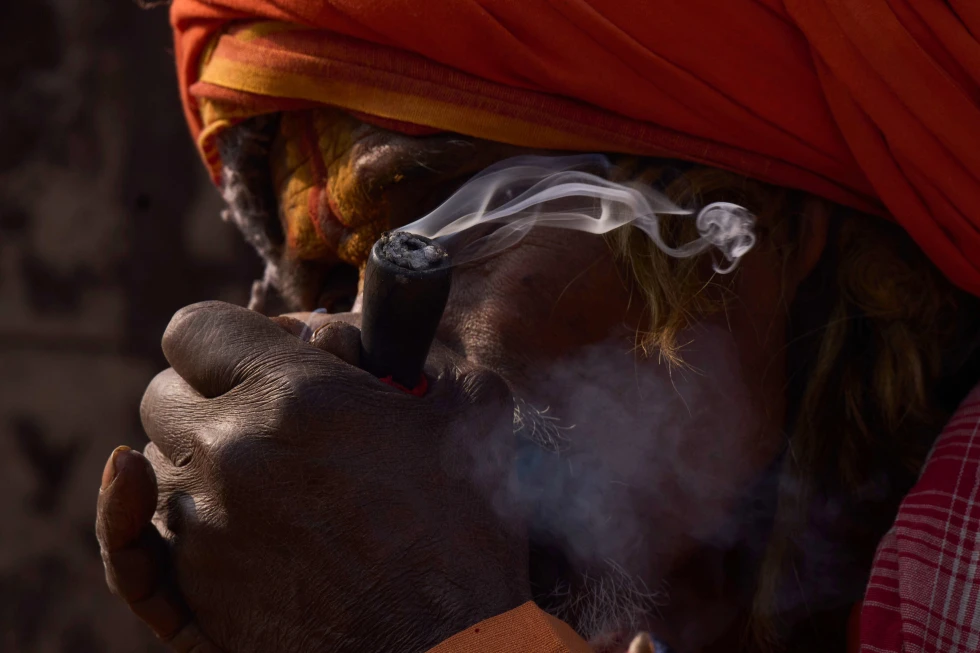
Hindu holy men and thousands of mostly young devotees openly smoked cannabis Sunday as Nepal observed Shivaratri, one of the country’s largest annual religious festivals honoring the god Shiva.
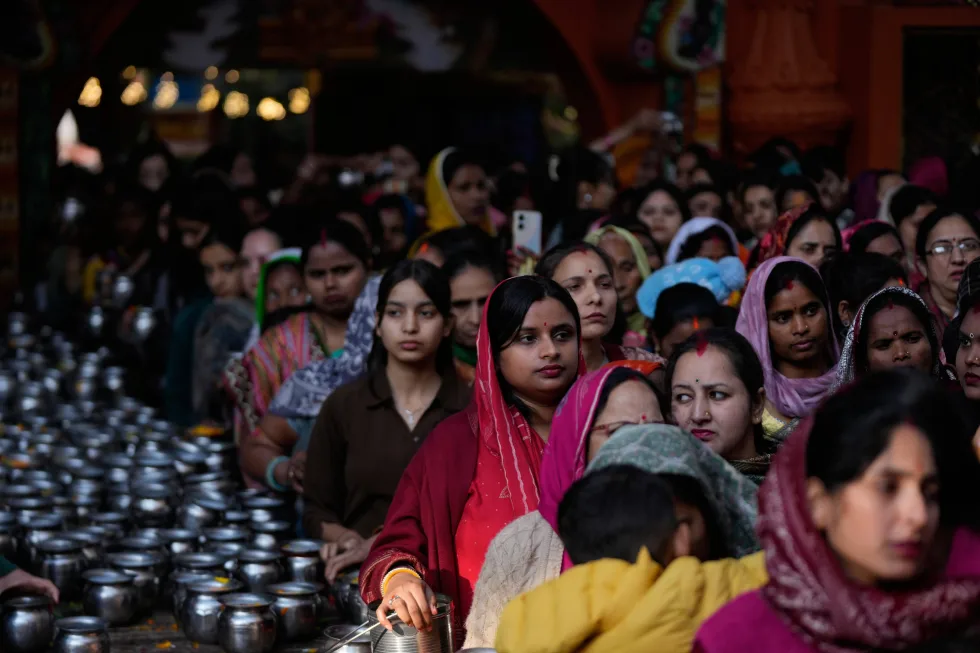
Long lines of worshippers formed before dawn outside Pashupatinath Temple, the revered temple complex dedicated to Shiva on the banks of the Bagmati River in the capital. The festival, known as Shivaratri, draws pilgrims from across Nepal and neighboring India each year, transforming the temple grounds into a sea of saffron robes, devotional music and incense smoke — along with the unmistakable scent of marijuana.
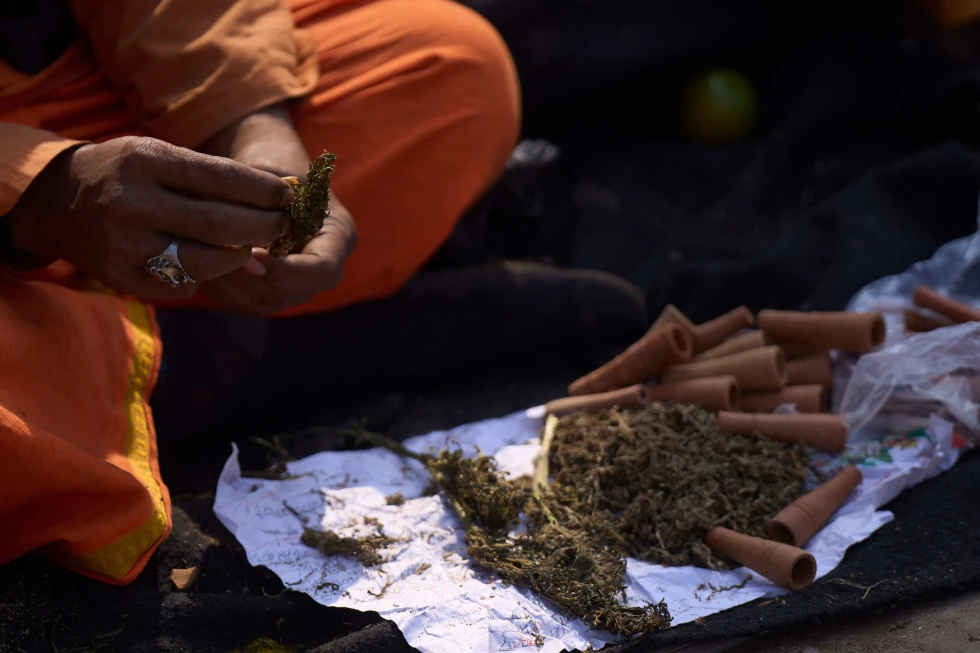
Though marijuana is illegal under Nepalese law, authorities customarily tolerate its use during the festival in recognition of Shiva’s longstanding cultural association with cannabis. In Hindu mythology and iconography, Shiva is frequently depicted as a meditative ascetic who consumes bhang, a traditional cannabis preparation.
Across the Bagmati River on the wooded slopes of the Bankali hills, ash-smeared sadhus — Hindu holy men — passed pipes among themselves, while groups of Nepali men and some women gathered to smoke openly. Young devotees danced and sang bhajans, or devotional songs, as festival-goers celebrated through the night.
Nepal’s Narcotics Drugs Control Act of 1976 criminalizes the cultivation, sale and consumption of cannabis. Under the law, users can face prison sentences of up to one month, while traffickers risk penalties of up to 10 years. Despite the prohibition, enforcement during Shivaratri has traditionally been relaxed.
Hindus make up roughly 81% of Nepal’s population, and the Pashupatinath temple remains one of the most significant pilgrimage sites in the Himalayan nation. Visitors from India and other countries traveled to Kathmandu for the observance, underscoring the festival’s regional importance.
Nepal’s complicated relationship with cannabis stretches back decades. During the 1960s, the country became a destination for Western hippies, and marijuana was openly cultivated and sold in government-licensed shops and tea houses. That changed in 1976, when Nepal outlawed cannabis production and sales amid international pressure to curb narcotics.
Efforts to revisit the ban have surfaced periodically. In 2020, lawmaker Sher Bahadur Tamang registered a private bill in Nepal’s parliamentary secretariat seeking to legalize cannabis cultivation, sales, medical use and scientific research. Tamang, a former law minister affiliated with the ruling Nepal Communist Party at the time, argued that regulated cannabis farming could generate substantial income for Nepali farmers and recognize the plant’s medicinal properties.
“The main reason behind registering the bill to legalize the cultivation and sales of cannabis is that it has proved to be a medicinal plant and it can also contribute to increasing income of Nepali farmers massively,” Tamang told Xinhua when introducing the proposal. He also noted that countries such as Canada and several U.S. states had already legalized cannabis production and sales.
The proposed legislation, titled the “Cannabis Farming (Management) Act,” called for licensed production, transportation and export of cannabis under government oversight. It included age restrictions, barring individuals under 18 from engaging in cultivation and prohibiting sales to those under 21 or to pregnant women. It further envisioned designated farming zones and regulatory agencies to oversee distribution.
The bill remains stalled, and cannabis continues to be illegal nationwide outside limited religious tolerance during Shivaratri.
The annual suspension of strict enforcement during Shivaratri highlights the tension between Nepal’s legal framework and its religious traditions. While the Narcotics Drugs Control Act reflects decades-old international anti-drug policies, the cultural association between Shiva and cannabis remains deeply embedded in Hindu practice.
For many devotees, smoking marijuana during the festival is less about intoxication and more about spiritual symbolism. Shiva is revered as an ascetic deity who renounced worldly attachments; cannabis use during Shivaratri is often framed by participants as an act of devotion rather than recreation.
At the same time, Nepal faces mounting economic pressures that have revived debate about cannabis reform. Proponents of legalization argue that regulated cultivation could provide a new revenue stream for rural farmers in a country where agriculture remains a major employer. They also point to shifting global attitudes toward cannabis, particularly in North America and parts of Europe.
Opponents, however, caution that legalization could complicate public health and law enforcement efforts in a country already grappling with limited regulatory capacity. They argue that religious exemptions should not automatically translate into broad commercial legalization.
The visible cannabis consumption during Shivaratri also underscores generational change. While sadhus have long been associated with the ritual use of marijuana, the growing presence of young urban participants suggests that cultural tradition and modern youth identity are intersecting in new ways.
Whether Nepal ultimately amends its 1976 law remains uncertain. Parliamentary momentum has slowed, and competing legislative priorities have sidelined reform proposals. Yet each Shivaratri, as smoke drifts above the temple spires of Pashupatinath, the contradiction between prohibition and practice becomes harder to ignore.
For now, the festival stands as a singular moment each year when religious devotion and relaxed enforcement briefly override statutory bans — a reminder of how tradition, law and politics continue to shape Nepal’s evolving approach to cannabis.
TheAssociatedPress/Xinhuanet




