

JERUSALEM (BN24) — Israeli Prime Minister Benjamin Netanyahu defended a new military offensive in one of Gaza’s most populated areas Sunday, declaring that Israel “has no choice but to finish the job and complete the defeat of Hamas” amid growing condemnation at home and abroad.
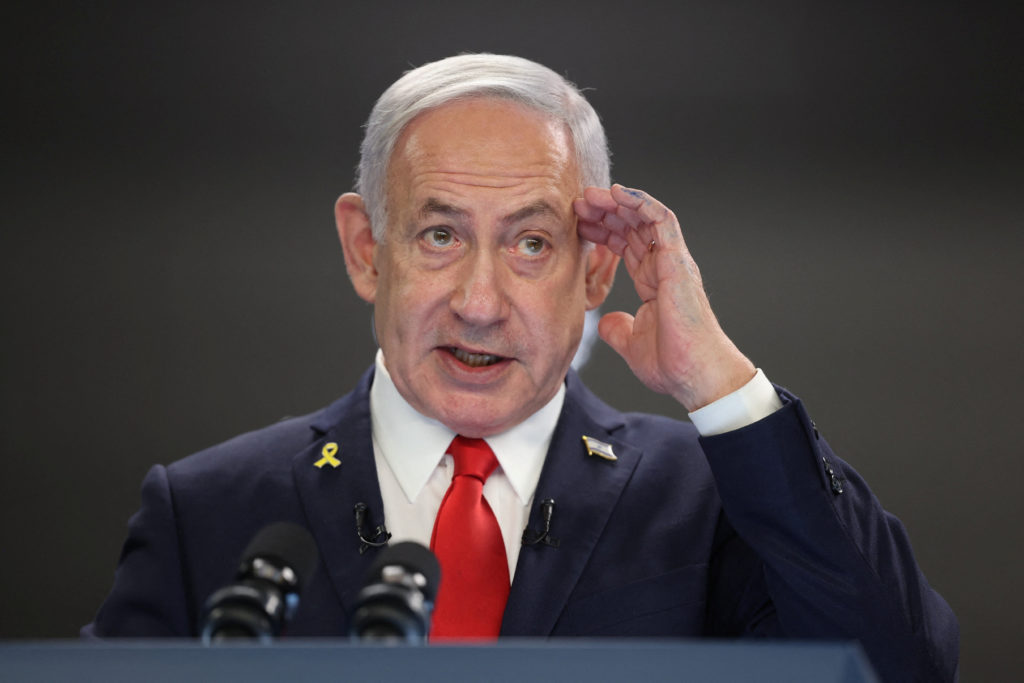
Netanyahu spoke to foreign media just before an emergency United Nations Security Council meeting on Gaza, rejecting what he characterized as a “global campaign of lies” against Israel’s military operations. The prime minister announced he has directed Israel’s military to “bring in more foreign journalists” to Gaza, which would mark a significant development as international media have been largely barred from the territory beyond military embeds during 22 months of warfare.
“Our goal is not to occupy Gaza, our goal is to free Gaza,” Netanyahu asserted during his media appearance. He specifically criticized German Chancellor Friedrich Merz, one of Israel’s strongest international supporters, claiming Merz had “buckled under” pressure by announcing Germany would not authorize military equipment exports to Israel that could be used in Gaza.
The prime minister outlined what he described as a “fairly short timetable” for upcoming operations in Gaza without providing specific details. Netanyahu said Israel’s goals include demilitarizing the territory, establishing Israeli military “overriding security control,” and installing a non-Israeli civilian administration to govern the area.
Netanyahu again blamed Hamas for Gaza’s humanitarian crisis, including civilian deaths, widespread destruction, and aid shortages. “Hamas still has thousands of armed terrorists,” he asserted, claiming Palestinians are “begging” the international community to be freed from the militant group’s control.
The prime minister acknowledged hunger in Gaza after previously asserting there was “no starvation” in the territory. “There was a problem with deprivation, no question about it,” Netanyahu said, announcing Israel’s intention to increase the number of aid distribution sites.
During the Security Council meeting, the United States defended Israel’s right to determine its security needs and dismissed allegations of genocide in Gaza as false. The U.S. maintains veto power at the council and can block proposed actions against Israel.
Other council members and U.N. officials expressed alarm at the humanitarian situation. China called the “collective punishment” of Gaza’s population unacceptable, while Russia warned against a “reckless intensification of hostilities.”
Ramesh Rajasingham from the U.N. humanitarian office delivered stark testimony about conditions in Gaza. “This is no longer a looming hunger crisis; this is starvation,” he said. “Humanitarian conditions are beyond horrific. We have frankly run out of words to describe it.”
At least 31 Palestinians were killed while seeking aid in Gaza on Sunday, according to hospitals and witnesses. Hospital officials said they received bodies from areas along truck convoy routes and near privately operated aid distribution points.
The Associated Press spoke to witnesses of gunfire in the Israeli-controlled Morag and Netzarim corridors and the Teina area in southern Gaza. All accused Israeli forces of firing at crowds as people attempted to reach food distributions or waited for aid convoys.
Fifteen people were killed while waiting for supply trucks near the Morag corridor that separates the southern cities of Rafah and Khan Younis, according to Nasser Hospital. Jamal al-Laweh, who witnessed the incident, described the situation as a “death trap” but said he had “no other choice to feed the kids.”
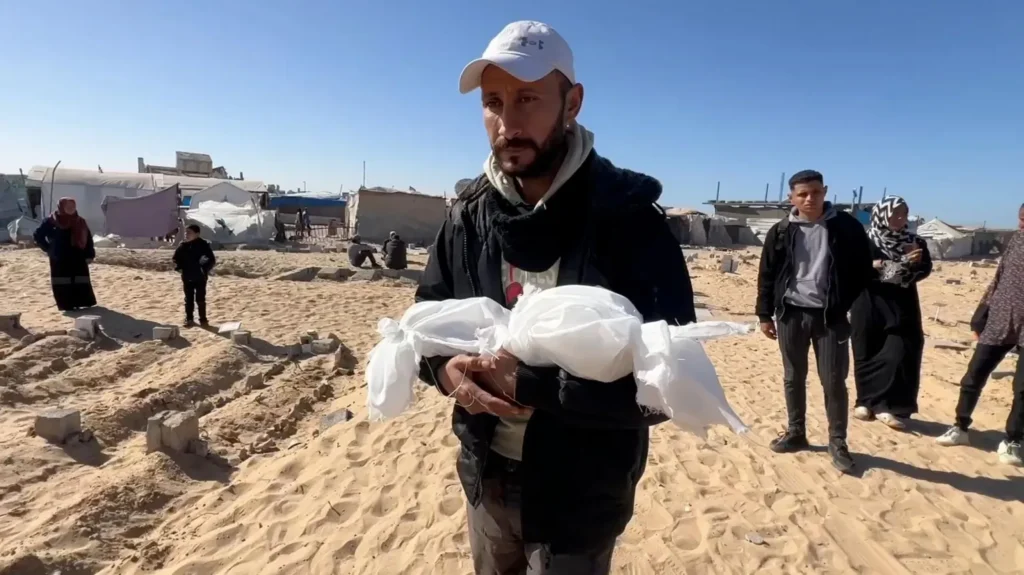
Six Palestinians were killed while waiting for aid in northern Gaza near the Zikim crossing, according to Gaza’s Health Ministry and Shifa Hospital. In central Gaza, witnesses reported hearing warning shots before gunfire was directed toward crowds trying to reach a distribution site operated by the Israeli-backed and U.S.-funded Gaza Humanitarian Foundation.
The GHF sites opened in May as an alternative to the U.N.-run aid system, but operations have been marked by deaths and chaos. Responding to Associated Press inquiries, the GHF media office said there were no incidents at or near their sites and suggested the deaths were linked to crowds attempting to loot aid convoys.
Seven additional Palestinians were killed in airstrikes, local hospitals reported. Three died near the fishermen’s port in Gaza City, while four others, including two children, were killed when their tent was struck in Khan Younis.
The humanitarian crisis has reached catastrophic levels, with two Palestinian children dying of malnutrition-related causes Saturday, bringing the total number of children who have died from hunger to 100 since the war began. At least 117 adults have died of malnutrition-related causes since June, when the Health Ministry began tracking such deaths.
The hunger-related deaths are separate from the ministry’s overall war casualty count of 61,400 Palestinians. The ministry, part of the Hamas-run government and staffed by medical professionals, does not distinguish between fighters and civilians but reports that approximately half of the dead have been women and children. The United Nations and independent experts consider it the most reliable source for war casualties.
Relatives of hostages held in Gaza urged Israeli companies to declare a general strike next week over plans to expand military operations in Gaza City, fearing escalation will endanger their loved ones. Fifty hostages remain from the Hamas-led attack on October 7, 2023, that sparked the war, with 20 believed to be alive.
Lishay Miran-Lavi, whose husband Omri is among the hostages, appealed directly to U.S. President Donald Trump and special envoy Steve Witkoff to halt the fighting.
Israeli Defense Minister Israel Katz toured part of the Israeli-occupied West Bank Sunday, where approximately 40,000 Palestinians have been displaced from their homes this year in the territory’s largest population movement since Israel captured the area in 1967. Katz said military forces would remain in refugee camps at least until the end of the year to combat what Israel describes as necessary anti-militancy operations.




