

ONITSHA, Nigeria — A hardware vendor operating from a cramped market stall in southeastern Nigeria has emerged as an influential, if controversial, source for Republican lawmakers who convinced President Donald Trump to launch airstrikes against alleged Islamic terrorists targeting Christians, despite the trader’s acknowledgment that he rarely verifies his data and relies primarily on Google searches to document deaths.
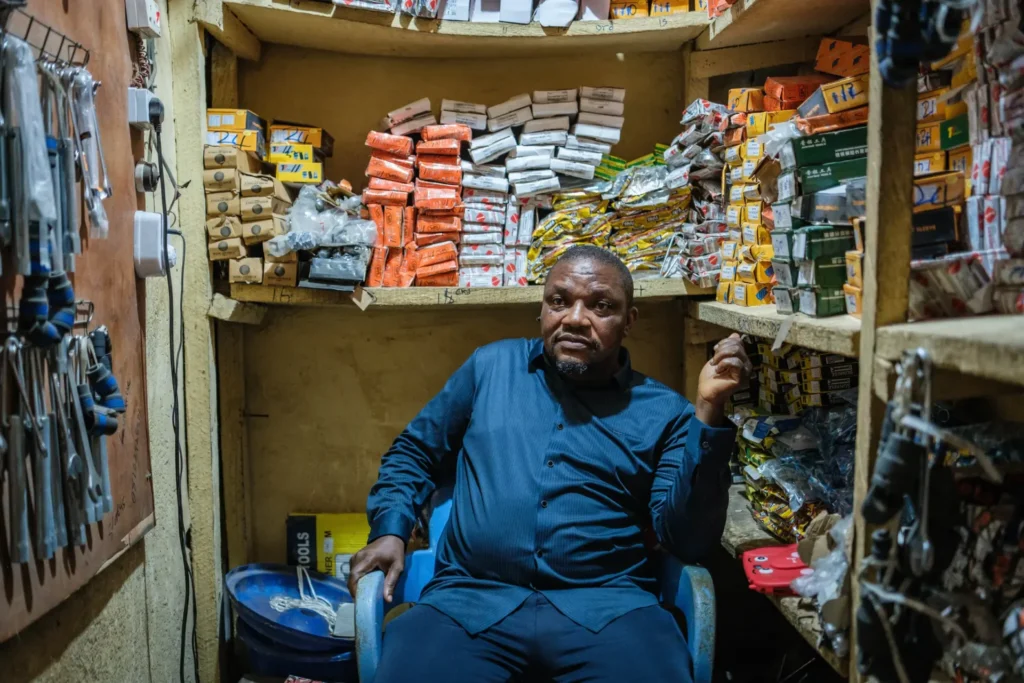
Emeka Umeagbalasi, who sells screwdrivers and wrenches from a tiny shop in Onitsha’s commercial market while running a home-based advocacy organization with his wife, claims to have documented 125,000 Christian deaths in Nigeria since 2009. The New York Times reported that his research, based on what he describes as “secondary sources” including Christian interest groups, Nigerian news reports and internet searches, has been cited by Sen. Ted Cruz of Texas, Rep. Riley Moore of Virginia and Rep. Chris Smith of New Jersey in efforts to characterize violence in Africa’s most populous nation as systematic religious persecution.
Armed with arguments drawing on Umeagbalasi’s assertions, Trump launched airstrikes on Christmas Day targeting what administration officials characterized as ISIS positions in northwestern Sokoto state, marking an extraordinary military intervention influenced partly by information from a self-described investigator who admits fundamental methodological limitations in his data collection.
“If nothing is done, Nigeria will explode,” Umeagbalasi said in an interview from his home, characterizing Trump’s decision to strike as “miraculous” validation of his advocacy work.
The case illustrates how unverified claims can gain traction in political environments receptive to particular narratives, potentially shaping military decisions with profound consequences despite serious questions about underlying evidence. The pathway from Umeagbalasi’s Onitsha market stall to American cruise missiles striking Nigerian territory reveals both the information ecosystem surrounding contemporary foreign policy debates and the challenges of establishing factual foundations for intervention decisions.
In October, Trump redesignated Nigeria as a “country of particular concern” regarding religious freedom, responding to allegations of systematic violence against Christians. “Christianity is facing an existential threat in Nigeria. Thousands of Christians are being killed,” Trump said, attributing the violence to radical Islamists engaged in “mass slaughter.”
A month later, the president threatened that the Department of Defense would invade Nigeria “guns-a-blazing” to eliminate Islamic terrorists if Nigerian authorities failed to address the alleged genocide. On Dec. 26, American forces conducted airstrikes in Sokoto state, with officials stating the operation occurred “at the request of Nigerian authorities.”
Umeagbalasi founded the International Society for Civil Liberties and Rule of Law, known as Intersociety, in 2008 and operates the organization from his residence alongside his wife, Blessing, an evangelical Christian who serves as a board member. The Catholic advocate told The New York Times he often does not verify his data and acknowledged his research derives mainly from secondary sources rather than direct investigation.
When questioned about methodology, Umeagbalasi explained he determines victims’ religious identity based on attack locations. “If a mass abduction or killing happens in an area where he thinks many Christians live, he assumes the victims are Christians,” The New York Times reported.
In an interview with The Sun, a Nigerian publication, Umeagbalasi defended his approach as “one of the oldest natural methods in the world,” pointing to “location and space of an incident or crime scene” as his primary analytical framework. He cited degrees in security studies and peace and conflict resolution from the National Open University of Nigeria and described himself as a “powerful” and “knowledgeable” investigator, comparing his work to veteran CNN journalist Christiane Amanpour.
The New York Times found significant discrepancies between Umeagbalasi’s figures and data from independent monitoring organizations. He claimed more than 7,000 Christians were killed in Nigeria during the first seven months of 2025, but Armed Conflict Location and Event Data, an independent conflict-monitoring group, estimated approximately 6,700 total deaths during that period, including Islamic insurgents and military personnel. Only 3,000 were recorded as civilians, with no religious breakdown available.
Umeagbalasi provided specific examples of his methodology that raised questions about accuracy. He cited 25 schoolgirls recently kidnapped in Kebbi state as predominantly Christian, though the school principal and local officials identified all the girls as Muslim. “The girls — a majority of them are Christians, but you know what Nigerian government did?” Umeagbalasi said. “They went and Islamized them. Gave them Islamic names just to confuse people.”
Alkasim Abdulkadir, a spokesman for Nigeria’s foreign minister, denied government misrepresentation of the girls’ religious identities. “There’s a lot of fallacy to his research, a lot of confirmation bias,” Abdulkadir said of Umeagbalasi’s work. “He’s very performative.”
The activist acknowledged he almost never travels to Nigeria’s Middle Belt, the region where violence against Christians reportedly occurs most intensely. Instead, he relies on news reports and data from Open Doors, a Christian advocacy organization whose figures Trump has cited in public statements about persecution.
One major secondary source for Umeagbalasi is Truth Nigeria, a project founded by Judd Saul, an Iowa-based filmmaker and evangelist. Like Intersociety and other Christian advocacy groups, Truth Nigeria frequently identifies perpetrators of attacks on Christians as “Fulani ethnic militias,” referring to an ethnic group with tens of millions of predominantly Muslim members, some of whom are herders whose ancestors have migrated across West Africa for centuries.
Umeagbalasi characterized the Fulani as “animals” in comments to The New York Times and advocated confining all Fulani people to a single Nigerian state, a proposal that would constitute ethnic cleansing. The inflammatory rhetoric raises questions about the objectivity of his research and whether advocacy objectives influence data collection and interpretation.
Researchers, journalists and prominent Nigerian Christians regularly dispute Umeagbalasi’s figures and methodology. Nnamdi Obasi, the Nigeria adviser for the International Crisis Group, described Intersociety’s methodology as “a total blank” and said figures in the organization’s reports contain basic mathematical errors. “The basic addition is very, very faulty,” Obasi told The New York Times.
Bishop Matthew Hassan Kukah, the Catholic bishop of Sokoto, the state where American forces conducted December airstrikes, said in an interview that excessive focus on Christian casualty data obscures more fundamental governance failures. “Focus on the fact that this state is weak and doesn’t have the capacity to protect its people,” Kukah said.
The bishop’s observation highlights a critical distinction between Umeagbalasi’s framing, which characterizes violence as systematic religious persecution, and alternative analyses suggesting that insecurity affects Nigerian civilians regardless of faith due to state capacity failures and widespread impunity. Research shows Christians are being killed in substantial numbers in Nigeria, but scholars emphasize that Muslims also face significant violence in regions most affected by conflict.
Collecting accurate data on killings, kidnappings and attacks in Nigeria presents formidable challenges. The Nigerian government does not release comprehensive statistics on violence casualties or victims’ religious affiliations. Many attacks occur in remote areas where documentation happens belatedly if at all, creating information gaps that advocacy organizations and researchers attempt to fill with varying methodological rigor.
These data collection difficulties create environments where unverified claims can circulate without effective challenge, particularly when they align with political narratives that influential actors wish to promote. Umeagbalasi’s figures have gained prominence not necessarily because they represent the most rigorous available research, but because they support arguments that certain American lawmakers find compelling.
Cruz, Moore and Smith did not respond to requests for comment from The New York Times about their reliance on Umeagbalasi’s data. A White House spokeswoman did not address questions about his methodology but said in a statement that “the massacre of Christians by radical, terrorist scum will not be tolerated.”
The administration’s unwillingness to engage with methodological questions suggests either that officials did not scrutinize the evidence underlying policy decisions or that they considered such scrutiny irrelevant to predetermined courses of action. Either scenario raises concerns about how intelligence and open-source information inform military intervention decisions.
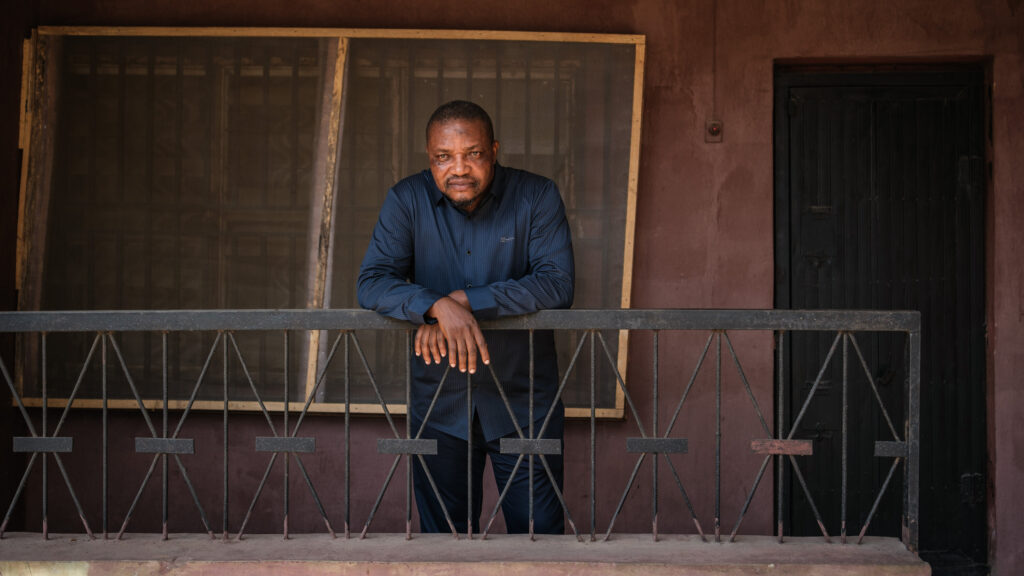
Umeagbalasi remains undeterred by criticism of his work. During a recent interview, he displayed a nearly completed report titled “The Situation of Christians in Nigeria Fueled by Jihadist Terrorism Inches a Point of No Return,” continuing his advocacy despite scholarly and journalistic challenges to his data.
Speaking from his living room with walls painted green and black and a bookshelf crammed with papers and plaques, including one reading “For excellent service to humanity,” Umeagbalasi asserted that approximately 20,000 churches were destroyed over the past 16 years. He claimed 100,000 churches exist in Nigeria as a baseline for calculating destruction rates.
When asked about the source for the 100,000 churches figure, Umeagbalasi responded simply, “Googled it.” The admission encapsulates concerns about his methodology, where internet searches substitute for systematic field research and assumptions replace verified documentation.
The Nigerian government does not maintain public data on the number of churches nationwide, making it impossible to verify Umeagbalasi’s baseline figure independently. The absence of official statistics creates space for advocacy organizations to advance claims that cannot be definitively refuted even when serious methodological questions exist.
The Cable and The Nation, Nigerian news outlets, reported extensively on The New York Times investigation, highlighting how a small-scale trader in Onitsha became an improbable but influential voice shaping American perceptions of religious violence in Nigeria. The coverage within Nigeria reflects both fascination with Umeagbalasi’s unlikely trajectory from market vendor to policy influencer and concern about how inadequately verified information can drive international interventions.
The broader implications extend beyond this specific case. The incident demonstrates how information ecosystems in the digital age permit individuals with limited resources and questionable methodology to gain significant influence when their claims align with political agendas. Social media, ideologically aligned news outlets and advocacy networks can amplify messages regardless of evidentiary foundations, creating feedback loops where repetition substitutes for verification.
For Nigerian Christians who do face genuine violence and persecution, the reliance on Umeagbalasi’s contested figures may ultimately prove counterproductive. If subsequent scrutiny discredits the most widely cited data on Christian casualties, it could undermine legitimate concerns about religious freedom and security challenges affecting all Nigerian communities.
The American airstrikes in Sokoto occurred in a majority-Muslim state where Bishop Kukah serves, adding irony to intervention justified partly by claims of systematic Christian targeting. Local dynamics in northern Nigeria involve complex interactions among pastoralist-farmer conflicts, resource competition, governance failures and extremist violence that resist simplistic narratives of religious persecution.
Whether Trump administration officials conducted independent verification of claims about Christian genocide before authorizing military action remains unclear. The willingness of senior lawmakers to cite Umeagbalasi’s work without apparent concern about methodology suggests that political objectives may have taken precedence over careful intelligence assessment.
As Umeagbalasi continues his work from Onitsha, calling it his “heavenly marathon,” the questions raised by his influence persist. How should policymakers weigh advocacy organization claims against academic research and independent monitoring? What standards should govern the use of open-source information in military decision-making? And how can legitimate concerns about religious persecution be addressed without relying on methodologically questionable data that may distort rather than illuminate complex realities?
For now, these questions remain largely unaddressed as the screwdriver vendor turned influential advocate continues documenting what he sees as an existential threat to Nigerian Christians, armed with a laptop, Google searches and an unwavering certainty that has captured the attention of American power despite scholarly skepticism about the foundations of his claims.
Thecableng/Thenationsonlineng




