

Gunmen who stormed churches in Nigeria’s restive northwest and abducted scores of worshippers have begun issuing ransom demands, seeking motorcycles rather than cash as security forces intensify efforts to locate more than 150 people still held captive.
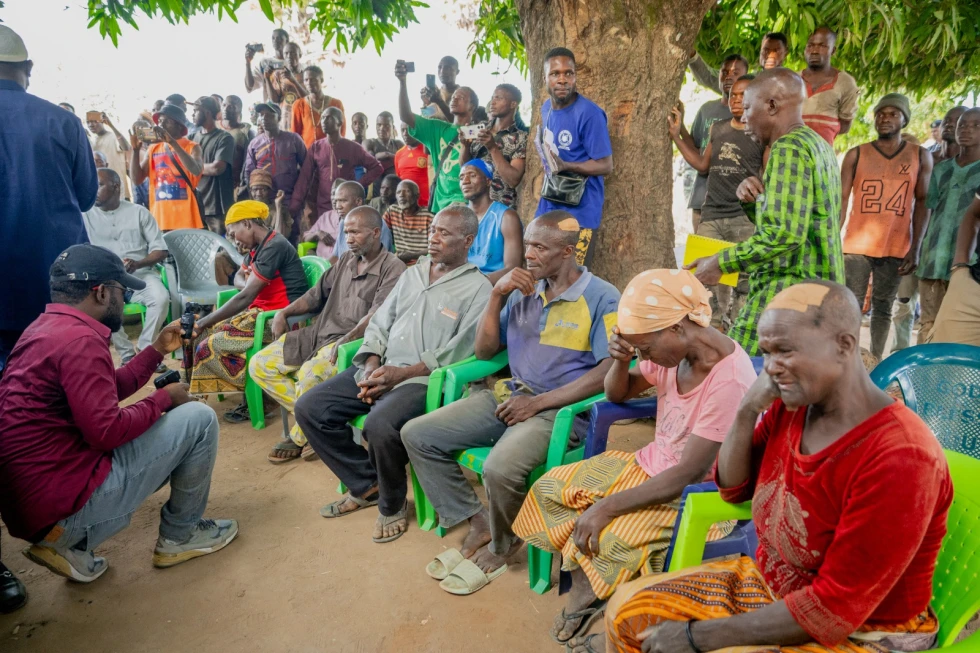
Residents in Kaduna State’s Kajuru local government area said Thursday that the attackers, believed to be members of armed criminal gangs operating from forest hideouts, have contacted families of the hostages and demanded 17 motorcycles as a condition for opening negotiations. The abductions, which occurred during Sunday church services, are among the largest mass kidnappings targeting religious centers in Nigeria in recent months.
The attackers raided three churches in quick succession, seizing 177 people before 11 managed to flee into nearby bushland, community leaders said. Those still missing include women, children and elderly worshippers, deepening fears among families and fueling anger over persistent insecurity in the region.
In interviews with The Associated Press, residents said the kidnappers specified motorcycles — each estimated to cost about $1,000 — rather than money, bringing the initial demand to roughly $17,000 in value.
“They said they want 17 motorcycles and have not told us yet that they need money,” said Ishaku Dan’azumi, the village head of Kurmin Wali, one of the affected communities.
Sebastine Barde, president of the Adara Development Association, an ethnic group in the district, said the demand was linked to the attackers’ operational needs. According to Barde, the gunmen told intermediaries they wanted the motorcycles to replace others they had lost during previous encounters.
In Nigeria’s northwest and north-central regions, criminal gangs commonly rely on motorcycles to navigate vast forest reserves that serve as their bases. The terrain allows them to move quickly across state lines and evade overstretched security forces, making motorcycles a critical asset for both raids and escapes.
As negotiations loom, Nigerian security agencies have stepped up their response. Tactical units have been deployed to the forests surrounding Kajuru, with soldiers and police combing remote areas in search of the kidnappers. Authorities say the operation is being coordinated across multiple agencies in an attempt to prevent the abductors from relocating the hostages deeper into hard-to-reach territory.
Kaduna State Gov. Uba Sani visited the affected communities late Wednesday and met with local leaders and security officials. He said the state government was working closely with federal security agencies to secure the release of those abducted.
“Our administration will continue to pursue peace, security and inclusive development,” Sani said during the visit, urging residents to remain calm and cooperate with authorities.
Despite such assurances, communities in Kajuru say fear remains high. Churches have suspended services, markets have thinned out and families are reluctant to allow children to move freely, residents said. Many locals accuse authorities of responding too slowly to repeated warnings about armed gangs operating in the surrounding forests.
The kidnapping highlights the growing challenge posed by criminal gangs in Nigeria’s northwest, where mass abductions for ransom have increasingly supplanted ideological insurgency as the dominant security threat. While Boko Haram and its splinter factions remain active in the northeast, the northwest has been plagued by loosely organized but heavily armed groups that target villages, highways, schools and places of worship.
Security analysts say the gangs exploit weak state presence, poverty and difficult terrain, often negotiating ransoms through community leaders or family representatives. Although authorities officially discourage ransom payments, families frequently feel they have little choice when faced with prolonged captivity and limited rescue successes.
The church abductions have also taken on diplomatic significance. In recent months, Nigeria has come under heightened scrutiny from the United States, which has accused the Nigerian government of failing to adequately protect Christians amid the country’s worsening security crisis. Nigerian officials have rejected claims of religious targeting, noting that attacks by criminal gangs and militants affect both Christian and Muslim communities.
The accusations have strained relations between Abuja and Washington. In December, U.S. forces carried out strikes against alleged Islamic State group members on Nigerian territory — an operation the Nigerian government said it was aware of, though the move underscored international frustration with the pace of Nigeria’s security response.
For families of the abducted worshippers, geopolitical tensions offer little comfort. Many are focused solely on whether the ransom demand will escalate and whether the motorcycles will be enough to secure the release of their loved ones.
Community leaders say they are walking a delicate line, balancing cooperation with security forces against pressure from desperate families who fear that delays could provoke reprisals from the kidnappers.
The demand for motorcycles rather than cash reflects an evolving ransom economy among Nigeria’s armed gangs. While earlier kidnappings often centered on large monetary payments, recent cases suggest abductors are increasingly seeking logistics — fuel, motorcycles or even food supplies — that allow them to sustain operations and avoid financial tracking.
This shift complicates the government’s long-standing policy discouraging ransom payments, as communities may perceive non-monetary demands as less likely to fund future violence. Security experts warn, however, that any concession risks strengthening criminal networks and entrenching kidnapping as a business model.
The targeting of churches also carries symbolic weight in a country where religion is deeply intertwined with identity. Even if attackers are motivated primarily by profit, assaults on worshippers amplify fear and can inflame sectarian tensions, particularly when international actors frame the violence through a religious lens.
As security forces push deeper into Kaduna’s forests, the coming days may determine whether the operation results in rescues or a prolonged standoff. For now, the fate of more than 150 worshippers hangs in the balance, emblematic of a broader crisis in which civilians remain trapped between armed gangs and an overstretched state.
The Associated Press




