

ABUJA, Nigeria — Nigeria’s military has confirmed that several officers arrested last year will face trial before a military judicial panel for allegedly plotting to overthrow President Bola Tinubu’s government, a revelation that exposes potentially the most serious threat to the nation’s quarter-century experiment with democratic governance since civilian rule resumed in 1999.
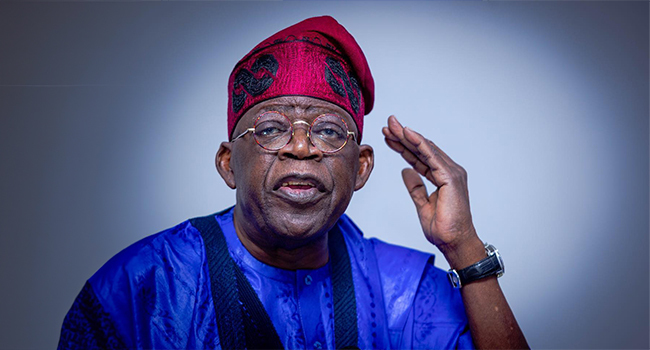
The Defence Headquarters disclosed Monday through spokesperson Major-General Samaila Uba that investigations into 16 officers detained in October have concluded, with findings identifying a number of the accused with allegations of orchestrating a government overthrow scheme. Those determined to have cases requiring adjudication will be formally arraigned before appropriate military judicial panels to face trial, though no timeline for proceedings has been established.
The announcement represents a dramatic reversal from the government’s initial position. When authorities first detained the officers in October, official statements characterized the arrests as involving “issues of indiscipline” and perceived career stagnation, with no mention of treasonous conspiracy. Despite these denials, sources across the Nigerian government and military confirmed to AFP at the time that the detention stemmed from a coup plot—information the administration vehemently disputed even as it undertook a sweeping reorganization of military leadership.
Reuters documentation indicates the military’s investigative findings uncovered firm cases against several officers, including specific allegations of plotting governmental overthrow, though the statement provided no details regarding the conspiracy’s scope, timeline or how many of the 16 detained personnel actually participated in the alleged scheme. Legal experts consulted by multiple news organizations emphasized that officers convicted of treason face the death penalty under Nigerian military law, raising stakes that transform the proceedings into potential capital cases.
The gravity of the accusations cannot be overstated given Nigeria’s tumultuous political history. The west African nation experienced numerous military takeovers following independence from Britain and spent much of the 20th century under junta rule before transitioning to civilian governance in 1999. The country has maintained democratic institutions for 26 years—the longest uninterrupted period of elected government in Nigerian history. A successful coup would have terminated this democratic continuity and potentially returned Africa’s most populous nation to authoritarian military control.
The composition of the detained officers suggests a conspiracy extending across multiple service branches and military specializations, potentially indicating broader institutional vulnerabilities than authorities initially acknowledged. Investigation details exclusively obtained by Premium Times reveal that 14 of the 16 detained officers serve in the Nigerian Army, with the remaining two drawn from the Navy and Air Force. Among the army personnel, 12 belong to the Infantry Corps—the army’s frontline combat unit whose troops primarily engage in ground battles—while one officer serves in the Signals Corps managing military communications and another in the Ordnance Corps responsible for procuring, storing and maintaining weapons, ammunition, vehicles and essential hardware.
The alleged conspirators’ ranks span from brigadier general down through lieutenant, encompassing a colonel, four lieutenant colonels, five majors, two captains and a lieutenant. The naval officer holds the rank of lieutenant commander—equivalent to major—while the Air Force participant serves as squadron leader, carrying identical rank equivalence. This distribution across rank structures raises troubling questions about how deeply dissatisfaction penetrates military hierarchy and whether senior leadership possessed adequate awareness of subordinate attitudes and potential disloyalty.
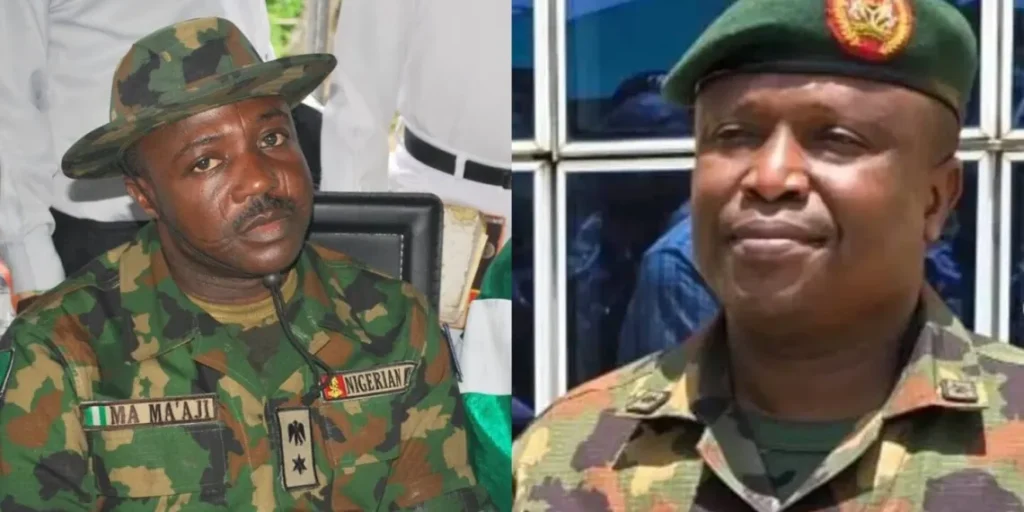
Investigators suspect Brigadier General Musa Abubakar Sadiq led the conspiracy. Born January 3, 1974, Sadiq carries service number N/10321 and trained as a Nigerian Defence Academy cadet between August 14, 1992 and September 20, 1997 as a member of Regular Course 44. The Nasarawa State native rose through ranks over decades of service, becoming colonel in 2015 and brigadier four years later. This represents not Sadiq’s first encounter with allegations of gross misconduct—in October 2024, he was reportedly detained for alleged diversion of rice palliatives and selling military equipment including generator sets and operational vehicles to scrap yards. Among various postings throughout his career, Sadiq served as Commander of the 3rd Brigade in Kano and Garrison Commander of the 81 Division of the Army in Lagos, positions conferring substantial authority and access to military resources.
Colonel M.A. Ma’aji, service number N/10668, allegedly functioned as a key strategist for the plot, though Premium Times could not independently verify that specific claim. Born March 1, 1976, the Nupe native from Niger State trained between August 18, 1995 and September 16, 2000 as a member of the 47 Regular Course. The infantry corps officer earned promotion to lieutenant colonel in 2013, advancing to full colonel four years later. The 49-year-old previously commanded the 19 Battalion of the Nigerian Army based in Okitipupa, Ondo State, and participated in Operation Crocodile Smile II, a 2017 military exercise addressing security challenges in the Niger Delta and portions of the South-west. He also served at Depot, Nigerian Army and later as Commander, Operation Delta Safe.
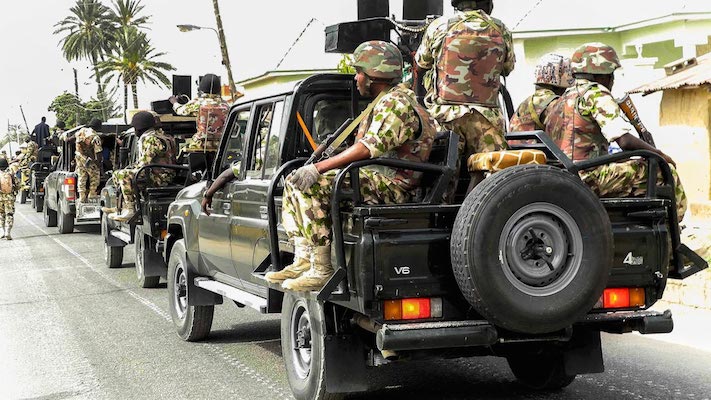
The alleged conspiracy’s timing coincided with mounting pressures on Nigeria’s military establishment from multiple directions. The armed forces continue fighting a long-running insurgency against Boko Haram and Islamic State West Africa Province in the northeast. While violence has diminished from its peak a decade ago, attacks persist—including deadly assaults on military bases—with no resolution apparent. Analysts warned of violence escalation in 2025, while troops have periodically disclosed unpaid wages and substandard conditions that erode morale and effectiveness.
Military resources are stretched dangerously thin across additional fronts, including combating armed gangs known as “bandits” in the northwest that kidnap for ransom, and confronting separatists in the southeast. This multi-theater operational tempo creates conditions where personnel become exhausted, equipment degrades without adequate maintenance, and strategic coherence becomes difficult to maintain. Such circumstances historically provide fertile ground for coup plotting, as disgruntled officers perceive civilian leadership as incompetent or insufficiently supportive of military needs.
Shortly after denying the alleged coup plot’s existence, President Tinubu executed a sweeping shake-up of military leadership in October aimed at bolstering security as the country confronts these multiple armed threats. General Christopher Musa was removed as chief of defence staff in the reorganization, though he subsequently returned in the defence minister role. A senior administration official told AFP at the time that such leadership changes typically indicate intelligence gaps, noting that no leader would accept such failures in threat detection and prevention.
The official’s comment reveals the delicate political calculation involved in acknowledging coup conspiracies. Admitting that senior military officers plotted governmental overthrow inherently suggests intelligence and security failures at the highest levels. It raises questions about loyalty screening procedures, counterintelligence capabilities, and whether civilian leadership maintains adequate awareness of military sentiment. These are uncomfortable admissions for any administration, particularly one already facing criticism over security challenges and economic hardship.
Hints of the affair first emerged publicly when Nigeria’s Defence Headquarters issued a statement October 4 announcing the arrest of 16 officers for what authorities characterized as indiscipline cases and perceived career stagnation. Reports of a foiled coup subsequently appeared in Nigerian press outlets, though the government maintained firm denials. News surrounding the alleged plot faded from prominence amid strong official pushback and as the country became consumed by diplomatic crisis when U.S. President Donald Trump criticized Nigeria for allegedly insufficient efforts protecting Christians from violence.
This diplomatic confrontation likely provided convenient cover for authorities seeking to deflect attention from domestic military instability. International disputes typically dominate news cycles and public discourse, allowing governments to avoid sustained scrutiny of internal vulnerabilities. The timing may have been coincidental or it may reflect deliberate strategic communication designed to change the subject from coup plotting to international relations.
The United States has since launched joint strikes against Islamic State Sahel Province militants in the northwest and pledged increased intelligence sharing to help Nigeria conduct air strikes across the north. This cooperation suggests American confidence in the Nigerian government’s stability despite the coup allegations, or alternatively reflects U.S. strategic interests in maintaining functional security partnerships regardless of internal Nigerian political turbulence.
The 12 remaining detained officers whose details are less comprehensively documented include Lieutenant Colonel S. Bappah from Bauchi State, a 41-year-old Signals Corps member born June 21, 1984 who trained between September 27, 2004 and October 4, 2008 as part of the 56 Regular Course. Lieutenant Colonel A.A. Hayatu from Kaduna State, born August 13, 1983, underwent identical training dates as an infantry corps officer also from the 56 Regular Course. Lieutenant Colonel P. Dangnap from Plateau State, born April 1, 1986, previously faced court-martial in 2015 alongside 29 others for offences related to fighting Boko Haram, suggesting prior disciplinary issues that may have contributed to alleged participation in conspiracy.
Lieutenant Colonel M. Almakura from Nasarawa State, Major A.J. Ibrahim from Gombe State, Major M.M. Jiddah from Katsina State, Major M.A. Usman from the Federal Capital Territory, and Major D. Yusuf from Gombe State all trained at the Nigerian Defence Academy during overlapping periods in the mid-2000s. Major I. Dauda from Jigawa joined through Direct Short Service Commissions, training between June 5, 2009 and March 27, 2010. Captain Ibrahim Bello and Captain A.A. Yusuf, Lieutenant S.S. Felix, Lieutenant Commander D.B. Abdullahi from the Navy, and Squadron Leader S.B. Adamu from the Air Force complete the roster, though details about these five officers remain sketchy.
The concentration of multiple officers from the 56 Regular Course raises intriguing questions about whether shared training experiences, institutional grievances formed during academy years, or personal relationships developed during that period contributed to conspiracy formation. Military academies create intense bonds among classmates who endure rigorous training together, and these connections often persist throughout careers. Investigators will likely explore whether the Regular Course 56 cohort harbored collective dissatisfactions that metastasized into treasonous planning.
The military’s decision to proceed with formal trials rather than administrative punishments or quiet dismissals signals the government’s determination to make an example of alleged conspirators. Public trials serve multiple functions: they demonstrate that coup plotting carries severe consequences, they potentially reveal details that allow security services to identify additional conspirators or sympathizers, and they provide transparent accountability that democratic governance theoretically requires. However, military tribunals also carry risks of appearing as show trials designed to intimidate potential dissidents rather than deliver justice.
The absence of announced trial dates leaves uncertainty about when proceedings will commence and how transparent they will be. Military judicial panels in Nigeria have historically operated with less public scrutiny than civilian courts, raising concerns among human rights organizations about due process protections and whether accused officers will receive fair hearings. International observers will likely monitor these proceedings closely given their implications for Nigerian democratic stability and civil-military relations.
The conspiracy’s apparent failure demonstrates that Nigeria’s democratic institutions retain sufficient resilience to detect and disrupt coup attempts, at least in this instance. However, the mere existence of such plotting among mid-to-senior rank officers indicates dangerous fissures within the military establishment that civilian leadership must address through improved conditions, better communication and perhaps structural reforms that reduce coup incentives.
Reuters/SaharaReporters/Barron’s




