

LAGOS, Nigeria — A Federal High Court in Lagos ordered Tuesday the remand of a Nigerian citizen wanted by United States authorities on charges of wire fraud, email compromise and aiding criminal schemes that allegedly defrauded a company of approximately $1.24 million.
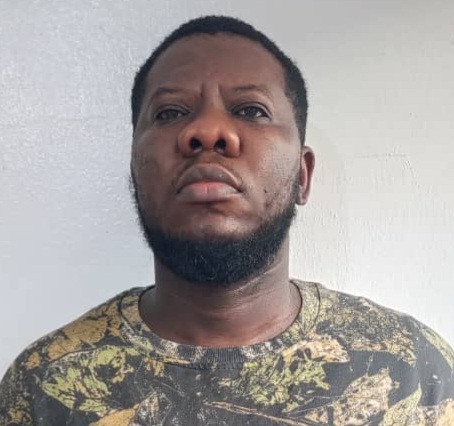
Justice Akintayo Aluko granted the Attorney-General of the Federation’s application to detain Lawrence Folawunmi pending the outcome of extradition proceedings initiated under the Extradition Act (Cap. E25), Laws of the Federation of Nigeria 2004. A lawyer from the AGF’s office presented the motion during Tuesday’s proceedings.
Officers from the Interpol Unit of the Force Criminal Investigation Department in Alagbon-Ikoyi, Lagos, arrested Folawunmi following directives from Inspector-General of Police Dr. Kayode Egbetokun.
Court documents reveal that Folawunmi is named in criminal case No. 3:21-00276, filed November 15, 2021, by a grand jury convened at the United States District Court for the Middle District of Tennessee, Nashville Division. The grand jury foreperson signed the indictment, which received certification from the court’s clerk and deputy clerk. Mark H. Wildasin, Acting United States Attorney, and Taylor J. Phillips endorsed the charging document.
United States authorities allege that Folawunmi fraudulently manipulated a firm into altering its payment information across at least eight separate transactions, resulting in the unauthorized transfer of approximately $1.24 million. The scheme represents what law enforcement characterizes as business email compromise, a sophisticated fraud method targeting corporate financial operations.
Counsel from the Attorney-General’s office argued the remand order was necessary to ensure Folawunmi’s availability throughout the extradition proceedings. The government’s position reflects standard practice in international criminal cases where flight risk concerns justify pretrial detention pending resolution of jurisdictional and legal questions.
Defense attorney W. Liadi did not contest the remand application but requested a brief adjournment to prepare and file responses to the extradition suit. The defense counsel’s non-opposition to remand while seeking time to mount a legal challenge represents a tactical approach that acknowledges the immediate detention reality while preserving options to contest the underlying extradition request.
The case highlights Nigeria’s role in international efforts to combat cybercrime, particularly business email compromise schemes that have become increasingly sophisticated and costly for corporations worldwide. Nigerian nationals have figured prominently in US prosecutions of such frauds, though law enforcement officials emphasize that perpetrators represent a small fraction of Nigeria’s population and that many Nigerians work legitimately in technology and financial sectors.
Business email compromise schemes typically involve criminals gaining access to corporate email systems or creating convincing imitations of legitimate business communications.
Perpetrators then manipulate payment instructions, redirecting funds intended for legitimate vendors or business partners into accounts controlled by the fraud network. The crimes require technical sophistication, social engineering skills and often international coordination among criminal conspirators.
The $1.24 million alleged loss in Folawunmi’s case represents a substantial but not unusual sum for such schemes. The FBI’s Internet Crime Complaint Center has documented business email compromise losses totaling billions of dollars annually, with individual cases ranging from tens of thousands to tens of millions of dollars. The crimes affect businesses of all sizes, though small and medium enterprises often lack the cybersecurity resources and training programs that might prevent successful attacks.
The extradition process in Nigeria follows established legal procedures designed to balance international law enforcement cooperation with protection of individual rights. The Extradition Act requires judicial review of extradition requests, examination of supporting evidence and assessment of whether charged offenses meet criteria for extradition under relevant treaties and domestic law.
Nigeria and the United States maintain an extradition treaty that facilitates transfer of accused individuals between the two countries, though the process can extend months or years depending on legal challenges, evidentiary issues and procedural complexities.
Courts must determine whether alleged conduct constitutes crimes under both nations’ laws—the “dual criminality” requirement—and whether extradition would violate Nigerian constitutional protections or human rights standards.
Defense counsel’s request for time to prepare responses suggests Folawunmi may contest extradition on various grounds. Common challenges in extradition cases include arguments about identity misidentification, lack of sufficient evidence linking the accused to alleged crimes, concerns about fair trial prospects in the requesting country, or claims that extradition would violate human rights protections.
The involvement of Acting United States Attorney Mark H. Wildasin in endorsing the indictment indicates federal prosecutors view the case as sufficiently significant to warrant attention from senior leadership in the Middle District of Tennessee. Federal districts across the United States have made business email compromise prosecutions a priority, recognizing the substantial economic harm these schemes inflict on American businesses and the challenges of pursuing perpetrators operating internationally.
The timing of the case—with an indictment filed in 2021 but arrest occurring in 2024—reflects common delays in international criminal matters. Locating defendants in foreign jurisdictions, coordinating between law enforcement agencies across national boundaries, assembling extradition documentation and navigating diplomatic channels all contribute to extended timelines between charges and arrests.
Inspector-General Egbetokun’s directive for Folawunmi’s arrest demonstrates Nigerian law enforcement cooperation with international partners on cybercrime investigations.
Nigeria has faced criticism over the years for allegedly insufficient action against cybercriminals operating within its borders, though authorities have increasingly prioritized such cases and collaborated with foreign agencies including the FBI, Secret Service and Interpol.
The Force Criminal Investigation Department’s Interpol Unit in Lagos serves as a key nexus for international law enforcement coordination involving Nigerian suspects or victims. The unit processes extradition requests, facilitates information sharing between Nigerian police and foreign agencies and conducts investigations with transnational dimensions.
As the extradition proceedings advance, the case will test legal mechanisms governing international criminal cooperation between Nigeria and the United States. The outcome will affect not only Folawunmi’s immediate liberty but potentially establish precedents or clarify procedures applicable to future extradition requests involving cybercrime allegations.
If extradition is granted and Folawunmi is transferred to United States custody, he would face trial in federal court in Tennessee, where conviction on wire fraud charges could result in substantial prison sentences. Federal sentencing guidelines consider factors including loss amount, number of victims, role in the offense and criminal history when determining appropriate punishment.
The broader context involves ongoing international efforts to combat cybercrime through enhanced law enforcement cooperation, improved information sharing and harmonization of legal frameworks across jurisdictions.
Cases like Folawunmi’s demonstrate both the reach of transnational criminal networks and the expanding capacity of law enforcement agencies to pursue suspects across international boundaries, though significant challenges remain in detecting, investigating and prosecuting crimes conducted through digital means across multiple countries.
Credit: Punchng




