

MINNA, Nigeria — Armed raiders mounted on motorcycles massacred at least 30 civilians and incinerated homes and businesses during coordinated predawn assaults on three villages in northwestern Nigeria’s Niger State on Saturday, survivors fleeing the violence told Reuters, marking the latest escalation in the region’s deepening security catastrophe.
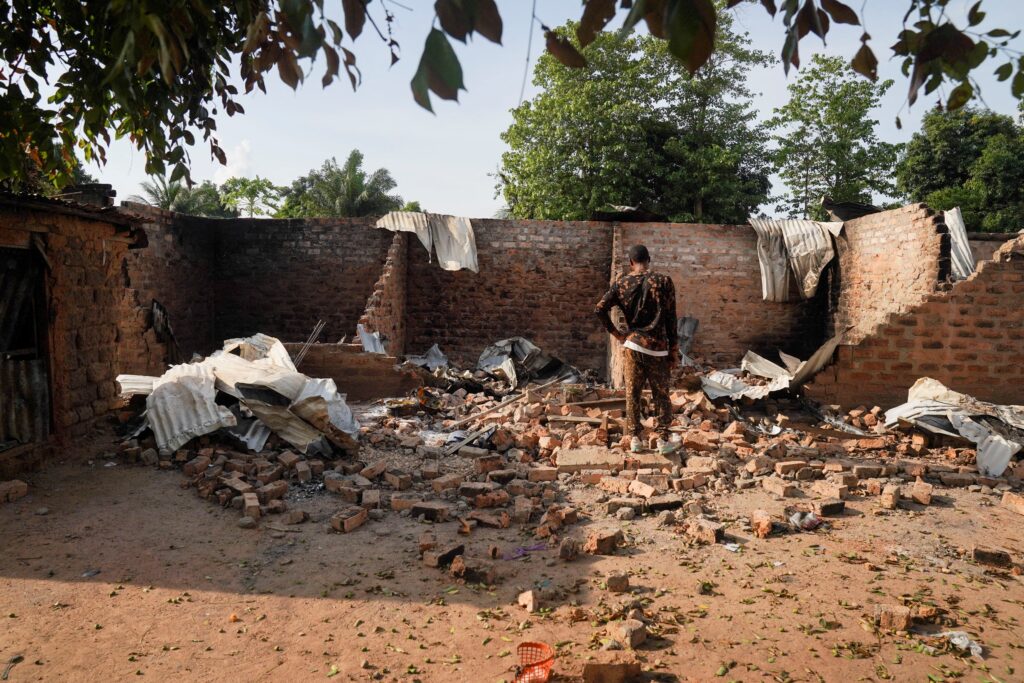
The attacks targeted communities in Borgu Local Government Area near Nigeria’s border with Benin Republic, where heavily armed groups locally termed “bandits” have unleashed waves of deadly violence, mass abductions for profit, and forced displacement affecting thousands across northern Nigeria’s rural heartland.
Insecurity has emerged as a defining crisis confronting the Nigerian government, with mounting public pressure demanding authorities restore order to regions increasingly characterized by lawlessness and predatory violence against vulnerable farming communities.
Wasiu Abiodun, spokesman for the Niger State police command, confirmed the assault on Tunga-Makeri village, though his initial casualty figures proved substantially lower than accounts provided by multiple witnesses who experienced the violence directly.
“Suspected bandits invaded Tunga-Makeri village … six persons lost their lives, some houses were also set ablaze, and a yet-to-be ascertained number of persons were abducted,” Abiodun stated in an official notification issued Saturday. He acknowledged that assailants subsequently advanced to Konkoso village, though details regarding additional attacks remained incomplete in police communications.
Jeremiah Timothy, a Konkoso resident who escaped to a nearby locality, described how the raid on his community commenced in the early morning hours with sporadic gunfire that rapidly intensified into sustained assault.
“At least 26 people were killed so far in the village after they set the police station ablaze,” Timothy recounted, explaining that attackers entered Konkoso approximately 6:00 a.m. local time while firing weapons indiscriminately at civilians and structures. He reported hearing military aircraft overhead during the attack, suggesting government forces attempted aerial response to the unfolding massacre.
Another witness requesting anonymity for security concerns described a massive assault force exceeding 200 motorcycles sweeping through the region in what appeared to be a carefully coordinated multi-village operation. The scale and organization of the assault force indicates sophisticated planning and substantial manpower unavailable to opportunistic criminal bands, raising questions about the nature and capabilities of groups Nigerian authorities characterize as “bandits.”
Auwal Ibrahim, a Tunga-Makeri resident, provided harrowing testimony about the approximately 3:00 a.m. local time assault on his community that initiated the night’s violence.
“The bandits stormed our town around 3:00 a.m. (local time), riding so many motorcycles while shooting sporadically, beheading six people and killing others. They set shops on fire and forced the whole village to flee,” Ibrahim told Reuters. He emphasized that numerous villagers remain too terrified to return home as armed groups continue operating in proximity to their devastated communities.
Punch Nigeria confirmed that the coordinated assaults unfolded across February 14, with attackers methodically moving between villages while overwhelming minimal security presence and terrorizing civilian populations. The news organization’s investigation corroborated witness accounts of systematic violence including executions, arson targeting both residential and commercial structures, mass abductions, and the destruction of a police outpost.
The initial raid struck Tunga-Makeri on Friday evening, where assailants killed six residents and systematically burned homes before advancing to additional targets. Mohammed Ibrahim, an eyewitness interviewed by Punch, described how raiders encountered negligible resistance from security forces, emboldening their progression to Paso and subsequently to other villages including Pisa.
“They moved to another village called Pisa again to carry out another operation. Seven people have been slaughtered by the bandits in Konkoso,” Mohammed Ibrahim explained, his account documenting the methodical nature of the multi-location assault. “This is how they destroyed the Pissa police outpost. So far, 26 deaths have been recorded in the Konkoso bandit attack.”
The destruction of a police station during the rampage demonstrates both the raiders’ military capabilities and the severe security vacuum afflicting rural northwestern Nigeria. That armed groups can assault and destroy law enforcement facilities with apparent impunity underscores the government’s struggle to maintain basic state authority across vast territories where banditry has metastasized from nuisance criminality into an existential threat to communities.
The Niger State Police Command confirmed the attacks occurred but declined to address questions regarding the police station’s destruction or provide comprehensive casualty assessments. Spokesman Abiodun indicated that a joint security team comprising multiple agencies had been deployed to affected areas to evaluate the situation, secure surviving residents, and attempt rescuing abducted victims.
“On 14/2/2026 at about 6 a.m., a report was received indicating that at about 3 a.m., suspected bandits invaded Tunga-Makeri village via Shafachi district, Borgu LGA. During the attack, six people lost their lives,” Abiodun stated in the official police account. “Some houses were also set ablaze, and a yet-to-be ascertained number of persons were abducted, as the terrorists were also reported to have moved to Konkoso village. Other details are still sketchy.”
The discrepancy between official police casualty figures acknowledging six deaths in Tunga-Makeri and witness accounts documenting at least 30 deaths across multiple villages reflects persistent challenges in documenting violence in remote rural areas where government presence remains minimal and communication infrastructure proves unreliable. Survivors often flee to distant locations before authorities arrive, while fear of retaliation discourages cooperation with investigators.
The Borgu attacks exemplify a broader pattern of escalating violence across northwestern Nigeria, where armed groups have evolved from cattle rustling and sporadic raids into sophisticated criminal enterprises controlling territory, taxing populations, and challenging state authority. These groups maintain extensive motorcycle fleets enabling rapid mobility across difficult terrain, sophisticated weapons rivaling security forces’ capabilities, and intelligence networks identifying vulnerable targets.
The terminology “bandits” employed by Nigerian authorities and media understates the scale and nature of the security threat. Many groups operate with quasi-military organization, maintaining camps in forested areas, coordinating multi-village operations, and demonstrating tactical sophistication suggesting training and leadership beyond typical criminal organizations. Some maintain links to extremist groups operating in Nigeria’s northeast, though the extent of ideological alignment versus pragmatic cooperation remains debated among security analysts.
Mass abductions for ransom have become a primary revenue source for these organizations, with families forced to pay substantial sums for relatives’ release. Schools, religious institutions, and entire villages have been targeted, with captives sometimes held for months while negotiations proceed. The profitability of kidnapping fuels the groups’ expansion and emboldens increasingly brazen operations.
Rural communities bear disproportionate suffering from this violence, lacking resources to hire private security or relocate to safer areas. Farmers frequently abandon fields due to abduction risks, creating food security challenges as agricultural production declines in affected regions. Markets and commercial activity collapse when traders fear traveling roads controlled by armed groups, further impoverishing already marginalized populations.
The Nigerian government has deployed military forces to combat banditry, conducting air strikes against suspected camps and ground operations to reclaim territory. However, the vast ungoverned spaces across northwestern Nigeria, porous borders facilitating weapons flows, and limited intelligence on group movements complicate military responses. Corruption within security forces occasionally enables bandits to evade operations through advance warning or safe passage arrangements.
State governments have attempted various approaches including amnesty programs offering financial incentives for bandits to surrender weapons, communication blackouts disrupting group coordination, and livestock market restrictions reducing rustling profitability. These initiatives have produced mixed results, with some former bandits returning to violence after exhausting amnesty payments, while communication restrictions also hamper legitimate economic activity and emergency response.
Civil society organizations and traditional leaders advocate addressing root causes including poverty, unemployment, ethnic tensions over land and resources, and youth marginalization that makes banditry attractive to young men lacking alternative economic opportunities. However, structural reforms require long-term investment and political will often overshadowed by demands for immediate security responses.
The international community has provided limited assistance to Nigeria’s security challenges, with Western partners offering training and intelligence support while expressing concerns about human rights violations by security forces. Regional cooperation through the Economic Community of West African States remains constrained by member states’ own security challenges and limited resources for coordinated action.
For residents of Tunga-Makeri, Konkoso, and surrounding villages now displaced by Saturday’s violence, immediate survival takes precedence over long-term solutions. Sheltering with relatives in safer locations or in makeshift camps, they face uncertain futures without homes, livelihoods, or confidence that authorities can protect them from future attacks.
Security operations continue in affected communities as forces work to secure areas and locate abducted residents, though the raiders’ head start and familiarity with local terrain typically enable escape before military reinforcements arrive. Previous patterns suggest abducted victims will face weeks or months of captivity while families scramble to assemble ransom payments, with those unable to pay sometimes killed or held indefinitely.
The psychological trauma inflicted on survivors extends beyond immediate physical danger. Witnessing neighbors beheaded, homes destroyed, and communities scattered creates lasting mental health impacts compounded by limited access to counseling or support services in rural areas. Children who experience such violence carry these traumas into adulthood, potentially perpetuating cycles of violence and instability.
As Nigeria approaches elections and political attention focuses on national issues, the grinding violence in rural northwestern communities risks becoming normalized—a tragic backdrop to national life rather than an urgent crisis demanding comprehensive response. For the at least 30 people killed Saturday in obscure villages far from power centers, their deaths may warrant brief headlines before fading from public consciousness.
Yet each massacre represents individual lives destroyed, families shattered, and communities traumatized. The accumulation of such violence across hundreds of incidents annually threatens Nigeria’s social fabric and territorial integrity, raising fundamental questions about state capacity and the social contract between government and citizens. Without dramatic improvements in security, governance, and economic opportunity, northwestern Nigeria faces a future where violence becomes the defining reality for millions trapped in zones of lawlessness.
Reuters/Punchng




