

ABUJA, Nigeria — The final 130 schoolchildren held captive following a mass kidnapping at a Catholic boarding school in Nigeria’s Niger State have been freed, presidential spokesman Sunday Dare announced Sunday, concluding a month-long ordeal that gripped the nation and highlighted persistent security failures in the country’s northern regions.
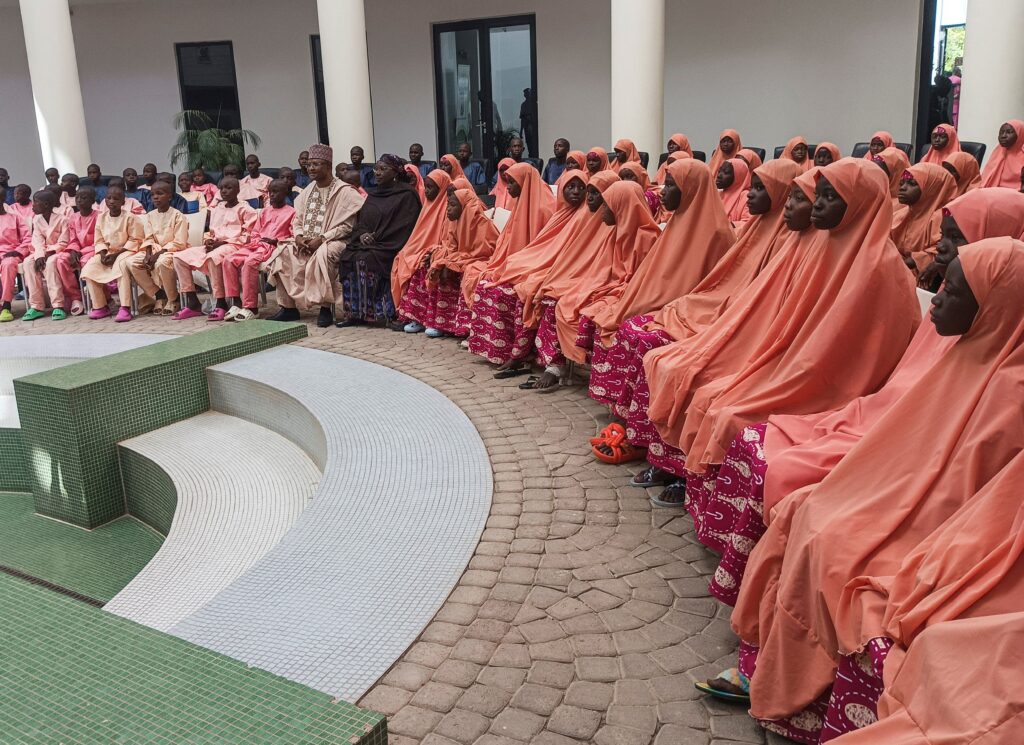
“Another 130 abducted Niger State pupils released, none left in captivity,” Dare stated on X, accompanying his announcement with a photograph showing smiling children. The spokesman did not disclose circumstances surrounding their release, including whether ransom was paid or how negotiations unfolded.
Armed bandits stormed St. Mary’s Private Catholic School in Papiri village during the early morning hours of November 21, abducting 303 children and 12 teachers, the Christian Association of Nigeria stated. The victims included boys and girls, some as young as 10 years old, Reuters confirmed.
Within 48 hours of the initial assault, 50 students managed to escape and return to their families, the Christian Association of Nigeria said at the time. On December 8, Nigerian government officials announced that security forces had rescued 100 of the kidnapped victims through military operations.
Dare’s Sunday announcement placed the final group of released students at 130, slightly fewer than previously believed to remain in captivity. CNN has contacted the Nigerian president’s office seeking clarification on the discrepancy. Presidential spokesman Onanuga stated the total number of freed students now stands at 230, though the mathematics of successive releases leaves questions about the exact accounting of victims.
The November abduction represents the latest episode in an escalating pattern of armed group attacks targeting vulnerable civilian populations, particularly educational institutions, for ransom extraction. The incident sparked national outrage over deteriorating security conditions in northern Nigeria, where criminal gangs have made school kidnappings a lucrative enterprise with devastating social consequences.
Nigeria’s security crisis stems from multiple overlapping conflicts. Violence repeatedly erupts from communal and ethnic tensions, as well as from disputes between farmers and herders competing for limited access to land and water resources in regions experiencing environmental degradation and population pressure. These underlying tensions create opportunities for armed criminal networks to operate with relative impunity.
The proliferation of school kidnappings accelerated dramatically after Boko Haram militants abducted 276 girls from a government secondary school in Chibok in April 2014, an international incident that generated the #BringBackOurGirls campaign and exposed Nigeria’s inability to protect students in conflict-affected regions. That abduction established a template that criminal gangs have since exploited, recognizing that schools provide concentrated populations of valuable hostages whose captivity generates intense public pressure on government officials to negotiate.
The phenomenon has transformed education into a high-risk activity in parts of northern Nigeria, with many schools closing temporarily or permanently due to security concerns. Parents face agonizing decisions about whether to send children to school, balancing educational aspirations against kidnapping risks. The educational disruption compounds existing development challenges in regions already struggling with poverty, unemployment and limited government services.
Armed bandit groups operating in Nigeria’s northwest and north-central regions have evolved into sophisticated criminal enterprises, often maintaining camps in remote forest areas beyond effective government control. These groups finance operations through kidnapping, cattle rustling and extortion, creating parallel economies that challenge state authority and undermine legitimate commerce.
The Nigerian government has deployed military and police forces to combat the armed groups, conducting operations that officials characterize as rescues though observers note many releases likely involve ransom payments that officials publicly deny. The reluctance to acknowledge ransom payments reflects political sensitivities around appearing to reward criminal behavior, even as families and communities frequently have no alternative to securing their children’s safety.
President Bola Tinubu’s administration has faced mounting criticism over its security strategy in northern regions, with opposition politicians and civil society organizations arguing that military operations alone cannot address the underlying governance failures that allow armed groups to flourish. Critics contend that effective responses require not just kinetic military action but comprehensive programs addressing youth unemployment, community development and restoration of state presence in ungoverned spaces.
The St. Mary’s abduction demonstrates how criminal networks have refined their operations, conducting nighttime raids on boarding schools where students are concentrated and vulnerable. The boarding school model, designed to provide quality education in regions with limited day schools, has become a liability in the current security environment, offering kidnappers easy access to large numbers of children in isolated locations with minimal security.
International observers have expressed concern about Nigeria’s deteriorating security situation and its regional implications. The country’s inability to secure its territory encourages similar criminal activity in neighboring states and undermines economic development across West Africa’s most populous nation. Foreign investors cite security concerns as a major impediment to operations in affected regions, limiting job creation and economic opportunities that might otherwise reduce the pool of potential recruits for armed groups.
The release of the final St. Mary’s students offers relief to families and communities that have endured weeks of uncertainty and anguish. However, it does little to address the systemic vulnerabilities that enabled the abduction or prevent future incidents. Without fundamental improvements in security sector effectiveness, community resilience and governance capacity in affected regions, Nigerian families will continue facing the impossible choice between pursuing education and ensuring their children’s safety.
As the freed students reunite with families and begin processing their traumatic experiences, questions persist about the long-term psychological impact of captivity and whether adequate mental health services exist to support their recovery. The broader challenge facing Nigeria is whether this latest high-profile release will catalyze meaningful security sector reforms or simply mark another chapter in an ongoing crisis that shows no signs of resolution.
CNN/Reuters




