

ABUJA, Nigeria (BN24) —South African maritime authorities have recovered 12 crew members alive after a Nigerian-flagged tugboat sank in rough seas off the country’s coast late Saturday, leaving one person dead and five others unaccounted for, Nigerian officials said Monday.
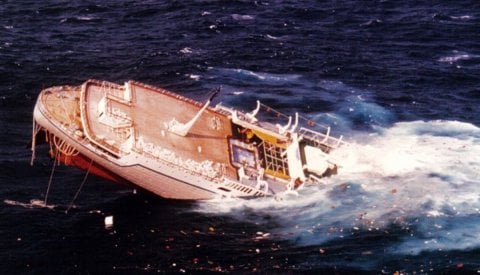
The vessel, identified as LEO, was carrying 18 people when it encountered trouble approximately 18 nautical miles offshore. According to information relayed to Nigerian authorities, the tugboat had traveled to South Africa for maintenance and was en route back to Lagos when it ran aground in stormy waters between Cape Town and Durban.
Nigeria’s Minister of State for Foreign Affairs, Bianca Odumegwu-Ojukwu, disclosed that Pretoria formally communicated details of the incident through diplomatic channels. In a statement issued in Abuja by her Special Assistant on Communication and New Media, Magnus Eze, the minister indicated that South Africa’s Ministry of Transportation had notified the Nigerian government of the sinking.
“The South Africa Ministry of Transportation informed us of this development,” the statement attributed to Odumegwu-Ojukwu said.
She further conveyed that the South African Maritime Safety Authority had coordinated rescue efforts and that surviving crew members were being transported to Port Elizabeth. Officials from the Nigerian High Commission were en route to receive them upon arrival, the statement added.
Authorities confirmed one fatality in the incident. Search-and-rescue teams continued their efforts Monday to locate the five missing crew members, with operations ongoing amid challenging maritime conditions.
The precise cause of the sinking has not yet been established. Maritime officials have not publicly outlined whether mechanical failure, severe weather, navigational error, or a combination of factors contributed to the accident. Investigations are expected once recovery efforts conclude.
Confirmed facts include the vessel’s identity as LEO, the presence of 18 people on board, the rescue of 12 survivors, and the confirmation of one death. Nigerian officials have acknowledged formal notification from South Africa’s transportation authorities and cited active coordination with maritime safety agencies.
What remains unclear is the sequence of events that led to the tugboat running aground. Authorities have yet to release technical assessments, weather reports at the time of the incident, or details regarding the tugboat’s seaworthiness following repairs.
Storm activity along South Africa’s southern coastline can be unpredictable, particularly in waters influenced by the confluence of the Atlantic and Indian Oceans. The stretch between Cape Town and Durban is known for complex currents and rapidly shifting weather systems, conditions that can pose hazards even for experienced crews.
The incident highlights ongoing risks facing commercial and auxiliary vessels operating along heavily trafficked African maritime corridors. Tugboats, often used for towing larger ships or supporting offshore operations, are typically built for resilience. However, their voyages across long distances especially after undergoing repairs, may expose vulnerabilities if mechanical systems are not fully optimized before departure.
Maritime analysts note that transnational vessel movements, such as traveling abroad for maintenance, are common practice in global shipping. Cost considerations, specialized shipyard capabilities, and scheduling constraints frequently determine where repairs occur. Yet the return journey, particularly across the open sea, demands rigorous inspection and certification to ensure seaworthiness.
Diplomatic coordination in emergencies of this nature is also routine but critical. The rapid notification from South Africa’s transportation ministry to Nigerian authorities underscores established maritime cooperation frameworks between coastal states. Embassies and high commissions typically play central roles in supporting affected nationals, facilitating medical care, and managing repatriation arrangements where necessary.
For Nigeria, a country with significant maritime trade and offshore oil infrastructure, incidents involving national vessels abroad carry both humanitarian and reputational dimensions. Ensuring transparent investigation outcomes and clear communication with families of the affected crew will likely remain a priority for officials in Abuja.
South Africa, meanwhile, maintains one of the continent’s more developed maritime oversight systems, with agencies such as the South African Maritime Safety Authority tasked with enforcing safety compliance and leading search-and-rescue missions. The success in recovering 12 survivors reflects operational capacity, though the ongoing search underscores the inherent unpredictability of maritime disasters.
Weather-related maritime accidents are not uncommon in the region. Seasonal storms, swells, and strong currents can escalate rapidly, leaving limited response time for smaller vessels. Experts emphasize the importance of updated navigational data, functioning communication equipment, and adherence to safety advisories issued by coastal monitoring services.
As rescue operations continue, attention may turn to whether distress signals were transmitted before the tugboat went down and how swiftly response teams were deployed. Such factors often prove decisive in survival outcomes.
Families of the crew members are awaiting further updates as authorities work to account for the missing. Officials have not indicated how long search efforts will continue, though maritime protocols generally sustain operations while there remains a reasonable prospect of recovery. Further details are expected once the investigations progress and maritime agencies release preliminary findings.





