

All worshippers abducted during coordinated attacks on churches in northern Nigeria last month have now been rescued, a leading Christian organization said Thursday, as Nigerian authorities simultaneously announced a new military operation aimed at stemming a surge in deadly assaults by armed groups across the region.
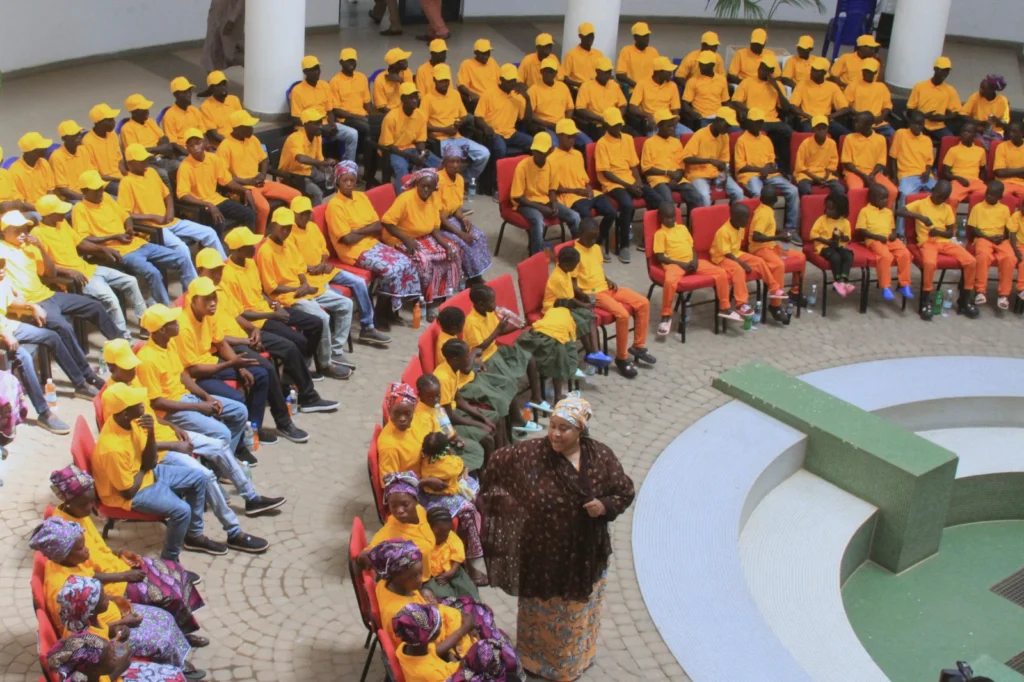
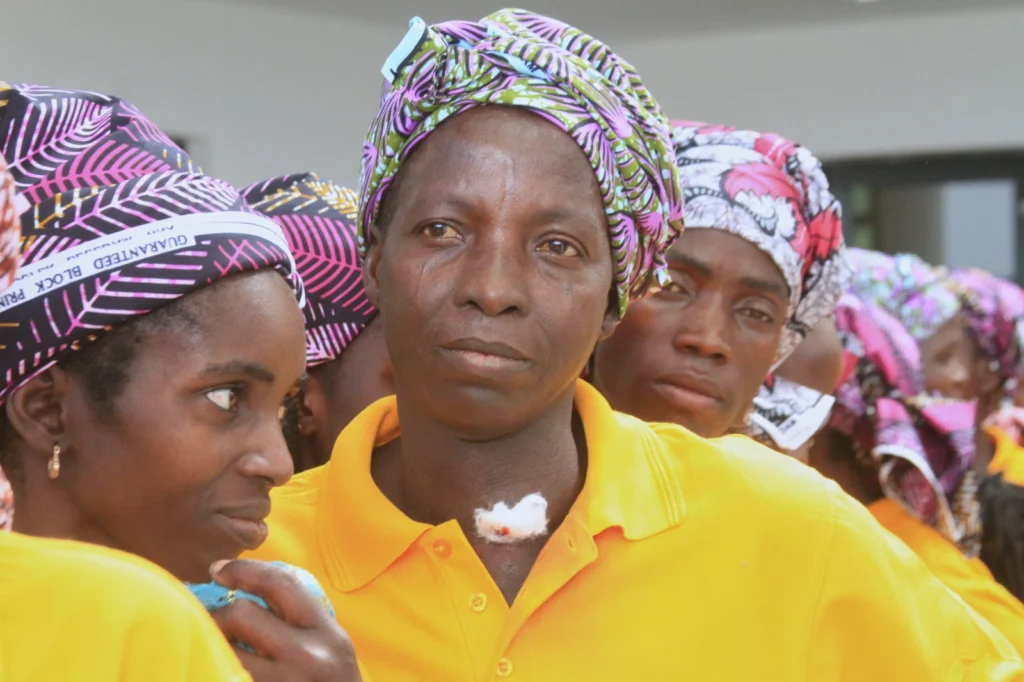
The Christian Association of Nigeria, known as CAN, said security forces have recovered all 166 churchgoers who were taken during raids on two churches in Kaduna state on Jan. 18, bringing an end to weeks of confusion, contradictory official statements and mounting fear among families and religious communities.
CAN attributed the outcome to sustained military operations and what it described as collective prayer but declined to provide details about how or when the captives were freed. Nigerian military officials, police and Kaduna state authorities did not immediately respond to requests for comment.
Gunmen stormed the churches during worship services, dragging congregants into surrounding forests, CAN said. Of the 177 people initially seized, 11 escaped in the immediate aftermath, leaving 166 unaccounted for. The association represents Christian congregations nationwide and has been one of the most vocal groups tracking abductions targeting religious communities in the north.
The episode drew international attention, including from President Donald Trump, who has repeatedly accused Nigeria’s government of failing to protect Christians, an allegation Abuja has rejected. Nigerian officials insist that insecurity affects communities regardless of religion and say they are working closely with international partners to confront militant violence.
Accounts of the church kidnappings have varied sharply. Police initially denied that any abductions had taken place, later revising their position and saying dozens of people listed as kidnapped had actually fled during the chaos and later returned home. CAN has disputed those claims, saying the discrepancies deepened mistrust between communities and security agencies.
On Thursday, the Rev. John Hayab, head of CAN’s northern chapter, said all those taken had now been freed, describing the episode as resolved “after all the drama and disagreements.” He emphasized that no ransom was paid by the churches.
“What we know is that they have been rescued,” Hayab said. “Nobody asked us to gather any money, and nobody collected a penny from us. Of course, the bandits still have their demands, but we did not have any amount to give them.”
The Rev. Caleb Ma’aji, CAN’s leader in Kaduna state, also confirmed the release, saying he had returned from the government house in Kaduna, where the governor was preparing to receive the freed churchgoers. “The stage is set for them to be brought,” he said. “This is a result of the prayers we have offered.”
Separately, the Kaduna state governor announced that all Christians abducted in three simultaneous church attacks last month had been released. Gov. Uba Sani said 89 captives were rescued on Wednesday alone, though he did not explain how the operation was carried out. Analysts have noted that in some cases, authorities or intermediaries quietly pay ransoms, a claim officials routinely deny.
The numbers surrounding the kidnappings have remained contested. Local residents and advocacy groups initially put the figure at about 168 abducted, while the governor cited 183 taken across three incidents.
“Following this incident, I approached the president and the national security adviser on the need to establish a military base, particularly around the Regina general area, which has long been identified as a flashpoint,” Sani said during a speech.
The rescues come amid a broader escalation of violence in northern and central Nigeria. In Kwara state, local officials said at least 162 people were killed earlier this week when gunmen attacked the Muslim-majority villages of Woro and Nuku, torching homes and looting shops. It was one of the deadliest single attacks in the country outside traditional conflict zones.
Amnesty International’s Nigeria office described the assault as “a stunning security failure.” No group has claimed responsibility, but residents and officials have pointed to Islamic militant factions operating across Nigeria’s north and central regions.
In response, President Bola Tinubu’s office said a Nigerian army battalion would be deployed to the Kaiama area of Kwara state, where security presence has historically been limited. The new command will lead Operation Savannah Shield, which Tinubu said is intended to “protect defenseless communities.”
Kwara State Gov. AbdulRahman AbdulRazaq said the attack may have been retaliation for recent counterterrorism operations in the region, some of which were aided by intelligence from local residents. Analysts say such attacks often serve both as punishment and intimidation, discouraging communities from cooperating with authorities.
Nigeria has struggled for years to contain violence by a patchwork of armed groups, including jihadist factions, criminal gangs and militias seeking territorial control. In November, Tinubu declared a state of emergency on security and announced plans to recruit more police officers, deploy forest guards and overhaul intelligence coordination following waves of mass abductions.
Despite those efforts, analysts say the military remains overstretched, fighting insurgents in the northeast, armed gangs in the northwest, separatist unrest in the southeast and rising violence in central states. Critics argue that limited investment in modern surveillance, intelligence gathering and rapid-response capabilities has blunted the effectiveness of security operations.
The insecurity has also fueled political and religious tensions internationally. President Donald Trump has asserted, without presenting evidence, that Christians are being specifically targeted in Nigeria. While Christians have been among the victims, analysts say most people killed by armed groups in the north are Muslims, reflecting the region’s demographics and the indiscriminate nature of many attacks.
The United States has nonetheless expanded security cooperation with Nigeria. U.S. forces carried out airstrikes on Dec. 25 against what Washington described as terrorist targets in northwest Nigeria, and a small contingent of American officers remains on the ground in an advisory role.
Speaking Thursday in Washington, Trump reiterated his claims. “We knocked the hell out of them the other day in Nigeria because they were killing Christians,” he said.
Experts caution that framing the violence solely along religious lines risks obscuring its root causes, which include weak governance in rural areas, competition among armed groups and long-standing grievances over land and resources. James Barnett, a researcher at the Washington-based Hudson Institute, said militant groups are expanding into new areas such as Kwara because of growing competition in their traditional strongholds.
“They’re going farther afield because they’re finding a lot of competition from rival groups in the areas where they traditionally operated,” Barnett said.
For now, the release of the abducted churchgoers has brought relief to families and congregations, but it has also highlighted the fragility of security in northern Nigeria. Community leaders say lasting peace will depend not only on military deployments, but also on rebuilding trust, improving intelligence and addressing the conditions that allow armed groups to thrive.
Reuters/AP




