

Former President Barack Obama said Friday that the conduct of federal immigration agents in Minnesota under the Trump administration mirrors patterns more commonly associated with authoritarian governments, escalating his criticism of intensified immigration enforcement operations in the state.
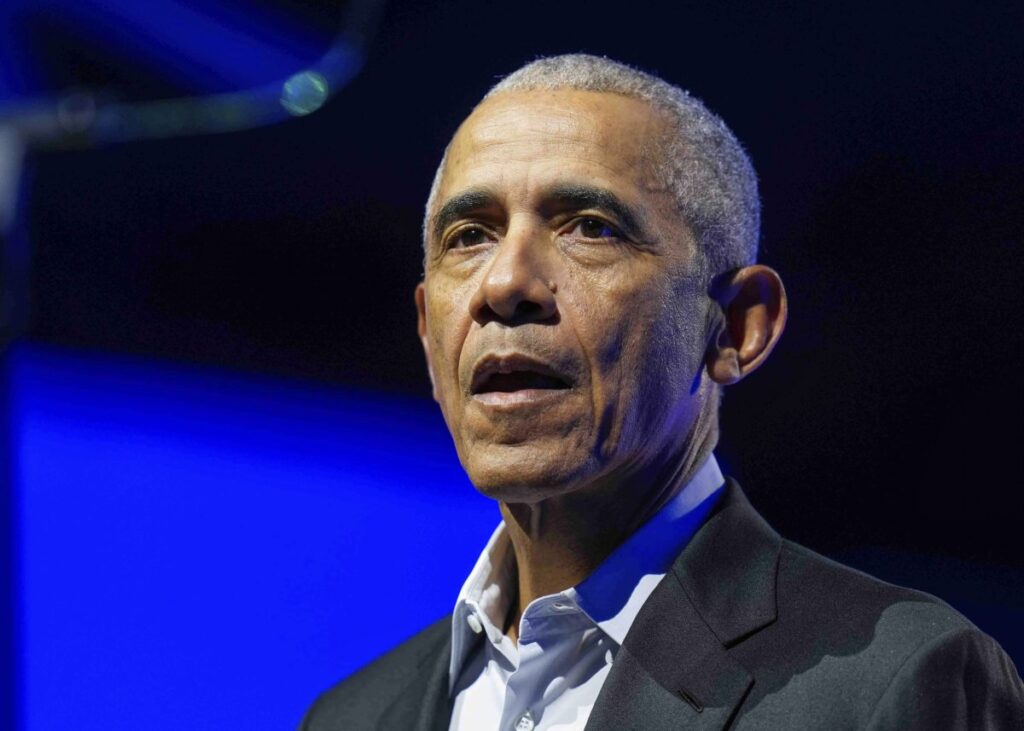
Speaking during an interview released Saturday with podcast host Brian Tyler Cohen, Obama described what he called “rogue behavior” by certain agents of the federal government as “deeply concerning and dangerous.” He argued that the deployment and tactics used during recent operations in Minneapolis and St. Paul were without precedent in modern American history.
“It is important for us to recognize the unprecedented nature of what ICE was doing,” Obama said, referring to Immigration and Customs Enforcement. He asserted that agents were sent into cities “without any clear guidelines” and engaged in actions that included removing individuals from their homes and dispersing crowds with tear gas, even when demonstrators were not breaking laws.
Obama also commended Minnesota residents who took part in peaceful protests, saying civic engagement remains central to democratic accountability. He described the demonstrations as a necessary spotlight on conduct that, in his words, resembled practices seen “in authoritarian countries” and “in dictatorships,” but not traditionally in the United States.
The former president’s remarks followed the Trump administration’s announcement earlier this week that it would wind down a months-long immigration enforcement surge in Minnesota. White House border adviser Tom Homan said Feb. 12 that federal immigration agents would begin drawing down operations in the state.
The enforcement surge, which involved roughly 3,000 federal agents, came after two fatal incidents in Minneapolis in January in which U.S. citizens Renee Nicole Good and Alex Pretti were killed during encounters with immigration agents. The shootings ignited widespread protests in Minnesota and prompted renewed scrutiny of federal enforcement tactics.
Obama characterized the operations as “deeply concerning and dangerous,” singling out what he described as aggressive confrontations captured on widely circulated videos. He maintained that the scale and manner of the deployment distinguished it from prior federal immigration actions.
Administration officials have defended the operations. Vice President JD Vance rejected allegations that agents used a five-year-old child as leverage in an enforcement action. Responding to critics, Vance argued that law enforcement cannot be constrained from arresting individuals solely because they are parents, framing the criticism as impractical and inconsistent with public safety obligations.
The White House has consistently emphasized its view that stricter immigration enforcement is necessary to uphold federal law and deter unlawful entry. Officials have also pushed back against characterizations of agents’ conduct as excessive, contending that operations were conducted within legal bounds and in response to specific enforcement priorities.
Obama’s comments mark a notable reentry into the national political debate. During much of former President Joe Biden’s term, Obama maintained a comparatively low public profile, allowing emerging Democratic leaders to take center stage. His latest interview signals a more assertive posture as disputes over immigration enforcement intensify.
In addition to addressing immigration policy, Obama commented on the broader tone of political discourse. Earlier this month, a video posted and later removed from President Donald Trump’s social media account depicted Obama and former first lady Michelle Obama in racially offensive imagery. Trump has said a staff member was responsible for the post and indicated he had not reviewed the final frames before it was shared.
Without naming Trump directly, Obama criticized what he described as a “clown show” atmosphere in segments of social media and television commentary. He suggested that political figures who once felt compelled to demonstrate decorum now appear unconcerned with maintaining traditional standards of respect.
“I think it’s important to recognize that the majority of the American people find this behavior deeply troubling,” Obama said, adding that such controversies can serve as distractions from substantive policy debates.
Obama’s intervention underscores the degree to which immigration enforcement has become one of the defining fault lines of the 2026 political landscape. His comparison of ICE tactics to authoritarian regimes is among his sharpest critiques of federal law enforcement actions since leaving office. Such language is likely to galvanize progressive activists while intensifying partisan divisions.
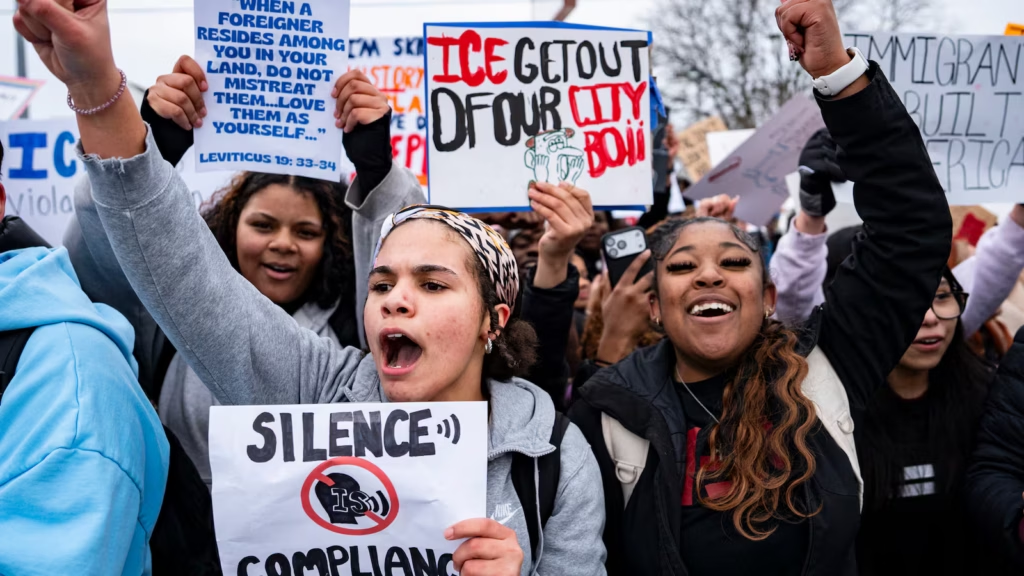
The Minnesota operations illustrate the tension between federal authority and local response. While immigration enforcement is a federal responsibility, the visibility of agents in urban neighborhoods — and the optics of heavily armed personnel conducting operations — have heightened public sensitivity. In the age of viral video, isolated incidents can quickly shape national narratives.
At the same time, the administration’s defenders argue that the federal government must retain the ability to enforce immigration laws consistently across states, particularly when local jurisdictions decline to cooperate fully. They contend that characterizing enforcement efforts as authoritarian risks undermining confidence in institutions tasked with public safety.
The deaths of Good and Pretti have become focal points in the debate. For critics, the incidents symbolize the potential human cost of aggressive enforcement. For supporters of the crackdown, they represent tragic but isolated outcomes within a broader effort to reassert border and interior enforcement priorities.
Negotiations between congressional Democrats and the White House over Department of Homeland Security funding add another layer of complexity. Democrats have sought new constraints on immigration agents in exchange for supporting funding measures. The outcome of those talks could shape operational guidelines for years to come.
Obama’s remarks also reflect a broader concern among some political leaders about democratic norms and civil discourse. His assertion that public protests in Minnesota offer “hope” suggests a belief that civic activism can serve as a corrective force when institutional oversight is perceived as insufficient.
Whether his renewed public engagement influences legislative negotiations or shifts public opinion remains uncertain. What is clear is that the immigration debate — already a central theme of President Donald Trump’s administration — is now entwined with questions about executive power, federal-state relations and the resilience of democratic norms.
As the Minnesota operations wind down, the broader national conversation appears far from settled.
CNN/USATODAY




