

LIMA, Peru (BN24) — Peru’s government has placed more than 700 districts under a state of emergency following weeks of torrential rainfall, landslides and flooding that have left dozens dead and severely damaged infrastructure across the country.
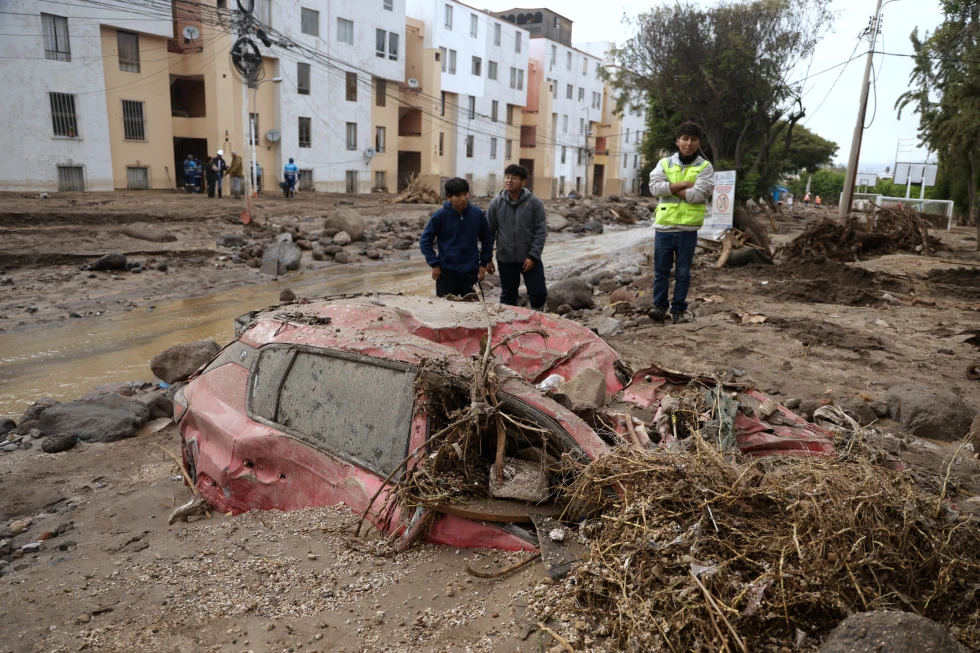
The decree, endorsed by interim President José María Balcázar and formalized in the nation’s official gazette Wednesday, enables authorities to accelerate the release of emergency funds. The measure is intended to allow local and regional governments to reinforce bridges and highways, restore electricity and water systems, and safeguard vulnerable communities facing continued downpours.
The emergency order covers districts stretching from Peru’s Pacific coastline to the Andean highlands and into the Amazon basin a swath that represents nearly half of the country’s administrative divisions.
Government officials attribute the extreme weather to rising ocean temperatures associated with the coastal climate pattern known as El Nino Costero. Specialists say warming waters along the Pacific shoreline are intensifying evaporation, which in turn fuels heavier rainfall and swells river systems beyond their capacity.
Although rainfall has intensified in recent days, the newly installed administration had been unable to enact emergency measures sooner. President Balcázar was sworn in only this week after naming a Cabinet, ending a ministerial vacuum that began Feb. 17 when his predecessor, José Jerí, was removed from office amid a corruption and influence-peddling investigation.
The Ministry of Transportation indicated Wednesday that approximately 931 kilometers (580 miles) of roadway have sustained damage nationwide. The heaviest destruction is concentrated in four regions that have borne the brunt of the storms. Officials noted that the affected routes serve more than 500,000 people weekly, underscoring the disruption to commerce, agriculture and daily life.
Authorities have confirmed that 68 people have died from rain-related incidents since December. Among the latest fatalities were a father and son carried away by a landslide in the southern region of Arequipa. In the capital, Lima, a police officer drowned in the Rimac River while attempting to rescue a dog stranded by surging floodwaters descending from the Andes.
Meteorological authorities caution that Pacific Ocean temperatures remain above seasonal averages and that El Niño Costero conditions are projected to intensify slightly in March. Elevated sea surface temperatures typically generate high evaporation rates, feeding moisture-laden systems that produce prolonged and extreme rainfall across coastal and mountainous terrain.
The mounting damage highlights Peru’s longstanding vulnerability to climate-driven disasters. Many rural roads and bridges particularly in mountainous regions are susceptible to erosion and collapse during sustained downpours. In low-lying urban neighborhoods, inadequate drainage systems frequently exacerbate flooding.
While the emergency declaration expedites spending and coordination, implementation will test the capacity of regional governments already grappling with limited resources. Emergency designations in Peru allow authorities to bypass certain bureaucratic procedures, but reconstruction projects often face logistical and geographic hurdles.
The unfolding disaster also places immediate pressure on Balcázar’s fledgling administration. The leadership transition followed the ouster of Jerí, whose removal left the executive branch temporarily without a full ministerial team. That gap delayed formal action as storms intensified.
Analysts note that swift mobilization will be critical not only for humanitarian reasons but also for political stability. Peru has experienced repeated episodes of governmental turnover in recent years, and public confidence often hinges on effective disaster response.
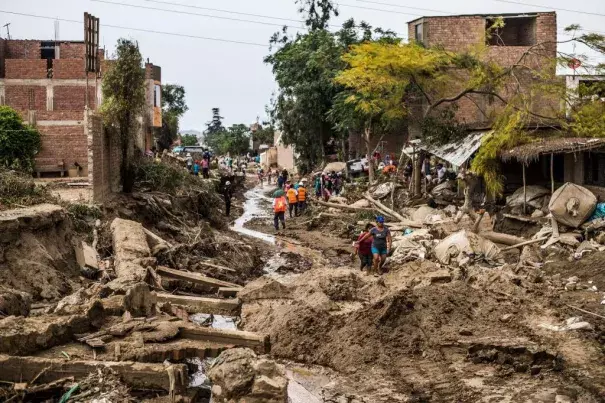
El Niño Costero differs from the broader El Niño phenomenon that affects global weather patterns. The coastal variant primarily influences Peru and neighboring Ecuador, periodically triggering severe flooding and landslides. Scientists have observed that climate variability may amplify the frequency and intensity of such events, though attribution studies remain ongoing.
Peru’s geography compounds the risk. The Andes create steep slopes prone to landslides, while rivers descending from the mountains can swell rapidly when rainfall intensifies. Communities in both remote highland villages and densely populated coastal cities face exposure.
Beyond immediate emergency response, the latest crisis underscores structural challenges confronting Peru and other Andean nations as ocean temperatures fluctuate. Rising Pacific waters not only increase rainfall but also threaten fisheries a vital sector for Peru’s economy. Warmer conditions can alter marine ecosystems, affecting anchovy stocks that support both domestic consumption and global fishmeal exports.
Infrastructure resilience remains another pressing concern. Repeated emergency declarations in recent years suggest that reactive measures alone may be insufficient. Long-term adaptation could require redesigning road networks, reinforcing riverbanks and modernizing drainage systems to withstand heavier precipitation cycles.
Climate researchers caution that episodic warming events such as El Niño Costero may interact with broader global warming trends, potentially intensifying their impact. Although not every heavy rainfall event can be directly attributed to climate change, cumulative patterns point to increasing volatility.
For residents in affected districts, however, the immediate priority is recovery restoring access to transportation, ensuring clean water supplies and preventing further casualties as the rainy season continues.
As meteorologists monitor Pacific conditions ahead of March, authorities face a narrowing window to fortify vulnerable regions before additional storms arrive. The effectiveness of the emergency decree and the government’s ability to translate funding into rapid on-the-ground action may shape both the humanitarian outcome and Peru’s political trajectory in the months ahead.





