

A ferry carrying more than 350 passengers and crew sank shortly after midnight near an island in the southern Philippines, killing at least 18 people and triggering a large-scale rescue operation involving coast guard vessels, naval ships and aircraft, Philippine officials said Monday.
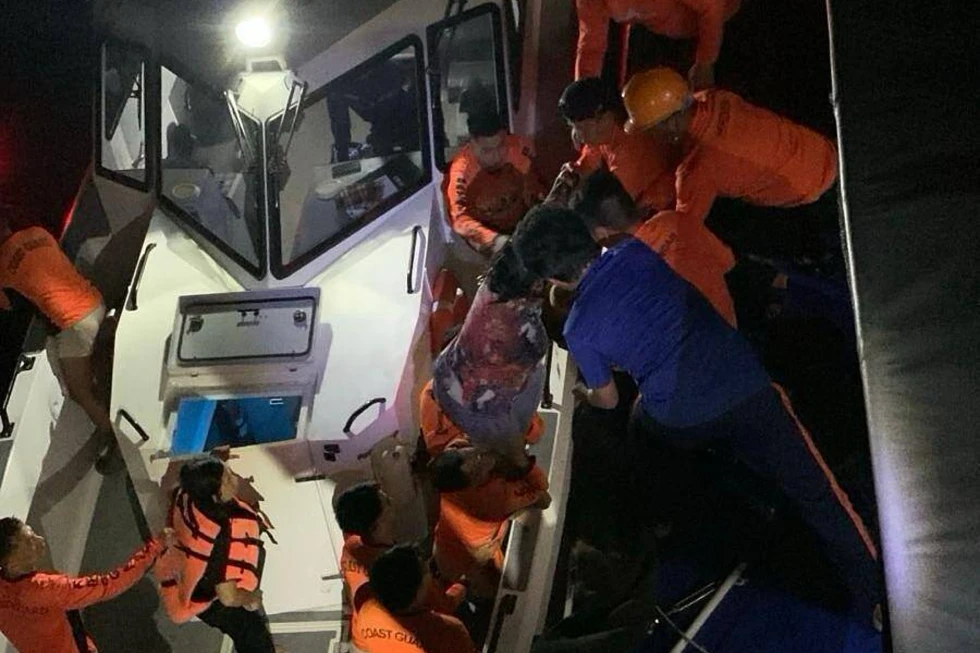
The steel-hulled cargo and passenger vessel, identified as the M/V Trisha Kerstin 3, went down roughly a nautical mile off the village of Baluk-baluk in Basilan province while en route from the southern port city of Zamboanga to Jolo island in Sulu province, according to the Philippine Coast Guard. The ship was traveling in calm weather conditions when it suddenly developed technical problems and began listing heavily before taking on water.
Coast guard Commander Romel Dua said the ferry abruptly tilted to one side, throwing passengers into the sea in near-total darkness. Panic spread quickly as people scrambled for flotation devices or clung to debris while the vessel continued to sink.
Among the survivors was Mohamad Khan, who recounted the chaos to volunteer rescuer Gamar Alih in an emotional account later shared on social media. Khan said he and his wife were holding their 6-month-old baby when the ferry lurched violently.
“My wife lost hold of our baby and all of us got separated at sea,” Khan said, his voice breaking as his wife wept beside him. Both parents were rescued, but their infant drowned, he said.
The ferry was carrying 332 passengers and 27 crew members, Dua told The Associated Press. Two coast guard safety officers were aboard the vessel and were able to immediately alert authorities after the ferry began to sink, prompting the rapid deployment of rescue assets. Both officers survived.
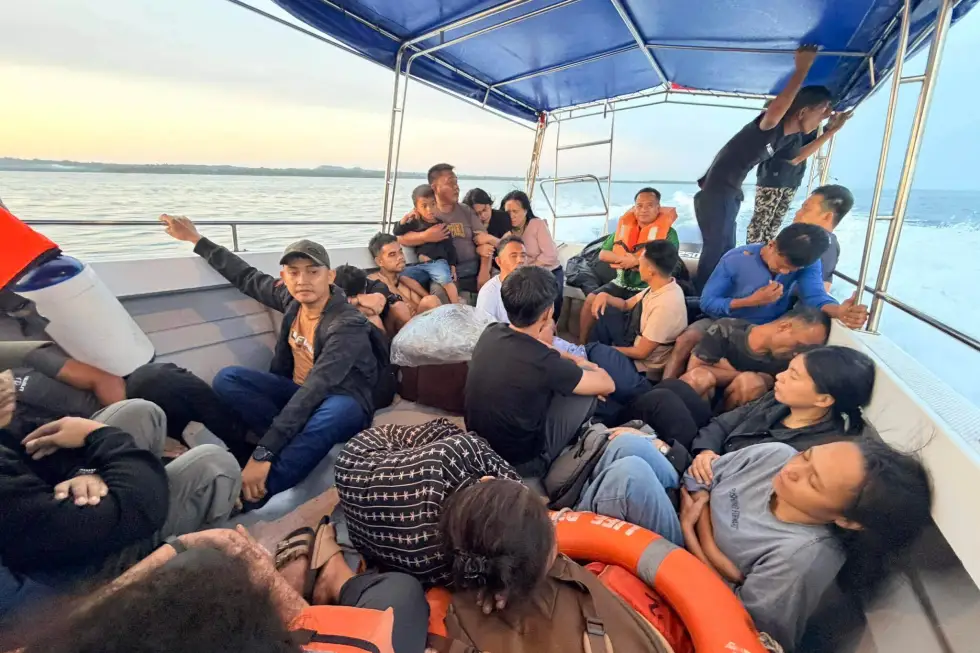
Rescue teams pulled at least 316 passengers and crew members alive from the water, while retrieval teams recovered 18 bodies, officials said. Search operations continued for about two dozen people believed to be missing, though officials cautioned that the number could change as passenger records are verified.
Coast guard and navy ships combed the waters off Basilan, joined by a surveillance aircraft, an air force Black Hawk helicopter and dozens of local fishing boats that rushed to assist after receiving distress calls. Survivors were taken to nearby ports, where ambulances and medical teams were waiting.
Basilan Governor Mujiv Hataman said several injured passengers and two of the recovered bodies were transported to Isabela City, the provincial capital, where provincial officials coordinated emergency care and family assistance.
The cause of the sinking was not immediately determined, Dua said, adding that a formal investigation would examine possible mechanical failures and crew actions. The coast guard had cleared the ferry for travel before it departed Zamboanga, and there were no initial indications the ship was overloaded, he said.
Authorities were also reviewing unconfirmed accounts that 15 individuals listed on the ferry’s manifest opted not to board at the last moment and requested refunds. If verified, that could reduce the number of people unaccounted for, Dua said.
Alih, a village councilor from Zamboanga City, told the AP that he joined the rescue effort after learning that relatives were aboard the ferry. All of his family members survived, he said, describing scenes of exhaustion and shock among those pulled from the water.
The sinking once again underscores the risks of sea travel in the Philippines, an archipelago of more than 7,600 islands where ferries are a primary mode of transportation, particularly in remote and conflict-affected regions such as Basilan and Sulu. Maritime accidents remain frequent, often linked to aging vessels, uneven enforcement of safety regulations and limited emergency response capacity in outlying provinces.
While officials emphasized that weather conditions were favorable at the time of the incident, safety advocates note that mechanical reliability and maintenance standards remain persistent concerns across the country’s ferry system. Even vessels that pass routine inspections may suffer from undetected structural or engine issues, particularly when operating under tight commercial schedules.
The tragedy also revived memories of past maritime disasters in the Philippines, including the sinking of the ferry Dona Paz in December 1987 after it collided with a fuel tanker in the central Philippines. That catastrophe killed more than 4,300 people and remains the world’s deadliest peacetime maritime disaster.
In the decades since, the Philippine government has pledged reforms aimed at improving passenger safety, but fatal accidents continue to occur, especially in southern waters where economic constraints and security challenges complicate oversight.
As search operations continued Monday, families gathered at ports and hospitals awaiting word on missing relatives. For many, the sinking of the Trisha Kerstin 3 is not only a personal tragedy but another reminder of the precarious nature of everyday travel in parts of the country.
Officials said rescue and recovery efforts would persist until all passengers and crew are accounted for, while investigators work to determine what caused the ferry to capsize so close to shore — and whether the disaster could have been prevented.
AP




