

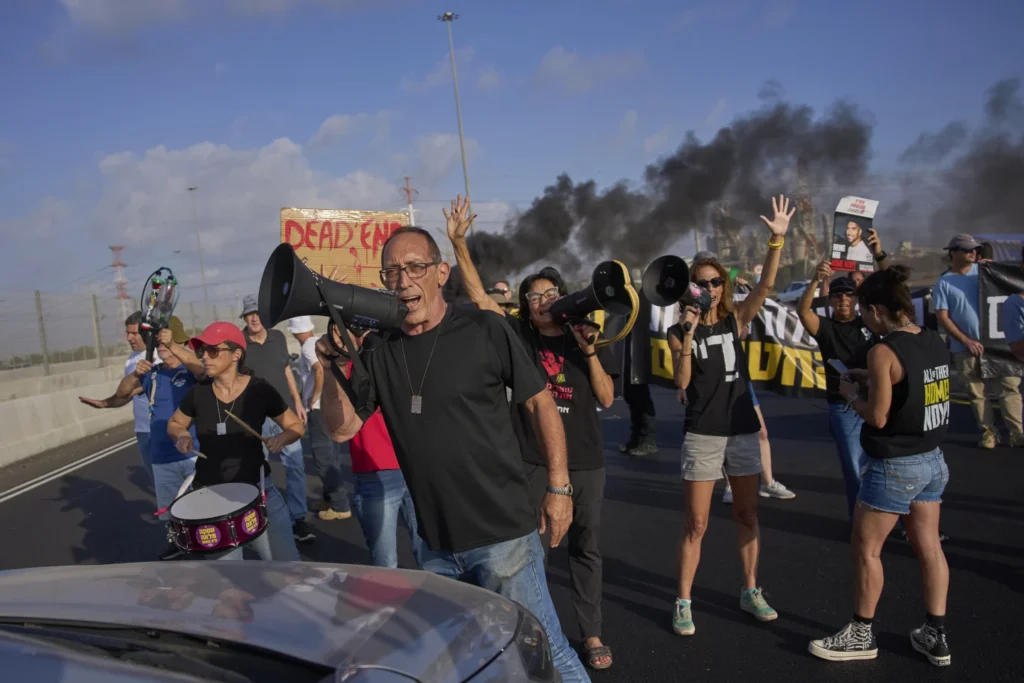
Tel Aviv (BN24) – Demonstrators across Israel torched tires and blocked major highways Tuesday, demanding an immediate ceasefire to secure the release of hostages still held in Gaza, even as Prime Minister Benjamin Netanyahu pressed forward with plans for an expanded military offensive he claims is necessary to eliminate Hamas.
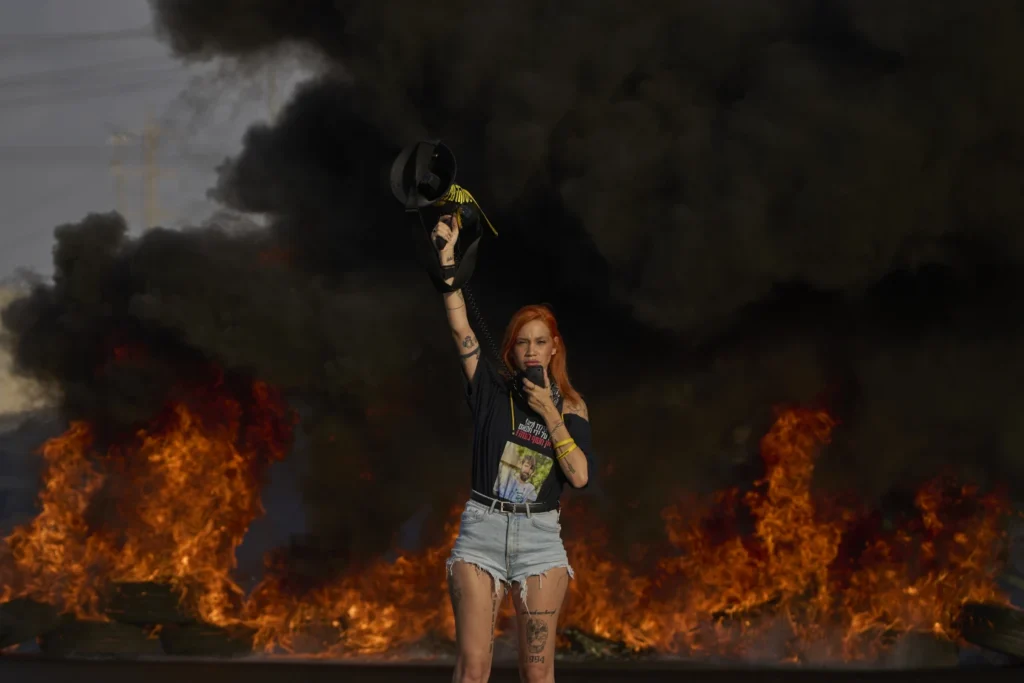
The nationwide protests erupted as Palestinians in Gaza prepared for intensified military operations amid widespread displacement, massive destruction and growing famine conditions across parts of the territory. The demonstrations followed deadly Israeli strikes on Gaza’s primary hospital that killed 20 people Monday, including medical personnel and journalists among them Mariam Dagga, who worked for The Associated Press.
Netanyahu was scheduled to convene his security cabinet Tuesday evening, though officials remained uncertain whether ceasefire negotiations would feature in discussions. The prime minister has maintained that Israel will simultaneously launch expanded operations in Gaza City while pursuing diplomatic efforts to free hostages, despite not yet dispatching a negotiating delegation to address current proposals. Netanyahu argues the military campaign represents the most effective strategy to weaken Hamas and recover captives, but hostage families and their advocates have mounted fierce opposition.
Ruby Chen, father of 21-year-old dual Israeli-American citizen Itay Chen whose remains are held in Gaza, urged leaders to return to negotiations. “Go back to the negotiation table. There’s a good deal on the table. It’s something we can work with,” Chen said. “We could get a deal done to bring all the hostages back.”
Hamas militants captured 251 hostages during their October 7, 2023 assault on Israel. The vast majority have been freed during previous ceasefire periods, while Israel has successfully rescued only eight hostages alive through military operations. Fifty captives remain in Gaza, with Israeli intelligence estimating approximately 20 are still living.
Responding to calls from Israel’s Hostages and Missing Families Forum for a “National Day of Struggle,” protesters displayed banners reading “Hostage Deal Now.” Relatives of the captives expressed hope that sustained public pressure could compel Netanyahu and his security cabinet to commit meaningfully to ceasefire negotiations. However, far-right coalition members have repeatedly threatened to abandon the government if Israel agrees to any truce arrangement and have dismissed the protesters’ appeals.
Einav Zangauker, whose 25-year-old son Matan was abducted from one of Israel’s most severely attacked kibbutzim on October 7, criticized the prime minister’s approach. “We could have ended the war a year ago and brought all the hostages and soldiers home. We could have saved hostages and soldiers, but the prime minister chose, again and again, to sacrifice civilians for the sake of his rule,” Zangauker said.
The demonstrations followed Monday’s strike on southern Gaza’s main medical facility that killed at least five journalists and 15 other individuals, including Dagga, who had recently reported on doctors treating children suffering from starvation at the same hospital. The attack, among the war’s deadliest targeting both media personnel and healthcare facilities, generated widespread condemnation from press freedom organizations and Palestinians, who held funeral services for the victims Monday.
International criticism of the hospital strike was immediate and severe. Netanyahu characterized the incident as a “tragic mishap” and pledged military investigators would examine the circumstances. Most casualties resulted from people rushing to assist after an initial blast, only to be struck by a second attack that multiple television networks captured on camera.
The southern Gaza strike occurred as Israel prepared to expand operations into densely populated northern Gaza neighborhoods. Military officials want civilians in hospitals, displacement camps and Gaza City residential areas to evacuate southward to designated safe zones, allowing forces to target Hamas infrastructure and prevent future attacks similar to the October 7, 2023 assault that killed approximately 1,200 people and triggered the current conflict.
Israeli strikes killed at least 16 Palestinians Tuesday, according to hospital officials. Representatives from Nasser Hospital, Shifa Hospital and Gaza City’s Sheikh Radwan clinic reported the casualties included entire families, women and children.
Gaza’s Health Ministry announced Tuesday that three additional adults died from malnutrition and starvation-related causes, raising the malnutrition death toll to 186 since late June when the ministry began tracking fatalities in this category. The total includes 117 children who have died from starvation-related causes since the war began.
Israel’s military campaign has killed 62,819 people according to Gaza’s Health Ministry, which does not distinguish between combatants and civilians but estimates approximately half were women and children. The ministry operates under the Hamas-controlled government and employs medical professionals. United Nations officials and independent experts consider it the most reliable source for war casualty data, though Israel disputes the figures while not providing alternative counts.
Source: AP




