

U.S. Health Secretary Robert F. Kennedy Jr. told podcaster Theo Von that he remains unafraid of germs because he previously “snorted cocaine off toilet seats” during his years of active drug addiction, drawing sharp criticism from political figures questioning his fitness to oversee the nation’s major health agencies.
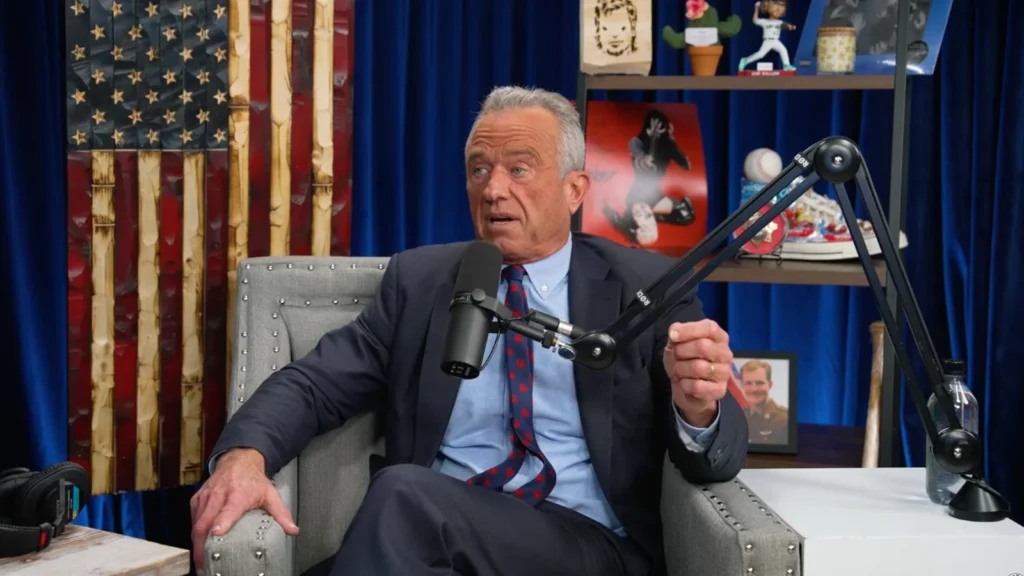
The health secretary made the candid remarks during a recent episode of “This Past Weekend,” during which the pair discussed their shared histories of substance abuse—a topic Kennedy has addressed openly in previous public forums. He detailed continuing to attend recovery meetings throughout the COVID-19 pandemic despite governmental restrictions on gatherings.
“They shut [the rehabilitation meetings] down during Covid,” Kennedy explained. “We still did live meetings every day during Covid, but it was kind of a pirate group… I said, ‘I don’t care what happens. I’m going to a meeting every day.'”
“I said, ‘I’m not scared of a germ.’ You know, I used to snort cocaine off a toilet seat, and I know this disease [addiction] will kill me, right? If I don’t treat it, which means, for me, going to meetings every day. It’s just bad for my life. So for me, it was survival,” Kennedy continued, framing his defiance of pandemic restrictions within his personal recovery priorities.
Kennedy has established a family history of substance abuse and has spoken publicly about his addiction to heroin. Last April, he recounted how he encountered addiction’s path at age 15 after experimenting with LSD, initiating a pattern of substance abuse that persisted for years before he achieved recovery.
The comments surfaced after the health secretary announced $100 million in funding for new grants as part of a pilot program targeting homelessness and substance use recovery in eight cities earlier this month. The funding followed an executive order signed by President Donald Trump titled “The Great American Recovery Initiative” late last month, positioning addiction treatment as a priority for the administration.
Social media users expressed disapproval of Kennedy’s candidness regarding his prior experiences using drugs in unsanitary bathroom environments. “It shows,” wrote the official X account of New York Governor Kathy Hochul in response to the podcast clip, suggesting Kennedy’s past behavior manifests in his current judgment.
“For some reason I don’t trust this guy on public health,” wrote Malcolm Kenyatta, a Democratic representative from Pennsylvania, voicing skepticism about Kennedy’s qualifications. Another social media user added: “The man who oversees our nation’s major health agencies,” highlighting the incongruity between Kennedy’s past risky health behaviors and his current responsibilities.
Elsewhere in the podcast, Von mentioned he had recently encountered Kennedy with musician Kid Rock in Nashville, Tennessee, adding that he had heard stories of the MAGA supporter snorting cocaine while eating oysters—an anecdote Kennedy did not explicitly confirm or deny.
“Yeah, I’m saving a seat for him still [at rehabilitation meetings],” Kennedy replied, suggesting Kid Rock may benefit from addiction recovery support.
Kennedy’s appointment as health secretary generated controversy given his history of promoting vaccine skepticism, his lack of traditional medical or public health credentials, and his past admissions of substance abuse. Critics argue that someone who engaged in extremely risky health behaviors—including using narcotics in bathroom facilities where pathogenic exposure risks are substantial—may lack appropriate judgment for overseeing federal health policy.
Supporters counter that Kennedy’s personal recovery experience provides valuable perspective on addiction treatment and that his willingness to discuss struggles openly demonstrates authenticity. They note that many effective addiction counselors and recovery advocates have personal histories of substance abuse, using their experiences to help others.
The toilet seat cocaine admission specifically raises health concerns beyond addiction itself. Bathroom surfaces, particularly in public facilities, harbor numerous pathogens including E. coli, norovirus, hepatitis A and various respiratory viruses. Kennedy’s assertion that he’s “not scared of a germ” after such exposures seems to contradict basic public health principles that his department is charged with promoting.
His defiance of COVID-19 gathering restrictions to attend recovery meetings also generated mixed reactions. While many addiction specialists emphasize that maintaining recovery support systems during crises is essential to preventing relapse, Kennedy’s characterization of authorized pandemic restrictions as obstacles he ignored aligns with his broader skepticism of governmental public health measures.
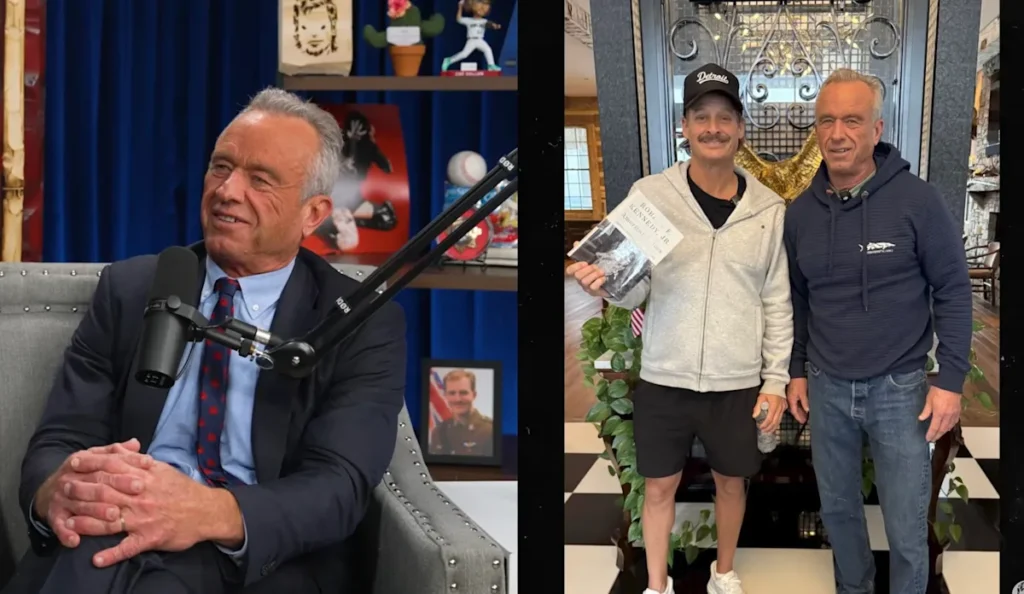
The Kennedy family’s well-documented struggles with addiction extend across multiple generations, with various family members experiencing substance abuse issues and related tragedies. Robert F. Kennedy Jr.’s openness about his personal battles continues this pattern of public acknowledgment while raising questions about how personal experiences inform his policy perspectives.
As health secretary, Kennedy oversees the Department of Health and Human Services, which includes the Centers for Disease Control and Prevention, the Food and Drug Administration, the National Institutes of Health and other agencies responsible for protecting public health and advancing medical research. His unconventional background and statements continue generating debate about appropriate qualifications for health leadership positions.
The podcast appearance demonstrates Kennedy’s willingness to discuss personal vulnerabilities in casual media contexts, an approach that contrasts with traditional governmental officials’ tendency toward carefully managed public communications. Whether this transparency serves public interests or undermines confidence in health leadership remains contested.
theindependent




