

ABU DHABI, United Arab Emirates — Russian attacks on Ukraine killed at least one person and wounded 23 overnight into Saturday, hours before negotiators from Ukraine, Russia and the United States convened for a second day of discussions aimed at ending Moscow’s nearly four-year full-scale invasion.
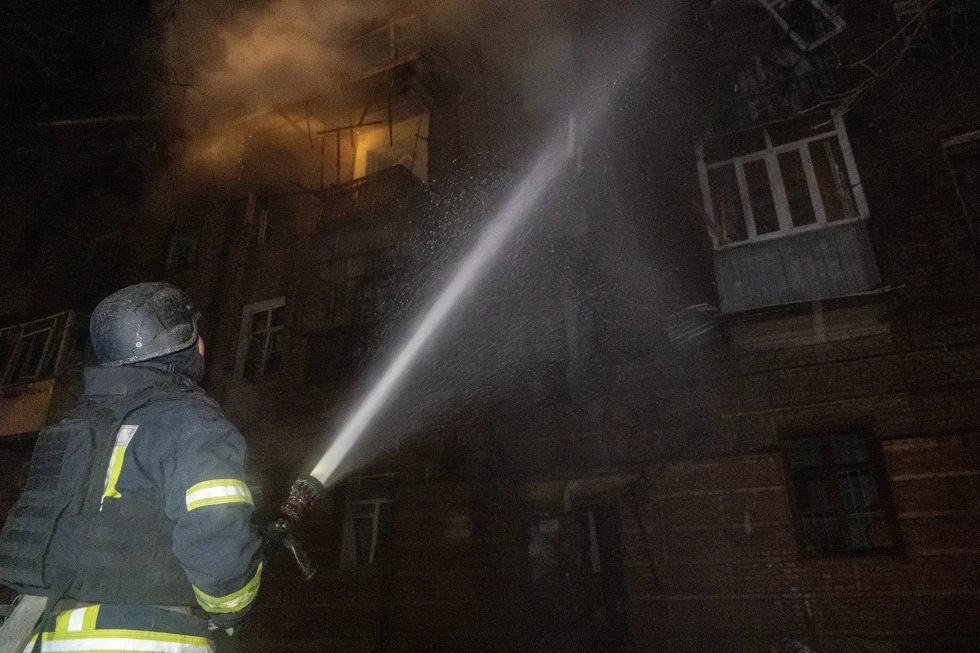
One person was killed and four wounded in Russian drone attacks on the Ukrainian capital, Kyiv, Kyiv City Military Administration head Tymur Tkachenko disclosed. In Ukraine’s second-largest city, Kharkiv, drone attacks wounded 19 people, Mayor Ihor Terekhov said Saturday.
The strikes occurred as envoys prepared to meet in the United Arab Emirates for a second day of negotiations Saturday. The talks represent the first known instance that officials from the Trump administration have conducted direct discussions with both countries as part of Washington’s initiative to advance progress toward ending Moscow’s invasion that began in February 2022.
The UAE’s foreign ministry characterized the talks as part of efforts “to promote dialogue and identify political solutions to the crisis.” The White House described Friday’s inaugural session as productive, though officials provided limited details about substantive progress on contentious issues dividing the parties.
Diplomatic activity has intensified in recent days, spanning from Switzerland to the Kremlin, despite serious obstacles persisting between both sides regarding fundamental questions about territorial integrity and security guarantees.
Ukrainian President Volodymyr Zelenskyy said in Davos, Switzerland, on Thursday that a potential peace agreement was “nearly ready,” though certain sensitive sticking points—most notably those concerning territorial issues—remain unresolved. The optimistic characterization contrasts with continued violence and Russia’s insistence on territorial concessions that Ukraine views as unacceptable.
Just hours before the three-way talks commenced, Russian President Vladimir Putin discussed Ukraine settlement terms with U.S. President Donald Trump’s envoys Steve Witkoff and Jared Kushner during marathon overnight discussions. The Kremlin maintains that reaching a peace agreement requires Kyiv to withdraw its troops from eastern areas that Russia illegally annexed but has not fully captured militarily.
The territorial demand represents the fundamental divide preventing peace agreement finalization. Russia controls portions of four Ukrainian regions it claims to have annexed—Donetsk, Luhansk, Zaporizhzhia and Kherson—but has failed to capture the entirety of any province despite nearly four years of warfare. Ukrainian leaders have consistently rejected ceding territory to an aggressor as a condition for peace.
The U.S.-led initiative to end the conflict gained momentum late last year and has accelerated in 2026, with leaders, diplomats and envoys conducting numerous meetings to explore potential settlement frameworks. The diplomatic flurry reflects Trump administration determination to broker an agreement that the president characterized during his campaign as achievable within days of taking office.
The negotiation timeline reveals intensive engagement by American envoys shuttling between Kyiv and Moscow while Ukrainian officials traveled repeatedly to the United States and Europe for consultations. Ukrainian President Zelenskyy traveled to Turkey on Nov. 19 in what he characterized as an effort to jump-start negotiations. Soon after, a 28-point peace plan drafted by the U.S. and Russia emerged, which critics characterized as leaning heavily in Moscow’s favor.
U.S. Army Secretary Dan Driscoll traveled to Kyiv on Nov. 20 to brief Zelenskyy on the U.S.-backed peace proposal. Three days later, Secretary of State Marco Rubio met a Ukrainian delegation headed by then-presidential chief of staff Andrii Yermak for talks in Geneva, with both sides claiming progress while providing few details.
Between Nov. 24-25, Driscoll met Russian officials in Abu Dhabi. Putin’s foreign policy adviser, Yuri Ushakov, indicated the parties did not examine the new peace plan in detail during those discussions.
A Ukrainian delegation led by Rustem Umerov met U.S. officials in Florida on Nov. 30. Umerov had replaced Yermak, who resigned amid a corruption scandal involving Ukraine’s energy sector, creating leadership disruption during critical negotiations.
Zelenskyy traveled to Paris on Dec. 1 to brief French President Emmanuel Macron on Florida talks outcomes as a U.S. delegation headed to Moscow for parallel discussions. The following day, Putin met Witkoff and Kushner at the Kremlin for five hours, with Russian envoy Kirill Dmitriev and Ushakov also participating. Ushakov described the meeting as constructive while acknowledging substantial work remained.
Ukrainian delegations returned to Florida on Dec. 4-6 for additional meetings with U.S. delegates. Between Dec. 14-15, Ukrainian officials including Zelenskyy traveled to Berlin for talks with Witkoff and Kushner, after which U.S. officials disclosed that Washington had agreed to provide Kyiv with unspecified security guarantees.
Russian envoy Dmitriev held several days of talks with Witkoff and Kushner in Miami on Dec. 20-21. The Americans separately met with Ukrainian delegation members also in Florida, conducting parallel negotiations with both parties rather than bringing them together directly.
Zelenskyy flew to Florida on Dec. 28 to meet Trump, who contacted Putin before sitting down with the Ukrainian president, demonstrating the president’s personal engagement in mediation efforts.
In 2026, Zelenskyy and other Ukrainian officials attended a “coalition of the willing” summit in Paris on Jan. 6-7 and held talks with Witkoff and Kushner. Kyiv’s allies emphasized major progress toward agreeing on mechanisms to defend Ukraine if a peace settlement is reached, expressing readiness to provide international guarantees deterring Russia from attacking again.
A Ukrainian delegation arrived in the United States for talks on Jan. 17 as Russia attacked Ukraine’s power grid, cutting electricity and heat during freezing temperatures. The timing illustrated how military pressure continues alongside diplomatic engagement.
Russian envoy Dmitriev met Witkoff and Kushner at the World Economic Forum in Davos, Switzerland, on Jan. 20, though no details about discussions were revealed. The following day, Umerov disclosed in a statement that the Ukrainian delegation in Davos met with Witkoff and Kushner.
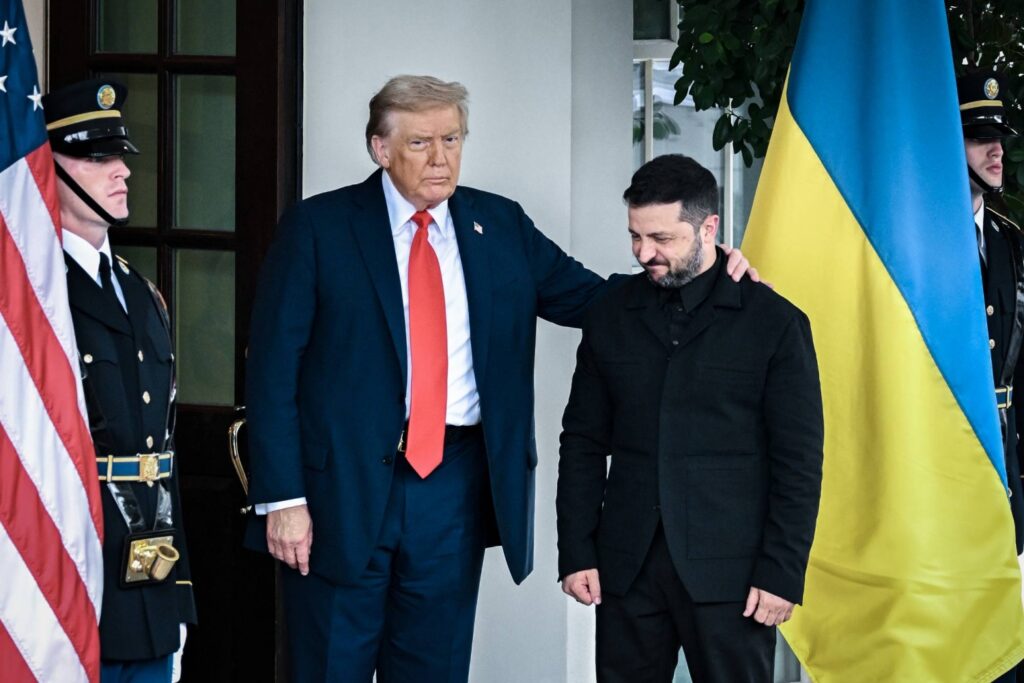
Zelenskyy met Trump in Davos on Jan. 22 for approximately one hour. Trump characterized the talks as “very good” while Zelenskyy described them as “productive and meaningful,” diplomatic language suggesting cordiality without breakthrough.
Between Jan. 22-23, Putin hosted Witkoff and Kushner for talks in Moscow. After nearly four hours of discussions, Ushakov reaffirmed that “reaching a long-term settlement can’t be expected without solving the territorial issue,” maintaining Russia’s position that Ukraine must accept territorial losses.
The Abu Dhabi talks on Jan. 23 marked the first trilateral session where Russian, Ukrainian and U.S. delegates convened together. Zelenskyy indicated the contentious territorial concessions issue would likely be discussed, while the Kremlin characterized the meeting as a “working group on security issues,” reflecting different priorities and expectations.
Saturday’s continuation of overnight Russian attacks while peace negotiations proceeded illustrated the disconnection between diplomatic processes and battlefield realities. Ukraine continues suffering civilian casualties and infrastructure damage even as representatives discuss settlement terms that might end the violence.
Whether the intensified diplomatic engagement produces a sustainable peace agreement or merely creates the appearance of progress while fundamental disagreements persist will become apparent in coming weeks as negotiations either advance toward concrete terms or stall over irreconcilable positions regarding territorial integrity and security arrangements.
For Ukraine’s civilian population enduring nearly four years of warfare, the promise of peace negotiations offers hope for ending bombardments like Saturday’s drone attacks that killed and wounded dozens. Yet that hope remains tempered by awareness that previous diplomatic initiatives have failed to halt Russian aggression or produce terms Ukraine can accept without compromising its sovereignty and territorial integrity.
AP contributed





