

MOSCOW — A senior Russian military commander died Monday after an explosive device detonated beneath his vehicle in southern Moscow, marking the third assassination of a high-ranking officer on Russian territory within a year and underscoring Ukraine’s expanding capacity to strike deep inside its adversary’s heartland.
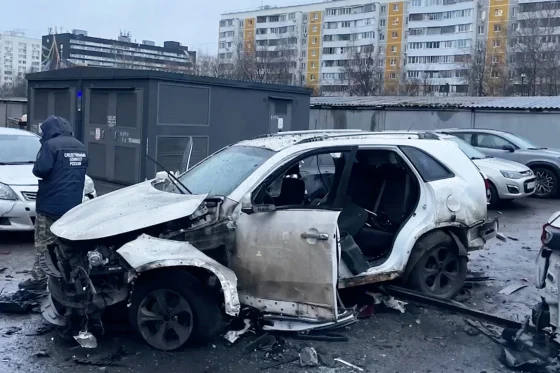
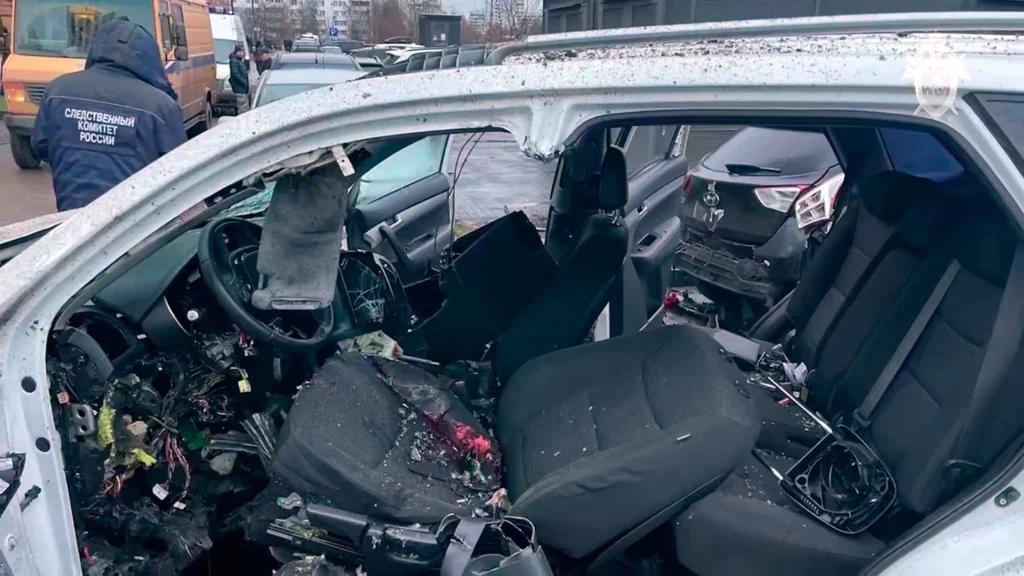
Lt. Gen. Fanil Sarvarov, 56, head of the Operational Training Directorate of the Russian Armed Forces’ General Staff, succumbed to injuries sustained when the bomb exploded under his car on Yasenevaya Street, Svetlana Petrenko, spokesperson for Russia’s Investigative Committee, announced in a statement.
“An explosive device planted under the bottom of a car was detonated” Monday morning, Petrenko stated. “Investigators are pursuing numerous lines of inquiry regarding the murder. One of these is that the crime was orchestrated by Ukrainian intelligence services.”
Kremlin spokesman Dmitry Peskov confirmed that President Vladimir Putin had been immediately informed about Sarvarov’s killing. NBC News has requested comment from the Ukrainian government, which has not yet responded to the allegations.
The assassination continues a disturbing pattern of targeted killings of senior Russian military officials, demonstrating what Western intelligence analysts describe as Ukraine’s sophisticated intelligence penetration and operational reach within Russia’s capital. The brazen nature of the attacks—occurring in daylight in residential neighborhoods—raises serious questions about Russian security service effectiveness and the Kremlin’s ability to protect high-value targets in its own territory.
Just over a year ago, on December 17, 2024, Lt. Gen. Igor Kirillov, chief of the military’s nuclear, biological and chemical protection forces, was killed by a bomb concealed on an electric scooter outside his apartment building, the Associated Press reported. Kirillov’s assistant also perished in that blast. Ukraine’s security service publicly claimed responsibility for that operation.
In April, Ukrainian intelligence agencies took credit for killing Lt. Gen. Yaroslav Moskalik, deputy head of the main operational department in the General Staff, in a car bombing near the Russian capital, according to officials. A suspected perpetrator was quickly arrested following that incident.
Putin characterized Kirillov’s killing as a “major blunder” by Russia’s security agencies, stating they should learn from the failure and improve their efficiency. Monday’s successful assassination of Sarvarov, despite those pledges, suggests that corrective measures have proven inadequate and that Ukraine maintains operational networks capable of conducting sophisticated attacks in Moscow.
The Defense Ministry noted that Sarvarov had previously fought in Chechnya and participated in Moscow’s military campaign in Syria, indicating his extensive combat experience and prominence within the Russian military establishment. His position overseeing operational training placed him at the center of efforts to prepare Russian forces for combat operations.
Moscow has blamed Ukraine for numerous bombings and attacks across Russian territory throughout the ongoing conflict. Beyond high-profile assassinations, Ukraine has demonstrated its ability to reach far inside Russia to strike the Kremlin’s warplanes and naval vessels with increasingly sophisticated tactics.
In June, Operation Spiderweb saw Ukraine deploy swarms of drones at several Russian airfields, destroying at least 10 aircraft and damaging dozens of others, NBC News reported. This month, Kyiv claimed one of its underwater drones destroyed a Russian submarine at a Black Sea port, an assertion Russia denied.
The escalating assassination campaign represents a strategic shift in Ukraine’s approach to the conflict, moving beyond conventional military operations to target Russia’s military leadership structure directly. Western intelligence officials, speaking on condition of anonymity, have suggested that eliminating senior commanders disrupts operational planning, degrades institutional knowledge and creates psychological pressure on military leadership considering their personal vulnerability.
The timing of Sarvarov’s assassination carries particular significance, occurring as diplomatic efforts to end the conflict have intensified. President Donald Trump has pushed for a peace agreement, with new negotiations held over the weekend involving representatives from both sides.
Putin’s special envoy Kirill Dmitriev was scheduled to brief the Russian leader Monday after returning from discussions with members of Trump’s team in Miami, Peskov stated. Dmitriev said Saturday the talks had proceeded constructively with Trump’s special envoy Steve Witkoff and his son-in-law Jared Kushner.
Witkoff met separately with Ukrainian and European representatives, characterizing those discussions as “productive and constructive.” Despite the optimistic rhetoric, the White House’s months-long peace initiative has failed to bridge the chasm between Moscow’s maximalist territorial demands and the grave concerns held by Kyiv and European allies about legitimizing Russian territorial conquest.
The assassination complicates peace negotiations by demonstrating Ukraine’s capability to inflict costs on Russia’s military establishment regardless of diplomatic progress. Some analysts suggest the timing may be deliberate, signaling to Moscow that Ukraine retains offensive options even as diplomatic channels remain open, thereby strengthening Kyiv’s negotiating position.
The repeated success of assassination operations in Moscow exposes vulnerabilities in Russian domestic security architecture that the Kremlin cannot easily address. Unlike conventional military targets that can be hardened or relocated, senior military officials must maintain some degree of accessibility for operational effectiveness. This creates inherent security trade-offs that Ukrainian intelligence services have evidently learned to exploit.
Russian security services face the challenge of identifying and dismantling Ukrainian intelligence networks operating within Moscow while avoiding the paranoia and internal purges that could further damage military effectiveness. The rapid arrests of suspected perpetrators following previous assassinations suggest Russian investigators can identify operational cells after attacks occur, but preventing strikes before they happen has proven more elusive.
The pattern of attacks also raises questions about insider assistance, as successfully placing explosive devices under vehicles or planting bombs near apartment buildings typically requires surveillance, timing and local knowledge difficult to achieve without some degree of internal support or collaboration from Russian citizens.

For Ukraine, the assassination campaign serves multiple strategic objectives beyond removing specific military commanders. Each successful operation inside Moscow undermines Russian citizens’ sense of security, demonstrates the government’s inability to protect even high-ranking officials, and creates a psychological impact that conventional military operations cannot replicate.
However, the tactic carries risks. Assassinations on Russian soil could harden public opinion against negotiated settlements, provide Putin with domestic justification for escalation, and potentially trigger retaliatory strikes against Ukrainian leadership or civilian infrastructure. The delicate balance Ukraine seeks to maintain involves demonstrating offensive capability while avoiding provocations that could derail diplomatic processes or justify Russian escalation.
As the conflict enters its third year, the expanding scope of operations inside Russian territory reflects Ukraine’s evolution from a defensive posture focused on territorial protection to a more offensive strategy targeting Russia’s military capacity and leadership infrastructure. Whether this approach accelerates diplomatic resolution or further entrenches the conflict remains an open question as both sides assess their positions and the international community watches for signs of breakthrough or escalation.
AP/NBC




