

A federal judge sentenced Ryan Routh to life imprisonment Wednesday for attempting to assassinate Donald Trump at a Florida golf course less than two months before the 2024 presidential election, concluding a case that exposed vulnerabilities in presidential security and underscored escalating political violence targeting major American political figures.
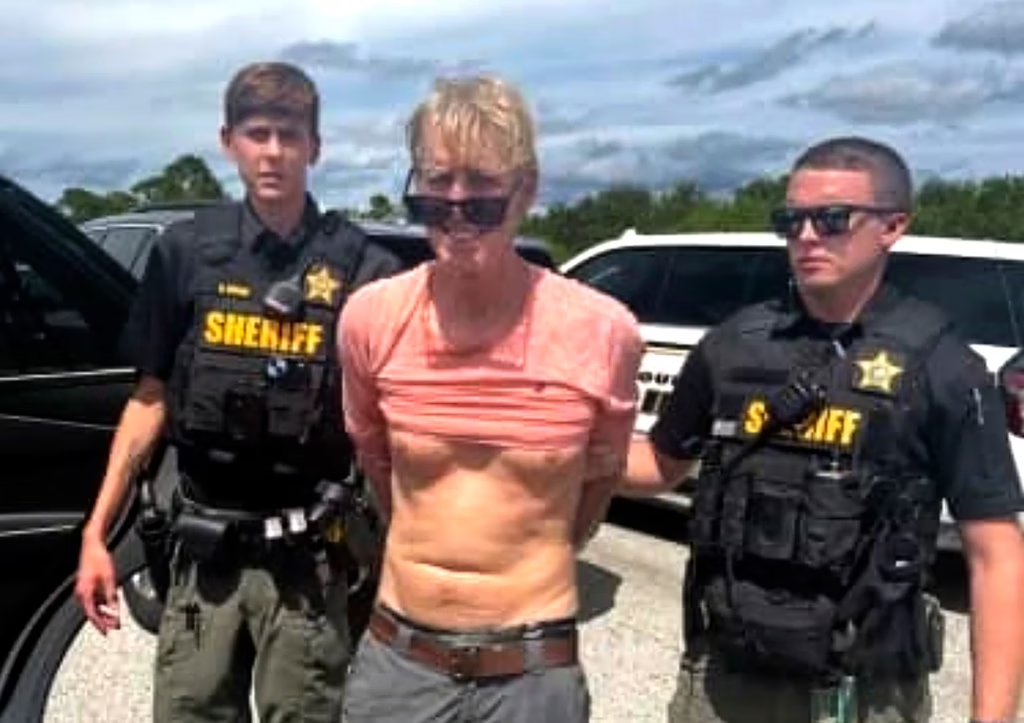
U.S. District Judge Aileen Cannon handed down the maximum sentence after determining that Routh, 59, engaged in a “premeditated, calculated plot to take a human life” when he concealed himself in bushes at Trump International Golf Club in West Palm Beach on September 15, 2024, armed with a semi-automatic rifle while the then-candidate golfed nearby.
Routh was convicted by a jury last September of five criminal counts including attempted assassination after controversially serving as his own defense attorney throughout the trial despite lacking formal legal training. The other convictions encompassed three illegal firearm possession charges and one count of impeding a federal officer during his arrest.
Appearing in court shackled and wearing beige prison garb, Routh delivered a rambling 15-minute address that avoided discussing case facts and instead focused on foreign conflicts and his desire to be exchanged for political prisoners held abroad. Judge Cannon eventually terminated his remarks, characterizing them as irrelevant to sentencing considerations.
Routh characterized himself as a “failure,” declared his sentence “totally unimportant” and lamented that “sadly, execution is not an option.” He claimed: “I have given every drop of who I am every day for the betterment of my community and this nation,” assertions that Judge Cannon directly challenged during sentencing.
Prosecutors had recommended life imprisonment while Routh requested a 27-year term through his attorney Martin Roth, who portrayed his client as a troubled and complex individual possessing a “very good core” and genuine concern for others’ wellbeing. The attorney announced plans to appeal both the conviction and sentence following the hearing.
Attorney General Pam Bondi issued a statement emphasizing that Routh will never regain freedom. “Ryan Routh’s heinous attempted assassination of President Trump was not only an attack on our President — it was a direct assault against our entire democratic system,” Bondi declared, framing the crime within broader concerns about threats to American democratic institutions.
Prosecutor John Shipley urged Judge Cannon during the hearing to impose a sentence sending clear messages that political violence remains unacceptable in American society. Shipley characterized Routh’s crimes as aimed at “upending American democracy,” positioning the assassination attempt as threatening constitutional governance beyond endangering one individual.
In delivering the life sentence, Cannon emphasized the “sheer seriousness” of Routh’s offenses while noting his extensive criminal history comprising at least 36 prior convictions. These included possession of a weapon of mass destruction, illegal firearm possession and larceny, demonstrating what the judge characterized as a longstanding pattern of disregarding societal norms and legal constraints.
“There has been much in this case about this narrative of your peaceful nature. For me, it’s the opposite,” Cannon stated, directly rejecting defense characterizations of Routh as fundamentally non-violent despite his attempted assassination of a presidential candidate.
Routh had resided most recently in Hawaii after previously living in North Carolina at the time of his September 2024 arrest. Secret Service agents discovered him hiding in dense vegetation several hundred yards from Trump’s golfing location at the West Palm Beach course, prompting him to flee the scene while leaving behind his semi-automatic rifle and other equipment.
Prosecutors established during trial that Routh arrived in South Florida approximately one month before the incident, staying at a truck stop while tracking Trump’s movements and schedule. He carried six cellular phones and employed fake identities to conceal his presence, according to trial evidence. Investigators determined he lay in wait within thick bushes for nearly 10 hours on September 15 before Secret Service detection.
Law enforcement personnel recovered the abandoned rifle, body armor-like metal plates and a video camera pointed toward the golf course from Routh’s concealment position. These items provided physical evidence corroborating the premeditated nature of the assassination attempt that Judge Cannon emphasized during sentencing.
The September 15 incident constituted the second assassination attempt against Trump during the 2024 campaign season. Two months earlier, a gunman’s bullet grazed Trump’s ear at a campaign rally in Butler, Pennsylvania, killing one attendee and seriously wounding two others before Secret Service counter-snipers killed the shooter.
Both assassination attempts occurred during the run-up to the November 2024 election in which Trump defeated Democratic candidate Kamala Harris to regain the presidency after losing the 2020 election to Joe Biden. The repeated targeting raised profound questions about Secret Service protective capabilities and the escalating dangers facing political figures in increasingly polarized American politics.
Trump transformed the assassination attempts into campaign issues, asserting that the Justice Department under Biden administration leadership could not be trusted to conduct impartial investigations. These claims reflected broader Trump narratives about weaponization of federal law enforcement against him and his supporters.
Routh pleaded not guilty to all charges but dismissed his court-appointed attorneys and chose self-representation at trial despite complete absence of legal training or courtroom experience. This decision proved disastrous, as Routh lacked understanding of evidentiary rules, legal procedures and effective advocacy strategies necessary to mount competent defense.
In earlier court filings, Routh denied intending to kill Trump and expressed willingness to undergo psychological treatment for a personality disorder during imprisonment. He suggested jurors were misled about case facts due to his inability to provide adequate legal defense, essentially arguing his self-representation constituted ineffective assistance of counsel.
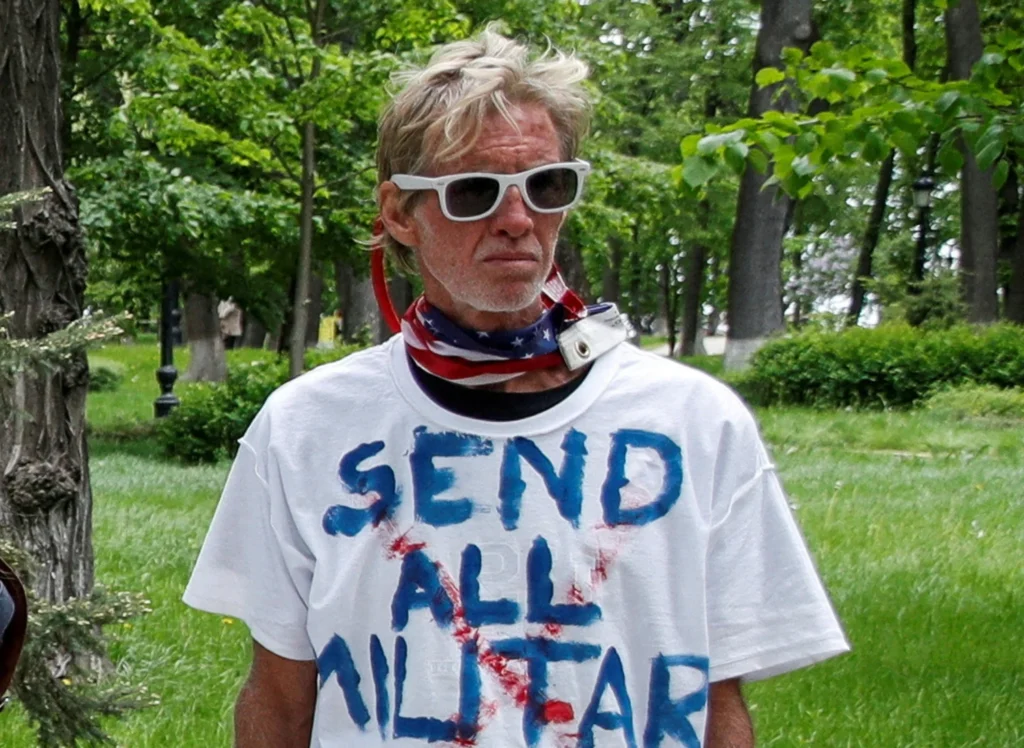
Following the jury’s guilty verdict announcement, Routh apparently attempted to stab himself multiple times with a pen, requiring physical restraint by U.S. marshals present in the courtroom. His daughter shouted that her father had harmed no one and vowed to secure his release from prison, emotional outbursts reflecting family trauma surrounding the conviction.
Trump praised the verdict via his Truth Social platform, writing: “This was an evil man with an evil intention, and they caught him.” The former and future president’s characterization emphasized moral condemnation beyond legal culpability, framing Routh as embodying malevolence rather than merely committing crimes.
The life sentence ensures Routh will die in federal custody absent successful appeal or presidential commutation—unlikely given the victim’s identity and current position. At 59 years old at sentencing, Routh faces decades of imprisonment with no possibility of release.
The case highlighted persistent challenges facing Secret Service protective operations in an era when presidential candidates conduct extensive public activities at known locations like private golf clubs. Trump’s preference for golfing at his own properties created predictable patterns that determined adversaries could exploit for attack planning.
The month-long surveillance period Routh allegedly conducted demonstrated sophisticated pre-operational preparation exceeding impulsive violence. His tracking of Trump’s schedule, acquisition of appropriate weapons and equipment, selection of concealment positions, and extended patience waiting for opportunity revealed calculating intent Judge Cannon emphasized when characterizing the plot as premeditated.
The video camera pointed at the golf course suggested Routh may have intended to document the assassination, raising questions about whether he sought notoriety, desired to create propaganda, or planned to share footage with accomplices or ideological compatriots. Investigators have not publicly disclosed whether the camera was activated or contained recordings.
Routh’s possession of six cellular phones under fake identities indicates operational security awareness typically associated with intelligence operatives or sophisticated criminals rather than impulsive actors. This tradecraft knowledge likely derived from extensive internet research or possible prior exposure to clandestine operational techniques.
The 36 prior convictions spanning possession of weapons of mass destruction, illegal firearms and property crimes demonstrate escalating criminal behavior culminating in attempted political assassination. This progression from conventional criminality to politically motivated violence mirrors patterns observed in other domestic extremists who radicalize over time.
Judge Cannon’s appointment by Trump during his first presidency created potential appearance of conflict given she was sentencing an individual who attempted assassinating her appointing president. However, neither prosecution nor defense raised recusal motions, and Cannon’s life sentence imposed the maximum penalty prosecutors requested, suggesting the judicial relationship did not produce leniency.
The case proceeds to appellate review where Routh’s attorney will challenge both conviction and sentence. Likely appeal arguments include ineffective assistance of counsel stemming from self-representation, evidentiary errors during trial, and disproportionate sentencing. However, appellate courts typically grant substantial deference to trial outcomes absent clear legal errors.
For Secret Service personnel responsible for presidential protection, the Routh case provides lessons about perimeter security at semi-public venues like golf courses, the necessity of counter-surveillance detection, and threats posed by determined individuals conducting extended reconnaissance. The agency has presumably implemented enhanced protocols following the two 2024 assassination attempts.
As political polarization intensifies and rhetoric escalates, the Routh prosecution demonstrates that American criminal justice system treats political violence with utmost seriousness regardless of target’s political affiliation or perpetrator’s motivations. The life sentence sends definitive message that assassination attempts against political figures will result in maximum consequences available under law.




