

Saif al-Islam Gaddafi, the son of Libya’s longtime autocratic ruler Muammar Gaddafi and once the regime’s most prominent heir, was killed early Tuesday after gunmen opened fire at his residence in western Libya, Libyan media and sources close to his family said, abruptly ending a controversial political comeback attempt that had reopened deep wounds from the country’s past.
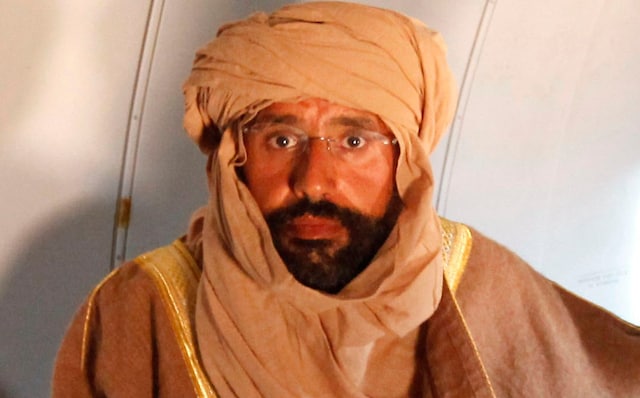
Saif al-Islam, 53, was shot and killed in the garden of his home in Zintan, a town in Libya’s Nafusa Mountains where he spent years in captivity following the 2011 uprising that toppled his father. Saudi-owned broadcaster Al Arabiya first reported that four attackers confronted him at the property and fled shortly afterward. The killing occurred at about 2:30 a.m. local time, the outlet said.
Reuters, citing sources close to the family and Saif al-Islam’s lawyer Khaled el-Zaydi, confirmed his death but said details surrounding the circumstances were still emerging. Libyan authorities have not yet issued an official account, and no group immediately claimed responsibility.
Saif al-Islam had lived largely out of public view in recent years, aware that his name alone made him a target in a country still fractured by militia rule, political paralysis and unresolved grievances from decades of dictatorship and a brutal civil war.
Once viewed as Libya’s most powerful figure after his father, Saif al-Islam occupied a singular position in the regime before 2011. Educated at the London School of Economics and fluent in English, he cultivated ties with Western governments and institutions, presenting himself as a reform-minded figure capable of guiding Libya out of international isolation.
He played a central role in negotiations that led Libya to abandon its weapons of mass destruction program and helped broker compensation for the families of victims of the 1988 bombing of Pan Am Flight 103 over Lockerbie, Scotland. For years, diplomats and analysts regarded him as the acceptable face of a regime seeking rehabilitation.
That image collapsed during the Arab Spring. When protests erupted against Muammar Gaddafi’s four-decade rule in 2011, Saif al-Islam publicly aligned himself with his father and became one of the most visible advocates of a violent crackdown. In televised speeches cited by Reuters at the time, he warned that “rivers of blood” would flow and dismissed opponents as “rats,” vowing that the regime would fight to the last.
“We fight here in Libya, we die here in Libya,” he said in an interview during the uprising, predicting that the country would descend into chaos if his father fell.
After Tripoli was overrun by rebel forces, Saif al-Islam attempted to flee toward neighboring Niger disguised as a Bedouin tribesman. He was captured on a desert road by the Abu Bakr Sadik Brigade militia and flown to Zintan about a month after his father was hunted down and killed by rebels.
Audio recordings from that period captured Saif al-Islam telling those around him that leaving Libya would mean certain death. “They’ll empty their guns into me the second I go out there,” he said.
He spent the next six years detained in Zintan, far removed from the privileged life he had once led. Human Rights Watch representatives who met him during his captivity said he did not allege physical abuse, though they raised concerns about prolonged solitary confinement. Hanan Salah, the group’s Libya director, told Reuters he appeared isolated, missing a tooth and cut off from visitors, though he was allowed access to television and books.
In 2015, a court in Tripoli sentenced Saif al-Islam to death by firing squad for war crimes, a verdict issued in absentia while he remained in militia custody. He was also charged by the International Criminal Court, which issued an arrest warrant accusing him of crimes against humanity, including murder and persecution.
He was released by the Zintan militia in 2017 under an amnesty law passed by Libya’s eastern-based authorities, though the ICC warrant remained outstanding. From that point, Saif al-Islam largely disappeared from public life, living under protection and moving cautiously to avoid assassination, Libyan analyst Mustafa Fetouri told Reuters.
Despite the legal and political obstacles, Saif al-Islam reemerged in 2021, filing paperwork to run in Libya’s long-delayed presidential election. Wearing traditional Libyan dress, he appeared in the southern city of Sabha to register his candidacy, betting that nostalgia for the relative stability of his father’s rule would resonate with voters weary of a decade of conflict and economic collapse.
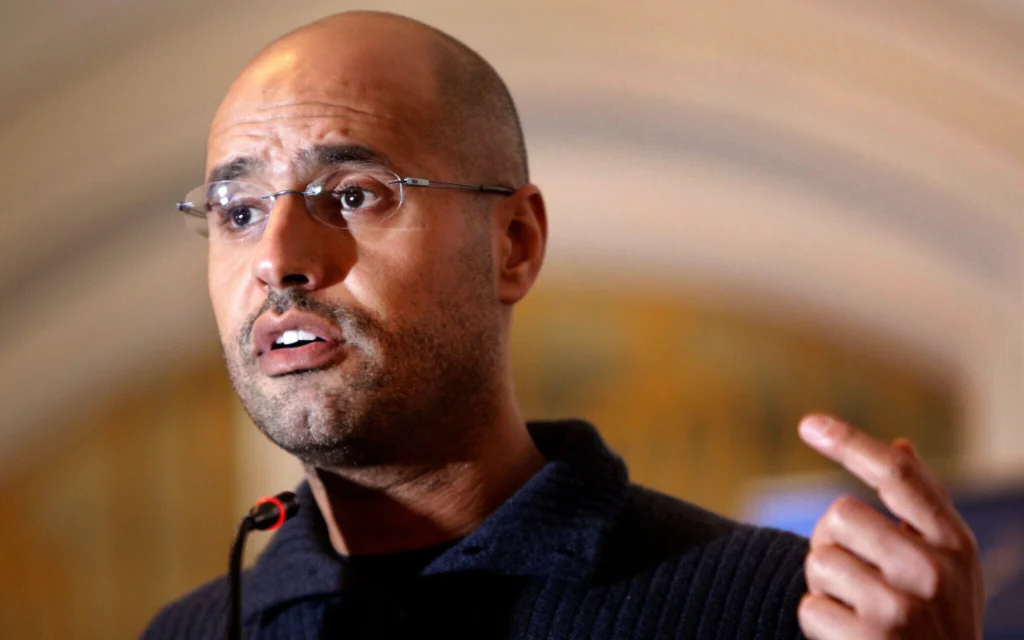
His bid immediately polarized the country. Victims of the Gaddafi era and armed groups that fought the regime rejected his return outright, while others argued that excluding him undermined claims of an inclusive political process. Libya’s High National Elections Committee ultimately disqualified him because of his criminal convictions, a decision he attempted to appeal.
The appeal process descended into chaos when armed fighters blocked access to the court, a standoff that became emblematic of Libya’s inability to hold a national vote. The election collapsed soon afterward, plunging the country back into political stalemate.
In a 2021 interview with The New York Times Magazine, Saif al-Islam outlined his long-term strategy, acknowledging the hostility he faced. “I’ve been away from the Libyan people for 10 years,” he said. “You need to come back slowly, slowly.”
His death now removes one of the most divisive figures from Libya’s already crowded political landscape. Analysts say the killing underscores the persistent dangers facing anyone associated with the former regime and the enduring absence of rule of law.
From an analytical standpoint, Saif al-Islam’s assassination highlights the unresolved legacy of Libya’s 2011 revolution. While his supporters saw him as a symbol of order and national sovereignty, opponents viewed his return as an insult to those who suffered under his father’s rule. That divide remains central to Libya’s instability.
The killing may also deter other controversial figures from reentering politics, reinforcing a climate where violence continues to shape outcomes more than institutions. With rival governments still competing for legitimacy and armed groups exercising de facto control across much of the country, political disputes frequently spill into lethal confrontations.
Libyan authorities said an investigation was expected, though accountability in high-profile killings has historically been elusive. For many Libyans, Saif al-Islam’s death closes a chapter that began with the fall of his father but leaves unanswered questions about justice, reconciliation and the country’s path forward.
Reuters




