

MADRID (BN24) — Sevilla coach Matías Almeyda has been suspended for seven matches after confronting a referee during his team’s recent La Liga draw against Alavés, Spain’s football authorities announced Wednesday.
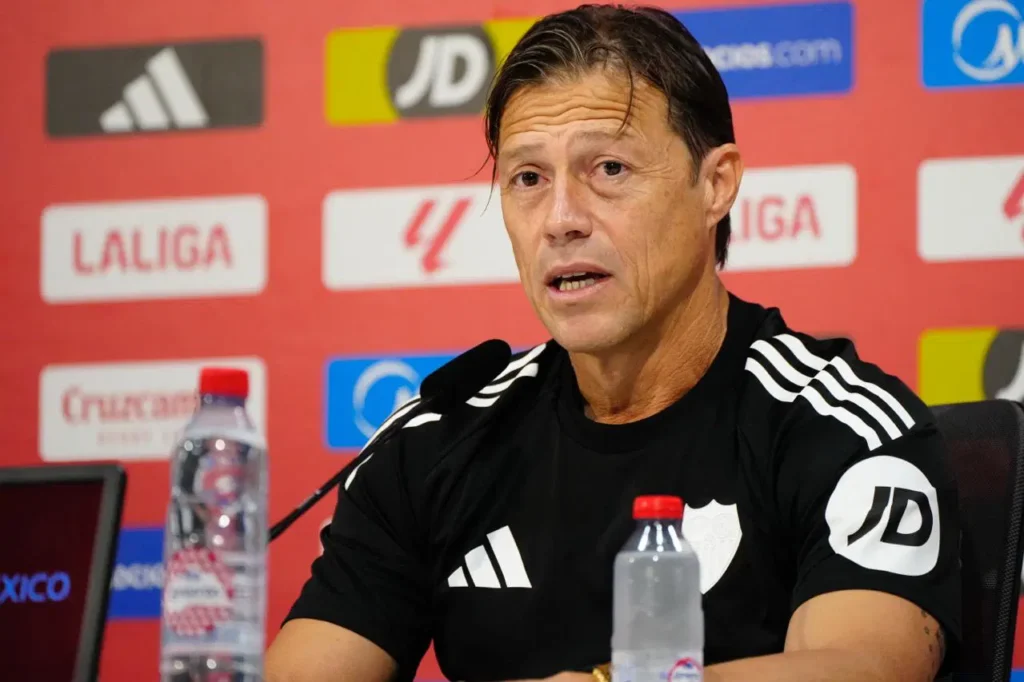
The 52-year-old Argentine was dismissed during the weekend fixture at the Ramón Sánchez-Pizjuán Stadium after protesting a decision. Following the red card, Almeyda entered the field of play and engaged in a heated exchange with the match official that lasted more than a minute.
In a ruling issued Feb. 18, the disciplinary committee of the Royal Spanish Football Federation outlined the sanctions imposed on the Sevilla coach. The breakdown includes a two-match suspension for his initial protests, a one-match penalty for remaining on the pitch after being sent off, three matches for what the committee described as an “attitude of contempt” toward the referee, and an additional one-match ban for unsporting conduct.
The cumulative sanction will sideline Almeyda for half of Sevilla’s remaining league fixtures. With 14 matches left in the campaign, the club sits 13th in the standings, only two points above the relegation zone.
The absence of the head coach during a pivotal stretch of the season represents a significant setback for the Andalusian side. Sevilla has endured an inconsistent campaign and now faces mounting pressure as it seeks to secure its status in Spain’s top division.
League authorities reiterated the importance of maintaining respect for referees and match officials, particularly amid heightened scrutiny of on-field conduct across European competitions. While emotional reactions are common in high-stakes matches, Spanish football’s governing body has taken a firm stance in recent seasons against behavior deemed disrespectful or confrontational.
Almeyda, a former Argentina international midfielder, took charge of Sevilla amid expectations of stabilizing the club after a turbulent run of results. His animated presence on the touchline has been a hallmark of his managerial style, but the latest incident underscores the disciplinary boundaries coaches must navigate.
The confrontation occurred during a tense phase of the match, with both teams contesting crucial points. Although details of the specific decision that prompted Almeyda’s protest were not elaborated in the federation’s announcement, the referee deemed the conduct severe enough to warrant an immediate dismissal.
Sevilla has not publicly indicated whether it intends to appeal the suspension. Under Spanish football regulations, clubs may challenge disciplinary decisions within a specified timeframe.
The timing of the suspension compounds the challenge facing Sevilla. Hovering near the relegation zone, the club must contend with upcoming fixtures that could define its season. Without Almeyda directing operations from the technical area, assistant coaches will assume responsibility for matchday decisions.
While managers may continue to oversee training sessions during suspensions, their absence on the bench can affect tactical adjustments and in-game communication. In closely contested matches, the inability to interact directly with officials or players from the touchline can alter team dynamics.
Sevilla’s recent form has reflected broader struggles within the squad, including defensive lapses and inconsistency in attack. The pressure of a relegation battle can intensify scrutiny on leadership, making Almeyda’s suspension particularly consequential.
Spanish football has increasingly emphasized decorum toward referees amid rising tensions across competitions. In recent seasons, governing bodies have introduced stricter enforcement measures to deter confrontations involving players and coaching staff.
The federation’s decision to detail the components of Almeyda’s suspension signals an intent to reinforce accountability. By specifying the categories — protest, refusal to exit, contempt and unsporting conduct the disciplinary committee underscored that multiple infractions compounded the sanction.
Such rulings also serve as a message to other coaches navigating emotionally charged environments. The balance between passionate advocacy and regulatory compliance remains a recurring theme in professional football.
From a competitive standpoint, Almeyda’s absence may test Sevilla’s organizational resilience. Teams battling relegation often rely heavily on strong sideline leadership to maintain composure during pressure-filled encounters. A prolonged suspension could influence player morale and tactical cohesion.
At the same time, disciplinary firmness may bolster institutional credibility. Leagues across Europe have grappled with maintaining respect for referees amid heated disputes. Clear consequences for violations reinforce standards that protect match officials and preserve the integrity of competition.
For Almeyda personally, the suspension may prompt reflection on balancing intensity with restraint. His career, both as a player and manager, has been defined by fiery competitiveness. Yet in a league as tightly regulated as La Liga, emotional displays can carry steep consequences.
Sevilla’s immediate priority will be navigating a demanding fixture list without its head coach on the touchline. The outcome of this period could shape not only the club’s league position but also perceptions of its long-term stability.
As the season enters its decisive phase, the Andalusian club faces a dual challenge: securing results on the field while managing the fallout from a disciplinary episode that has drawn attention across Spanish football.





