

TOKYO (BN24) — Japan’s parliament on Tuesday elected ultraconservative Sanae Takaichi as the country’s first female prime minister, a historic appointment that concludes months of political turmoil following the Liberal Democratic Party’s (LDP) consecutive election defeats. At 64 years old, Takaichi, head of the struggling ruling party, succeeds Shigeru Ishiba, who resigned along with his Cabinet after only one year in office, triggered by the party’s poor electoral performance in July.
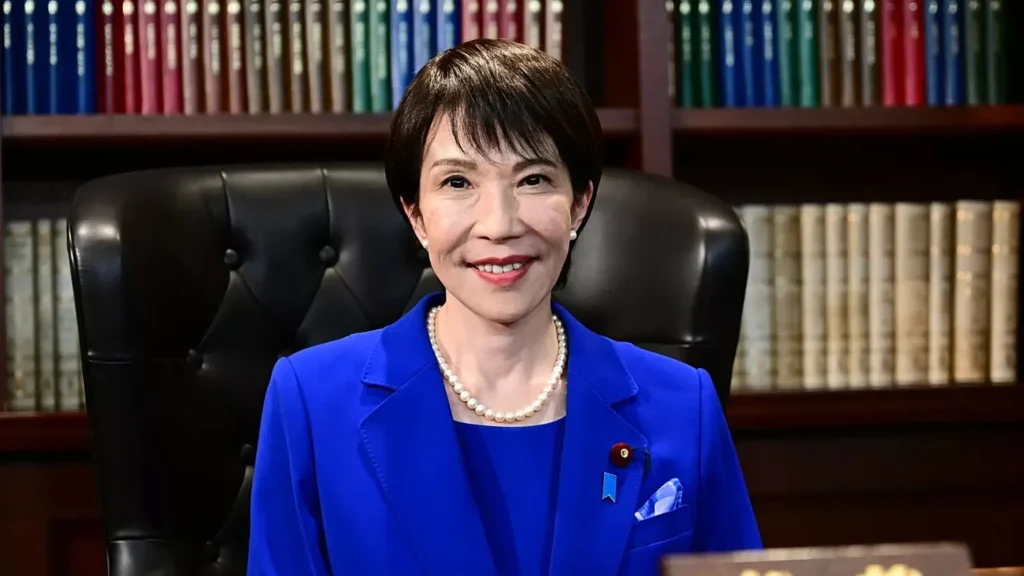
Takaichi’s rise to power comes on the heels of a last-minute coalition agreement forged between the LDP and the Osaka-based Japan Innovation Party (JIP), also known as Ishin no Kai. This alliance, while crucial in securing her premiership, falls short of an outright majority in both houses of Japan’s bicameral legislature. As a result, her governing bloc must seek support from other opposition parties to pass any significant legislation, raising concerns about the durability and stability of her administration.
At the coalition signing ceremony on Monday, held in Tokyo, Takaichi and JIP leader and Osaka Governor Hirofumi Yoshimura underscored the urgency of political stability. Takaichi declared, “Political stability is essential right now. Without stability, we cannot push measures for a strong economy or diplomacy.” This statement reflects her administration’s immediate priorities: to address economic challenges and navigate delicate foreign relations amid a shifting global environment.
The coalition deal signals a clear rightward tilt in Japanese politics. It comes just ten days after Komeito, the Buddhist-backed centrist party that had been a steady coalition partner of the LDP for decades, withdrew from the government. Komeito’s departure stemmed from frustrations with the LDP’s inadequate response to recent political scandals involving illicit slush funds, which contributed to the party’s electoral setbacks. Additionally, Komeito expressed deep unease with Takaichi’s nationalist views and actions, particularly her revisionist interpretation of Japan’s wartime past and her controversial visits to the Yasukuni Shrine—a shrine dedicated to Japan’s war dead, including convicted war criminals. These visits have drawn sharp rebukes from neighboring China and South Korea, who view them as a failure to acknowledge Japan’s wartime aggression.
Takaichi’s Cabinet is expected to include several close allies of Taro Aso, a prominent and influential figure within the LDP, as well as supporters who backed her during the party leadership contest. However, Yoshimura clarified that the Japan Innovation Party will not immediately accept ministerial posts in Takaichi’s Cabinet, opting instead to observe the stability of the coalition before fully committing to governance roles.
The new prime minister faces a pressing timeline. Within days, she is scheduled to deliver a major policy speech outlining her government’s agenda. She is also expected to hold discussions with U.S. President Donald Trump and participate in critical regional summits. Addressing Japan’s rising inflation and economic stagnation will be urgent priorities, with the government aiming to implement effective stimulus measures by late December in response to growing public dissatisfaction over living costs.

While Takaichi’s appointment marks a significant milestone as Japan’s first female prime minister, she is not seen as an advocate for progressive gender policies. Throughout her career, she has resisted initiatives aimed at advancing women’s rights and gender equality in Japan. She opposes reforms to the imperial succession laws that would allow women to ascend the throne, as well as efforts to legalize same-sex marriage or permit married couples to retain separate surnames. These positions highlight the conservative and traditionalist values she espouses, setting her apart from global trends toward greater inclusion and diversity.
A longtime protege of the late former Prime Minister Shinzo Abe, Takaichi is expected to continue Abe’s policy agenda. This includes efforts to strengthen Japan’s military capabilities, reinvigorate the economy, and pursue constitutional revision—particularly regarding Article 9, which renounces war. However, with a tenuous parliamentary majority and a coalition fraught with uncertainty, the extent to which Takaichi will be able to realize these ambitions remains unclear.
Takaichi’s nationalist rhetoric and controversial stances have exacerbated political divisions domestically and complicated Japan’s relations with its neighbors. Her visits to the Yasukuni Shrine have been a source of diplomatic tension, though she recently moderated her approach by sending a religious ornament in lieu of personally visiting the shrine, signaling a cautious attempt to ease frictions.
Moreover, Takaichi’s recent xenophobic remarks have further alienated moderate and centrist forces in Japanese politics, contributing to the fracturing of the governing coalition. As she steps into office, she must balance the competing demands of a divided parliament, an unsettled electorate, and complex regional dynamics that include tensions with China and North Korea. In this critical moment, Takaichi’s government will be closely watched for its ability to restore political stability, revitalize Japan’s economy, and navigate the country’s evolving geopolitical landscape.





