

Syrian government forces captured the strategic town of Tabqa on Sunday, seizing control of a critical dam and military air base as Damascus intensifies its push against U.S.-backed Kurdish forces east of the Euphrates River in a campaign that threatens to unravel the fragile post-Assad territorial settlement.
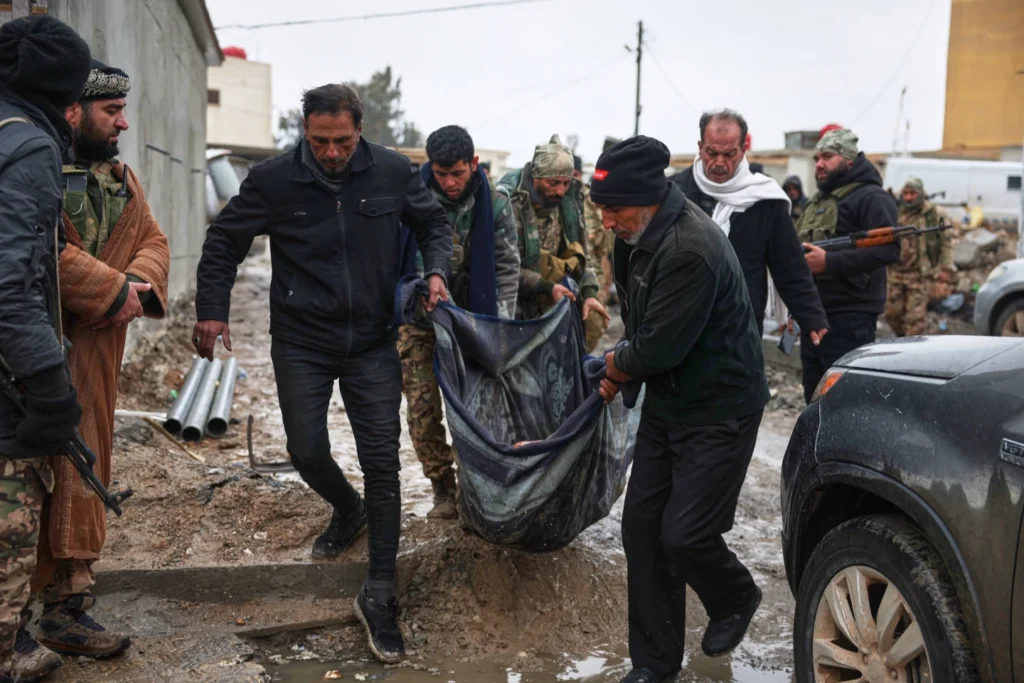
The military advance into Raqqa province represents a significant escalation in tensions between President Ahmad al-Sharaa’s government and the Syrian Democratic Forces, the Kurdish-led alliance that controls substantial territory across northeastern Syria and has served for years as Washington’s primary partner in combating the Islamic State group.
An Associated Press reporter in Tabqa witnessed residents emerging from homes to welcome Syrian troops while waving the national flag, scenes suggesting at least some local support for the government takeover in this predominantly Arab town. The reception reflects complex ethnic dynamics in areas where Arab populations have chafed under Kurdish-led administration despite the SDF’s military effectiveness against Islamic State militants.
The capture of Tabqa holds strategic importance due to the dam controlling water flow southward into territories still under SDF administration and the presence of a military air base that enhances Damascus’s ability to project power across the region. Control of water infrastructure provides leverage over downstream communities and agricultural production, creating economic and political pressure points beyond purely military considerations.
Tensions between Damascus and the SDF erupted into violence earlier this month when deadly clashes in Aleppo left 23 people dead and displaced tens of thousands. The government subsequently took control of three Aleppo neighborhoods previously held by Kurdish fighters, establishing a pattern of territorial gains that continued Sunday with the Tabqa operation.
Since leading the insurgency that ousted Bashar Assad in December 2024, al-Sharaa has struggled to assert comprehensive control across Syria’s war-ravaged territory and to win confidence from minority communities skeptical of Islamist-led governance. The government and SDF have exchanged accusations of violating a March agreement intended to reintegrate northeastern Syria and Kurdish forces with Damascus administration.
The United States, which developed strong ties with al-Sharaa’s government after Assad’s removal while maintaining its longstanding partnership with Kurdish forces, has attempted to mediate tensions between the two sides. Washington urged calm following this month’s Aleppo violence, seeking to preserve both relationships despite their increasingly apparent incompatibility.
SDF leader Mazloum Abdi announced Friday that his forces would withdraw from contested areas to positions east of the Euphrates River following al-Sharaa’s announcement of measures strengthening Kurdish rights in Syria. The withdrawal decision suggests Kurdish leadership concluded that defending exposed positions west of the river had become untenable given Damascus’s determination to reassert control and the limited international support for maintaining the territorial status quo.
Last week, Syria’s Defense Ministry declared a contested area in eastern Aleppo a military zone, encompassing portions of the tense frontline separating government and SDF territories. Government troops now appear to be advancing deeper toward Raqqa city, one of the most significant urban centers in northeastern Syria under Kurdish administration.
Tabqa represents the latest predominantly Arab town that government forces have captured in Raqqa province. How far into the Kurdish heartland the Syrian military will advance remains uncertain, though the trajectory suggests Damascus intends to reclaim substantial territory beyond mixed Arab-Kurdish areas.
Syrian state media SANA reported Sunday that Kurdish forces detonated a bridge in Tabqa, apparently attempting to slow government advances into the city. The bridge destruction indicates SDF forces withdrew under pressure rather than negotiating a peaceful handover, suggesting continued distrust despite announcements about Kurdish rights protections.
The Syrian government issued a statement accusing SDF forces of executing prisoners in Tabqa before withdrawing from the area. The SDF denied the allegations, stating they had transferred detainees from the prison, and accused government forces of firing at the facility. The Kurdish alliance shared video footage showing armed men in civilian clothing inside the prison seizing munitions left behind, with the person filming shouting, “We liberated Tabqa prison!” The brief video showed no bodies, leaving the execution allegations unverified.
The SDF captured Tabqa from Islamic State forces in 2017 during its military campaign to dismantle the extremist group’s self-proclaimed caliphate, which at its peak controlled vast territories across Syria and Iraq. The town’s return to government control reverses one of the key gains from that anti-Islamic State campaign, raising questions about whether Damascus can maintain security against potential extremist resurgence.
In Deir el-Zour province further east, the governor asked residents to remain home following reports of clashes with SDF forces. Relations between the Kurdish-led alliance and Arab tribes in the eastern province near a strategic border crossing with Iraq have remained strained, creating vulnerabilities that Damascus appears positioned to exploit.
Deir el-Zour hosts the Al-Omar oil field and Conoco gas facilities, located near where U.S. troops maintain bases in the area. Unconfirmed reports suggest local armed tribes opposing Kurdish-led administration have seized control of the energy installations, though neither U.S. forces nor SDF leadership have confirmed those accounts.
The Syrian Observatory for Human Rights, a Britain-based war monitor, reported that government forces gained control of more than a dozen villages and towns in eastern Deir el-Zour countryside after SDF forces withdrew. The territorial losses suggest Kurdish forces are conducting strategic retreats across multiple fronts rather than defending exposed positions that could become encircled.
The rapid government advances raise fundamental questions about the future of Kurdish autonomy in Syria and the sustainability of U.S. military presence in northeastern territories. American troops deployed to support SDF operations against Islamic State militants now find themselves amid escalating conflict between Damascus and their Kurdish partners, creating complex policy dilemmas for Washington.
The United States has approximately 900 troops stationed in Syria, primarily in the northeast, where they have partnered with SDF forces for years. The collapse of Kurdish-government cooperation undermines the security architecture that enabled those deployments and threatens to force Washington to choose between competing partnerships rather than maintaining both simultaneously.
For Kurdish communities in Syria, the government’s territorial advances evoke historical anxieties about Arabic domination and the loss of autonomy gains achieved during the civil war when Damascus’s attention focused elsewhere. The autonomous administration established in northeastern Syria during Assad’s rule represented unprecedented Kurdish self-governance that many fear will disappear under renewed Damascus control.
Al-Sharaa’s government faces delicate challenges in managing reconquered territories. Heavy-handed treatment of Kurdish populations could trigger renewed insurgency and international criticism, while excessive accommodation might encourage separatist sentiment and alienate Arab constituencies. The government must demonstrate it can provide security, services and inclusive governance superior to Kurdish administration without resorting to repression that characterized Assad’s rule.
The territorial realignment also affects international efforts to stabilize Syria and facilitate reconstruction. European nations and Gulf states considering engagement with Damascus will watch closely how the government treats Kurdish areas, using those interactions as indicators of whether al-Sharaa’s administration represents genuine departure from Assad-era authoritarianism or merely a rebranded version of centralized Arab rule.
Islamic State remnants retain presence across eastern Syria despite the group’s territorial defeat. The disruption caused by government-SDF conflict creates opportunities for extremist resurgence as security forces focus on each other rather than counterterrorism operations. Areas changing hands between competing authorities experience governance vacuums where militant cells can reestablish networks.
The role of external powers beyond the United States complicates the situation further. Turkey maintains intense interest in limiting Kurdish autonomy along its southern border and has conducted military operations against Syrian Kurdish forces it considers terrorist organizations. Russia retains military presence and political influence in Syria following its decisive intervention supporting Assad. Iran’s regional ambitions include maintaining access corridors through Syrian territory to support Lebanese Hezbollah.
These overlapping external interests create conditions where local conflicts between Damascus and Kurdish forces can escalate into broader confrontations involving multiple international actors. The United States’ dual relationships with both the Syrian government and Kurdish forces place Washington in an increasingly untenable position as the two sides move toward open conflict.
For ordinary Syrians in affected areas, the territorial fighting represents another chapter in over a decade of conflict that has devastated infrastructure, displaced millions and destroyed economic opportunities. War-weary populations care less about which authority controls their regions than whether governing powers can restore security, provide services and permit normal life to resume.
The coming weeks will reveal whether Sunday’s capture of Tabqa represents a limited operation to assert government control over mixed Arab-Kurdish areas or the beginning of a comprehensive campaign to eliminate Kurdish autonomy entirely. Kurdish leaders’ calculations about whether to defend remaining territories or withdraw to core Kurdish areas will shape the conflict’s trajectory and determine whether Syria moves toward unified governance or prolonged territorial partition.




