

JUBA, South Sudan (BN24) —Twenty-six staff members of Doctors Without Borders, widely known by its French acronym MSF, remain unaccounted for nearly a month after armed attacks struck two of its medical facilities in South Sudan’s Jonglei State, the organization announced Monday.
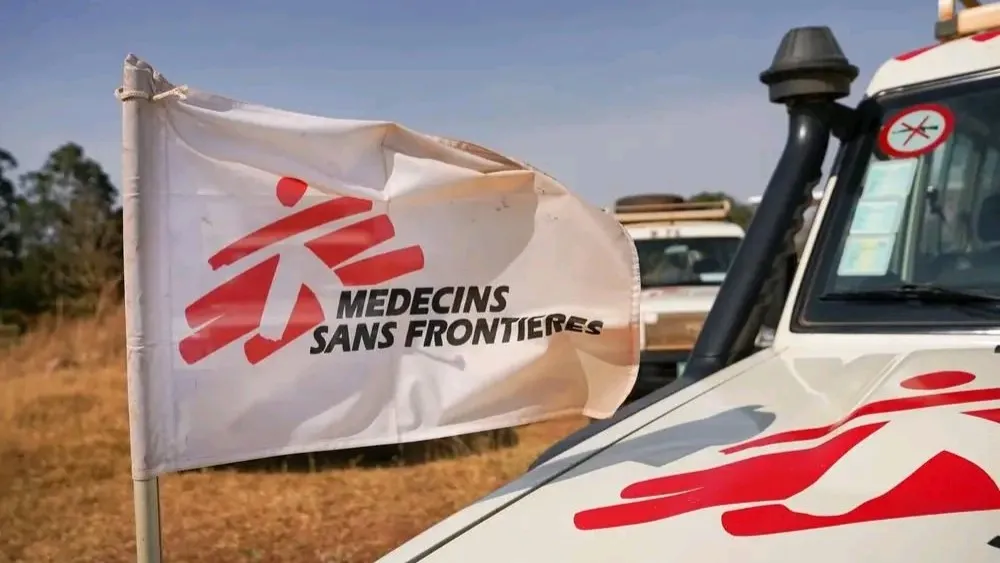
The violence erupted Feb. 3 in the northeastern region, where intensified fighting has uprooted an estimated 280,000 people since December. MSF said one of its hospitals in the town of Lankien was hit by aerial bombardment carried out by government forces. In contrast, a separate clinic in the town of Pieri was overrun by unidentified gunmen. Both locations are situated in areas previously controlled by opposition fighters.
In a written update issued Monday, MSF indicated that 26 out of 291 personnel assigned to its Lankien and Pieri projects have not been located.
“We have lost contact with them amid ongoing insecurity,” the organization said, underscoring that communication networks in Jonglei remain unreliable and may be hindering efforts to reach the missing staff.
Employees who have managed to reconnect with MSF described scenes of widespread destruction and persistent violence. They also recounted severe shortages of food, water, and basic services as communities fled deeper into remote rural terrain to escape clashes and airstrikes.
The Feb. 3 attacks unfolded against a backdrop of escalating hostilities in Jonglei State. Armed confrontations intensified in December when opposition fighters seized a series of government outposts across north-central parts of the state. In January, government troops mounted a counteroffensive and regained most of the lost ground, further destabilizing the region.
Civilians have borne the brunt of the renewed conflict. In Akobo, an opposition-held town near the Ethiopian border, displaced residents described episodes of extreme violence attributed to government-aligned forces. Several civilians said they walked for days in search of safety, often without reliable access to food or clean drinking water.
MSF’s facilities in Lankien and Pieri had been among the few operational health centers in the region, providing emergency care, maternal health services,s and treatment for common diseases. The temporary closure or disruption of these facilities has compounded humanitarian needs in a state already struggling with limited infrastructure.
Yashovardhan, MSF’s head of mission in South Sudan, said the impact of repeated attacks on medical infrastructure has been devastating.
“This violence has taken an unbearable toll not only on health care services, but on the very people who kept them running,” Yashovardhan said in a statement. He added that medical personnel must be protected under international humanitarian law. “Medical workers must never be targets. We are deeply concerned about what has happened to our colleagues and the communities we serve.”
Aid groups operating in South Sudan say assaults on humanitarian workers and assets have risen over the past year. MSF indicated that its facilities in the country have been struck or forcibly entered 10 times within the last 12 months. Such incidents have disrupted vaccination campaigns, emergency surgeries, and disease-control programs in one of the world’s most fragile states.
International humanitarian law prohibits deliberate attacks on medical facilities and staff during armed conflict. However, enforcement mechanisms are often limited in areas where government authority is contested, and armed groups operate with relative impunity.
South Sudan, the world’s youngest nation, has faced recurrent bouts of violence since gaining independence in 2011. Although a 2018 peace agreement formally ended a brutal civil war, sporadic clashes between rival factions have persisted, particularly in remote states like Jonglei, where political rivalries intersect with ethnic tensions and competition over resources.
Humanitarian organizations warn that displacement on the current scale risks triggering secondary crises, including malnutrition and disease outbreaks. Seasonal flooding in parts of Jonglei further complicates aid delivery, cutting off road access and forcing relief agencies to rely on air transport or river routes.
MSF has not specified whether negotiations are underway to secure safe passage or updated information about the missing workers. The organization said its immediate priority is reestablishing contact with staff and assessing whether it is safe to resume operations in the affected areas.
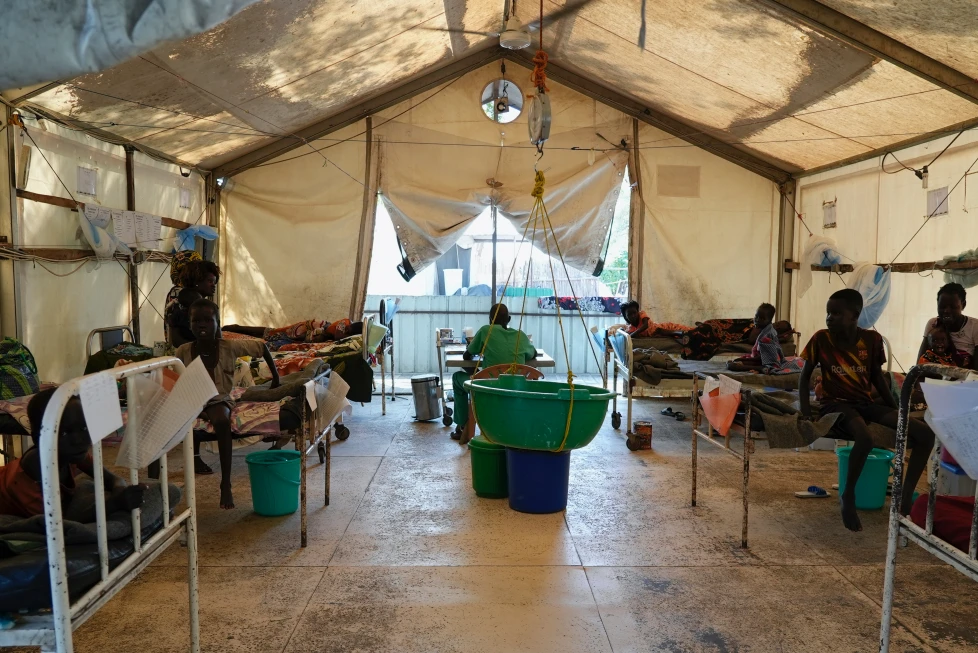
The disappearance of 26 MSF staff members highlights the increasingly precarious environment for humanitarian actors in South Sudan. While aid groups have long operated amid instability, the frequency and severity of attacks on health facilities suggest a troubling erosion of respect for neutral medical services.
The targeting or collateral damage of clinics in Lankien and Pieri may reflect the strategic importance of infrastructure in contested zones. In conflicts where territorial control shifts rapidly, hospitals can be perceived as symbols of authority or logistical hubs, making them vulnerable despite their protected status under international law.
The broader humanitarian implications are significant. With more than a quarter-million people displaced in Jonglei since December, the loss of functioning medical centers amplifies risks of untreated injuries, maternal deaths, and preventable diseases. In fragile settings, even short disruptions to health services can have cascading effects, particularly for children and pregnant women.
Repeated incidents involving aid organizations may also deter international groups from maintaining a presence in volatile areas. If security guarantees cannot be ensured, agencies could scale back operations, leaving already-isolated populations without lifesaving assistance.
For South Sudan’s transitional government, the situation presents both a political and reputational challenge. Ensuring accountability for attacks on medical facilities would signal a commitment to international norms. Failure to do so may strain relations with donors whose funding underpins much of the country’s humanitarian response.
As search efforts continue and sporadic communications emerge, the fate of the missing MSF workers remains uncertain. Their disappearance underscores the human cost of a conflict that, despite periodic peace agreements, continues to destabilize communities across Jonglei and beyond.
For families awaiting news and communities deprived of care, the impact of the Feb. 3 attacks extends far beyond damaged buildings — reaching into the fragile lifelines that sustain one of the world’s most vulnerable populations.





