

A South Sudanese man secured marriage to his bride through a lavish dowry presentation totaling $77,000 in cash, 297 cattle and multiple land parcels, prevailing over a rival suitor in a highly publicized courtship competition that has reignited continental debate about evolving traditional marriage practices and escalating bride price expectations.

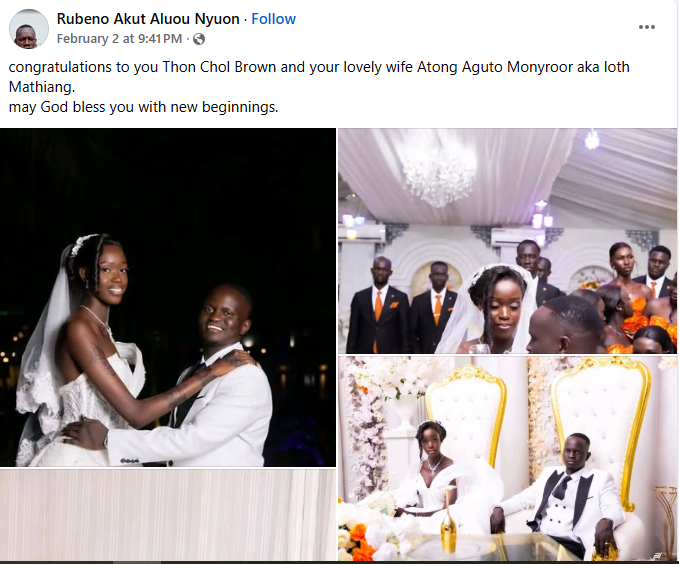
Thon Chol Riak married Atong Aguto Monyroor on February 1, 2026, in an elaborate wedding ceremony that concluded months of intense public fascination surrounding competing dowry offers from two prominent South Sudanese families seeking to formalize the union through customary Dinka cultural protocols.
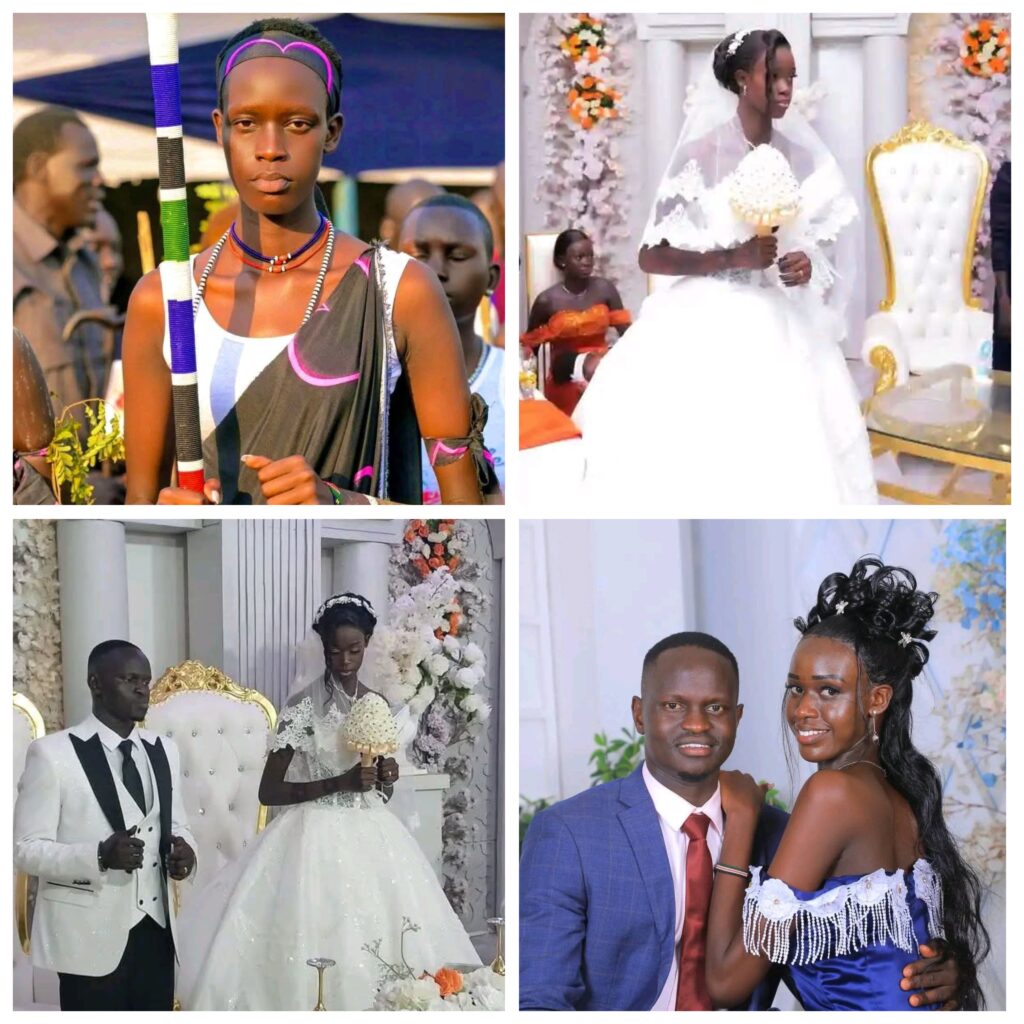
Social media imagery from the celebration documented a grand affair confirming the marriage after the protracted negotiation process captured widespread attention throughout South Sudan and across African digital platforms. The union represents one of the most publicized traditional marriages in recent South Sudanese history, with rival families presenting extraordinary wealth transfers that sparked national conversation about cultural preservation versus economic accessibility of marriage.
The courtship competition commenced in December 2025 when two influential family networks presented competing proposals for Atong Aguto Pach’s hand in marriage, each attempting to demonstrate superior capacity to provide for the bride and her family through substantial material commitments. Video documentation shared by GD Maniir Media chronicled the traditional negotiation process that culminated in Riak’s successful courtship.
The Awulian community, supporting suitor Mabior Abit Biar, presented an initial offer comprising 158 cattle, 161 goats and dozens of sheep—livestock holdings representing substantial agricultural wealth in South Sudanese pastoral economies. The proposal extended beyond animal assets to include urban real estate consisting of a town bungalow and seven land plots in Juba, the national capital, plus two motor vehicles and approximately 3.2 million Kenyan shillings ($25,000) in cash.
This comprehensive package would constitute exceptional wealth by South Sudanese standards, where per capita gross domestic product remains among the continent’s lowest following decades of civil conflict and ongoing political instability. The inclusion of urban property and vehicles alongside traditional livestock offerings demonstrates how contemporary dowry practices blend customary expectations with modern economic realities.
However, the Abang community, backing eventual successful groom Thon Chol Riak, countered with a substantially larger presentation promising 297 cattle—nearly double the rival offer’s bovine component—plus 9.9 million Kenyan shillings ($77,000) in cash, unspecified land holdings, additional assets, and educational sponsorships for two of the bride’s relatives. This commitment to finance family members’ schooling reflects growing recognition that educational access constitutes valuable long-term investment comparable to immediate material transfers.
The scale of competing offers generated polarized reactions within South Sudan and broader African communities observing the spectacle. Supporters characterized the lavish presentations as authentic expressions of cultural identity and tangible demonstrations of grooms’ capacity to sustain families according to time-honored Dinka traditions that have governed marriage formation for generations.
Critics expressed alarm about escalating dowry valuations that increasingly place marriage beyond economic reach of ordinary South Sudanese men, potentially contributing to delayed family formation, cohabitation without formal marriage, or financial hardship as families strain to meet inflated expectations. This tension between cultural continuity and practical accessibility represents a fundamental challenge facing traditional societies navigating modernity’s economic pressures.
Among many South Sudanese communities, particularly within Dinka, Nuer and other pastoralist ethnic groups, marriage constitutes a union between extended families and clans rather than merely joining two individuals. This conceptual framework positions dowry payments as establishing reciprocal obligations and social bonds transcending the couple, incorporating entire kinship networks into relationships of mutual support and responsibility.
Cattle carry profound cultural significance extending beyond their economic value as agricultural assets or wealth stores. Bovine ownership historically indicated honor, social standing and masculine achievement within pastoral societies where herding expertise and livestock accumulation demonstrated capacity to provide sustenance and security. The prestige associated with cattle ownership persists despite South Sudan’s partial urbanization and economic diversification.
The tradition of bride price payments—labeled dowry in common usage though technically constituting bride wealth transferred from groom’s family to bride’s family—reflects fundamentally different marriage economics than Western dowry systems where brides’ families provided assets to grooms. African bride price compensates the bride’s family for losing a productive member while establishing the groom’s commitment and capability to fulfill husbandly responsibilities.
Contemporary bride price negotiations increasingly incorporate modern assets alongside traditional livestock. Urban real estate, motor vehicles, cash payments and educational sponsorships supplement or partially replace cattle in communities where pastoral lifestyles have yielded to wage employment and urban residence. This evolution demonstrates cultural adaptation while maintaining core principles of demonstrating provider capacity and cementing family alliances.
The publicized nature of Riak and Monyroor’s courtship competition represents a relatively recent phenomenon enabled by social media connectivity and smartphone proliferation. Traditional marriage negotiations historically occurred privately among family elders through deliberative processes shielded from public scrutiny. Contemporary documentation and online sharing transform intimate family matters into spectacles subject to public commentary and debate.
This transparency generates both benefits and complications. Public awareness can hold families accountable to cultural standards and prevent exploitation, but exposure also invites external judgment and can intensify competitive pressures as families seek to avoid perceived inadequacy. The viral attention surrounding this particular marriage likely influenced the escalating offers as competing families recognized their proposals would be evaluated by national audiences.
The economic implications of these elevated dowry expectations extend beyond individual families to influence broader social patterns. Young men facing astronomical marriage costs may postpone unions indefinitely, contributing to demographic shifts including later family formation and reduced fertility rates. Some resort to debt or risky income-generating activities to accumulate necessary resources, potentially destabilizing their financial futures.
Women’s agency within these traditional frameworks remains contested. Critics argue that substantial bride price payments commodify women and reinforce patriarchal control by framing marriage as a transaction where husbands acquire rights over wives. Defenders contend that bride wealth validates women’s value and ensures families invest significantly in marriages, theoretically increasing commitment and reducing casual abandonment.
The educational sponsorship component of Riak’s successful offer introduces an intriguing dimension suggesting evolving priorities. By committing to finance relatives’ schooling, the groom’s family acknowledges education’s transformative potential and positions themselves as investing in the bride’s extended family’s long-term prosperity rather than merely transferring immediate wealth. This forward-looking element may represent emerging trends in dowry practices.
South Sudan’s specific context—emerging from decades of civil war, achieving independence in 2011, then descending into renewed internal conflict from 2013—shapes how communities approach marriage traditions. In societies disrupted by violence and displacement, cultural practices like elaborate marriage ceremonies and substantial dowry payments represent assertions of identity continuity and normalcy amid chaos.
The February 1 wedding ceremony’s lavish nature, documented through social media imagery showing festive gatherings and celebratory rituals, served multiple functions beyond formalizing one couple’s union. Such events demonstrate community resilience, provide opportunities for dispersed families to reunite, and reassert cultural values that conflict and displacement threaten to erode.
Linda Ikeji’s coverage and Tuko’s documentation of the marriage ensured the story reached pan-African audiences, sparking conversations about tradition and modernity across the continent. Similar debates occur throughout Africa as urbanization, education access and economic change reshape courtship and marriage practices that evolved in predominantly rural, agricultural societies.
The intersection of tradition and contemporary economic realities creates unique pressures in societies like South Sudan where many citizens maintain strong cultural identities while confronting modern cash economies, urban lifestyles and global connectivity. Navigating these tensions without abandoning valued traditions or creating unsustainable economic expectations represents an ongoing challenge.
As the newlyweds begin their life together, their highly publicized union will likely continue influencing South Sudanese discourse about appropriate dowry levels, cultural authenticity and marriage accessibility. Whether their story inspires emulation or prompts reconsideration of escalating expectations remains to be determined as communities grapple with balancing cultural preservation and practical sustainability.
LindaIkeji/Tuko




