

A drone strike blamed on Sudan’s powerful paramilitary Rapid Support Forces struck a vehicle carrying displaced families in central Sudan on Saturday, killing at least 24 people, including eight children, medical monitors said, in what rights groups described as another grave escalation in attacks on civilians and humanitarian operations.
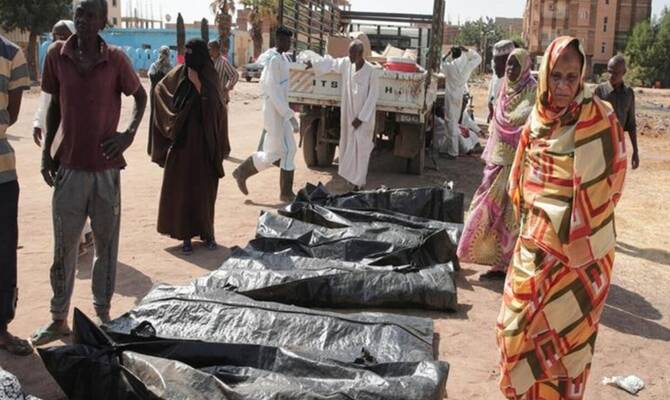
The Sudan Doctors Network said the attack occurred near the city of Rahad in North Kordofan province, an area that has become increasingly volatile as front lines shift in Sudan’s nearly three-year war. The vehicle was transporting families who had fled fighting in the Dubeiker area, seeking safety from clashes that have engulfed much of the region.
Among the dead were two infants, the doctors’ group said, underscoring the toll the conflict continues to take on children. Several other people were wounded and rushed to medical facilities in Rahad, where hospitals and clinics face chronic shortages of medicines, equipment and staff, conditions mirrored across much of Kordofan.
In a statement, the Sudan Doctors Network appealed to the international community and human rights organizations to intervene, calling for urgent action to protect civilians and hold the leadership of the Rapid Support Forces, or RSF, “directly accountable” for what it described as serious violations.
There was no immediate response from the RSF, which has been locked in a brutal struggle with Sudan’s military for control of the country since April 2023. The conflict erupted after a power struggle between army chief Gen. Abdel-Fattah Burhan and RSF commander Gen. Mohamed Hamdan Dagalo, widely known as Hemedti, collapsed into open warfare in the capital, Khartoum, and rapidly spread nationwide.
The strike on the displaced families came just one day after a separate drone attack hit a World Food Programme aid convoy in the same province, raising alarm among humanitarian agencies already struggling to operate in one of the world’s most dangerous aid environments.
Denise Brown, the United Nations’ resident and humanitarian coordinator in Sudan, said the WFP convoy was traveling to deliver “life-saving food assistance” to displaced people in the city of El Obeid when it was struck. One person was killed and several others were wounded, she said, as the trucks caught fire and food supplies were destroyed.
“Attacks on aid operations undermine efforts to reach people facing hunger and displacement,” Brown said, warning that repeated strikes on humanitarian assets threaten to cut off already desperate communities from assistance.
Brown also pointed to another drone strike earlier in the week near a WFP facility in Yabus, in Blue Nile state, which wounded a WFP staff member. She said she personally encountered the aftermath of Friday’s convoy attack hours later while leaving El Obeid, a stark reminder of the insecurity facing aid workers.
Emergency Lawyers, an independent Sudanese group that documents abuses during the war, blamed the RSF for the convoy attack. The Sudan Doctors Network went further, describing the strike as a “flagrant violation of international humanitarian law” that amounted to a war crime.
International condemnation followed swiftly. Massad Boulos, a U.S. adviser for African and Arab affairs, denounced the attack in a message on X, calling the destruction of food aid and the killing of humanitarian workers “sickening.”
“The Trump Administration has zero tolerance for this destruction of life and of U.S.-funded assistance,” Boulos wrote. “We demand accountability.”
Britain’s minister for international development and Africa, Jenny Chapman, also criticized the strike, describing it as “disgraceful” and stressing that aid workers and humanitarian operations “should never be targeted” as civilians face widespread hunger.
Saudi Arabia’s foreign ministry issued a strongly worded statement condemning a series of recent drone strikes attributed to the RSF, including the attack on displaced families, the WFP convoy and an earlier strike on a hospital in Kordofan that killed at least 22 people. The statement called on the RSF to halt attacks on civilians and aid convoys and criticized foreign actors that continue to supply “illegal arms, mercenaries and foreign fighters” — a reference widely interpreted as pointing to the United Arab Emirates. The UAE has denied accusations by rights groups and U.N. experts that it arms the RSF.
Kordofan has emerged as a major battleground in recent months, though Sudan’s military said it managed to break RSF sieges of two key cities in the region earlier this year. Despite those developments, civilians remain trapped between shifting front lines, with displacement accelerating as violence spreads.
The war has killed more than 40,000 people, according to United Nations figures, though aid organizations caution that the true death toll is likely far higher. More than 14 million people have been forced from their homes, creating what the U.N. describes as the world’s largest humanitarian crisis.
Disease outbreaks, collapsing health systems and blocked aid routes have pushed parts of Sudan into famine. A report released Thursday by the Integrated Food Security Phase Classification, or IPC, found that famine conditions had expanded to two additional areas in Darfur, months after famine was confirmed in a displacement camp there in August 2024.
The IPC warned that acute malnutrition is expected to worsen significantly in 2026, projecting a 13.5% increase among children under five and pregnant or breastfeeding women — rising from 3.7 million affected in 2025 to nearly 4.2 million next year. Severe acute malnutrition, the deadliest form, is forecast to reach 800,000 cases.
Mohamad Abdiladif, Save the Children’s country director in Sudan, said children are already dying from hunger-related causes across large swaths of the country.
“Every day we hear devastating stories of parents selling the last of what they own simply to keep their children alive from one day to the next,” he said.
The twin drone attacks in North Kordofan — one on fleeing families, the other on food aid — illustrate how Sudan’s war has evolved into a conflict where civilians and humanitarian lifelines are increasingly in the crosshairs. Analysts say the growing use of drones by armed actors has expanded the battlefield, allowing strikes far from traditional front lines and deepening the sense of insecurity.
Targeting aid convoys not only violates international law but also compounds famine risks by disrupting fragile supply chains. Each destroyed truck represents thousands of missed meals in a country where millions already rely on humanitarian assistance to survive.
As diplomatic efforts to end the war remain stalled, the attacks underscore a grim reality: without sustained international pressure and accountability, Sudan’s civilians are likely to bear an even heavier burden, caught between armed forces willing to turn displacement routes and aid deliveries into lethal targets.
AP




