

United Nations human rights investigators have documented the deaths of more than 6,000 civilians during a catastrophic three-day assault on the Sudanese city of el-Fasher in late October, describing systematic atrocities by paramilitary forces that constitute war crimes and potentially crimes against humanity.
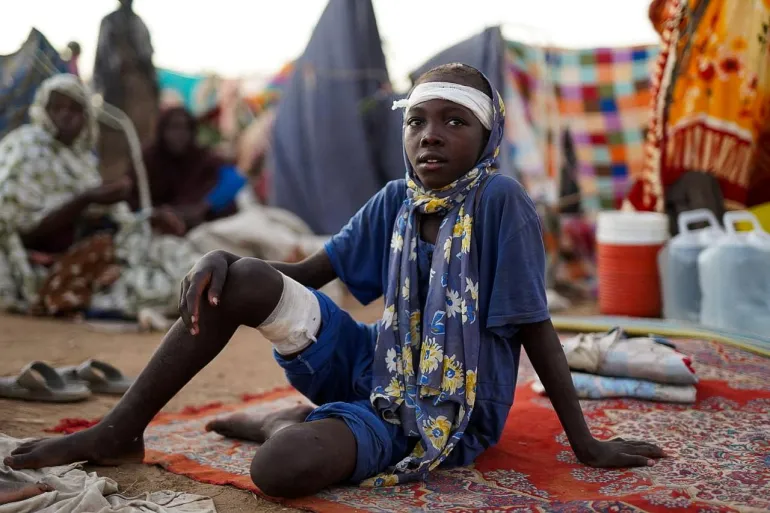
The Rapid Support Forces unleashed what the UN Human Rights Office characterized as “a wave of intense violence … shocking in its scale and brutality” when they overran el-Fasher, the Sudanese military’s final remaining bastion in the Darfur region. The offensive culminated on October 26 following an 18-month siege that had already devastated the city’s population and infrastructure.
“The wanton violations that were perpetrated by the RSF and allied Arab militia in the final offensive on el-Fasher underscore that persistent impunity fuels continued cycles of violence,” declared UN High Commissioner for Human Rights Volker Türk in a statement accompanying the 29-page report released Friday.
The investigation documented at least 4,400 people killed within el-Fasher between October 25 and October 27, with an additional 1,600 civilians slaughtered as they attempted to flee the paramilitary rampage. Researchers compiled the death toll through interviews with 140 victims and witnesses, cross-referenced against independent satellite imagery analysis and contemporaneous video documentation.
However, investigators cautioned that the actual casualty figures from the week-long offensive remain “undoubtedly significantly higher” than confirmed deaths. The documented toll excludes at least 460 people killed when RSF fighters stormed the Saudi Maternity Hospital on October 28, according to the World Health Organization, and approximately 300 residents killed during shelling and drone strikes on the Abu Shouk displacement camp northwest of the city between October 23 and October 24.
The report catalogues a horrifying litany of atrocities including mass killings, summary executions, widespread sexual violence, abductions for ransom, torture, arbitrary detention, and enforced disappearances. Investigators found that attacks frequently targeted specific ethnic groups, with African communities from the Zaghawa and other non-Arab tribes bearing disproportionate violence.
In one particularly gruesome incident on October 26, RSF combatants opened fire with heavy weapons on approximately 1,000 civilians sheltering in the Rashid dormitory at el-Fasher University, killing an estimated 500 people. A witness described seeing bodies hurled into the air by the explosions, comparing the scene to “a horror movie,” according to testimony recorded in the UN report.
That same day, approximately 600 people—including 50 children—were executed while seeking refuge in other university facilities. The deliberate targeting of educational institutions where civilians had gathered for protection demonstrates what investigators characterize as systematic rather than incidental violence against non-combatants.
Sexual violence emerged as a pervasive weapon of war during the el-Fasher offensive. RSF fighters and their allied Janjaweed Arab militias systematically raped women and girls, particularly targeting those from Zaghawa communities accused of maintaining links to or supporting the Sudanese military. Both individual rapes and gang rapes occurred with apparent frequency, according to survivor testimonies.
Türk, who traveled to Sudan last month to assess the humanitarian catastrophe firsthand, emphasized that sexual violence survivors provided accounts demonstrating the practice “was systematically used as a weapon of war” rather than isolated criminal acts by individual combatants.
The paramilitaries established at least 10 detention facilities throughout el-Fasher following their capture of the city, including converting the Children’s Hospital into an interrogation and holding center. Thousands of residents have been confined in these facilities, with several thousand more remaining missing and unaccounted for weeks after the offensive concluded.
Many civilians attempting to escape el-Fasher were abducted by RSF forces and released only after families paid substantial ransoms—a pattern that transforms wartime violence into profitable criminal enterprise while terrorizing populations already traumatized by combat and displacement.
The RSF did not respond to requests for comment on the UN findings. General Mohammed Hamdan Dagalo, the paramilitary force’s commander, has previously acknowledged that his fighters committed abuses but has consistently disputed the scale and systematic nature of reported atrocities.
The el-Fasher massacre mirrors RSF operational patterns documented in previous offensives, including attacks on the Zamzam displacement camp 15 kilometers south of el-Fasher and the 2023 assaults on West Darfur’s Geneina city and the nearby town of Ardamata. This consistency across multiple locations and timeframes supports UN assessments that atrocities represent deliberate strategy rather than breakdowns in discipline.
Türk concluded that “reasonable grounds” exist to determine that RSF forces and allied Arab militias committed war crimes during the el-Fasher offensive, with their actions potentially rising to the threshold of crimes against humanity—the gravest category of international criminal law short of genocide. He demanded accountability for those responsible, including commanders who directed operations or failed to prevent subordinate atrocities.
The violence in el-Fasher unfolds within Sudan’s broader civil war, which erupted in April 2023 when power-sharing tensions between the RSF and the Sudanese Armed Forces exploded into open combat in Khartoum and rapidly spread nationwide. The conflict has created what aid organizations describe as the world’s largest humanitarian emergency, with multiple regions experiencing famine conditions and millions displaced both internally and as refugees in neighboring countries.
The International Criminal Court has announced investigations into alleged war crimes and crimes against humanity committed during the conflict. The Biden administration determined in its final months that RSF forces were committing genocide in Darfur—a designation carrying significant legal and diplomatic implications, though the Trump administration has not yet confirmed whether it will maintain that assessment.
Diplomatic efforts to negotiate a ceasefire resumed Wednesday in Cairo, where Egyptian and United Nations officials convened talks aimed at securing a nationwide humanitarian truce as the war approaches its three-year anniversary. Egyptian Foreign Minister Badr Abdelatty emphasized that Cairo would not accept Sudan’s collapse, institutional disintegration, or territorial partition, describing such outcomes as “red lines” for Egyptian national security.
“There is absolutely no room for recognizing parallel entities or any militias. Under no circumstances can we equate Sudanese state institutions, including the Sudanese army, with any other militias,” Abdelatty declared during a joint press conference with Ramtane Lamamra, the UN Secretary-General’s personal envoy for Sudan. The comments signal Egypt’s fundamental rejection of treating the RSF as a legitimate political or military actor equivalent to Sudan’s internationally recognized government.
Lamamra offered cautious optimism that diplomacy could still produce resolution despite repeated previous failures. “The meeting demonstrated that diplomacy remains a viable path toward peace,” he said, though he acknowledged the enormous challenges facing negotiators.
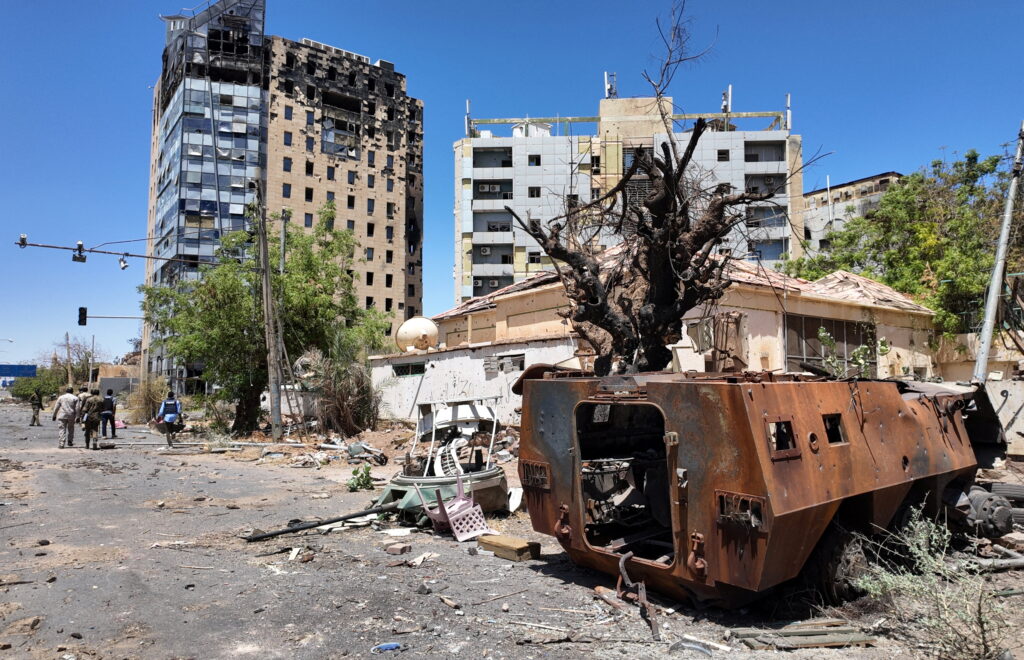
Massad Boulos, senior U.S. adviser for Arab and African Affairs, participated in the Cairo discussions and announced that more than 1.3 metric tons of humanitarian supplies reached el-Fasher on Wednesday—the first aid delivery since the RSF siege began 18 months ago. The shipment resulted from American-led negotiations, demonstrating limited progress on humanitarian access despite continued military confrontation.
“As we press the warring parties for a nationwide humanitarian truce, we will continue to support mechanisms to facilitate the unhindered delivery of assistance to areas suffering from famine, malnutrition, and conflict-driven displacement,” Boulos wrote on social media platform X.
Egyptian President Abdel Fattah el-Sissi met with Boulos to coordinate bilateral efforts toward stabilizing Sudan, expressing appreciation for President Donald Trump’s engagement on the crisis. The Egyptian leader emphasized the interconnection between Egyptian and Sudanese national security, suggesting Cairo’s willingness to take direct action if Sudan’s territorial integrity faces existential threats.
The United States, Saudi Arabia, Egypt, and the United Arab Emirates—collectively known as the Quad—have proposed a humanitarian truce that both warring parties reportedly accepted in principle. However, fighting has continued unabated despite these commitments, raising questions about the belligerents’ sincerity and the international community’s leverage to enforce agreements.
Violence continued this week with fresh atrocities reported across multiple fronts. The UN Office for the Coordination of Humanitarian Affairs confirmed that at least 19 civilians died during ground operations Monday in Jarjira, North Darfur. A Darfur rebel group aligned with the Sudanese military claimed responsibility for a joint operation that reportedly liberated the area and forced RSF withdrawal southward.
An additional 10 civilians died and nine sustained injuries Monday when a drone strike hit Sinja, the capital of Sennar province, according to OCHA and the Sudan Doctors Network. The medical advocacy organization attributed the attack to RSF forces and condemned the deliberate targeting of civilians as “a full-fledged war crime.”
“The network holds the RSF fully responsible and demands an end to the targeting of civilians and the protection of civilian infrastructure,” the group stated, reflecting mounting frustration among humanitarian workers witnessing persistent attacks on non-combatants and medical facilities.
Recent violence has displaced more than 8,000 additional people from North Darfur villages, with some seeking safer locations within the province while others fled across the border into Chad, according to International Organization for Migration estimates. The fresh displacement adds to millions already uprooted by nearly three years of conflict.
The el-Fasher massacre and continuing atrocities present the international community with profound moral and practical challenges. Despite extensive documentation of war crimes, crimes against humanity, and potential genocide, mechanisms for accountability remain largely theoretical. The Sudanese government has not accepted ICC jurisdiction, limiting the court’s ability to prosecute suspects, while UN Security Council action faces potential vetoes from members prioritizing geopolitical considerations over humanitarian imperatives.
Sudan’s descent into what some analysts characterize as state collapse creates additional complications for peacemaking efforts. With military forces controlling some regions, RSF paramilitaries dominating others, and various armed groups holding additional territory, no clear path exists toward restoring unified governance even if a ceasefire could be achieved.
The humanitarian catastrophe continues expanding as international attention and resources remain limited. Famine conditions persist in multiple regions, with aid organizations warning that hundreds of thousands face starvation without immediate intervention. Yet insecurity, bureaucratic obstacles, and deliberate obstruction by warring parties prevent adequate humanitarian access to populations in desperate need.
For the survivors of el-Fasher’s October massacre and Sudan’s broader civil war, the international community’s response will determine whether perpetrators face justice or impunity prevails. The UN report’s documentation provides essential evidence for future accountability mechanisms, but translating evidence into prosecutions requires political will that has proven elusive in previous African conflicts.
As diplomatic efforts resume in Cairo and humanitarian workers struggle to reach suffering populations, the fundamental question remains whether the international system possesses the capacity and determination to halt mass atrocities in real time rather than merely documenting them for historical record. For the 6,000 civilians who died in el-Fasher and countless others killed throughout Sudan’s war, the answer has already arrived too late.
AP




