

El-Fasher, Sudan (BN24) — In the besieged city of el-Fasher in Sudan’s Darfur region, the thump of artillery echoes through makeshift camps where civilians huddle in fear. Among them is 13-year-old Ahmed Abdul Rahman, lying in pain from injuries caused by a recent shelling. His body is riddled with shrapnel, and like many in the war-torn city, he is caught in a worsening humanitarian crisis as paramilitary forces close in.

Ahmed’s mother, Islam Abdullah, lifts her son’s shirt to reveal deep wounds across his emaciated frame, injuries worsened by hunger and the lack of medical care. “His condition is unstable,” she says, her voice heavy with helplessness. Medical facilities in the city have been damaged or shut down, and the little that remains is running dangerously low on supplies.
El-Fasher, once a relatively stable urban center in Darfur, has been under siege by the Rapid Support Forces (RSF) for 17 months. The RSF, a powerful paramilitary group, is engaged in a brutal power struggle with the Sudanese army. As the army clings to a shrinking perimeter around the city’s airport, tens of thousands of civilians remain trapped, facing daily bombardments, food shortages, and constant fear.
The siege intensified after RSF forces lost ground in Khartoum earlier this year. Now they are pushing hard to capture el-Fasher, the army’s last stronghold in western Sudan, and are making tactical gains. Verified footage shows RSF fighters operating from what has been identified as the Sudanese military’s armored corps headquarters.
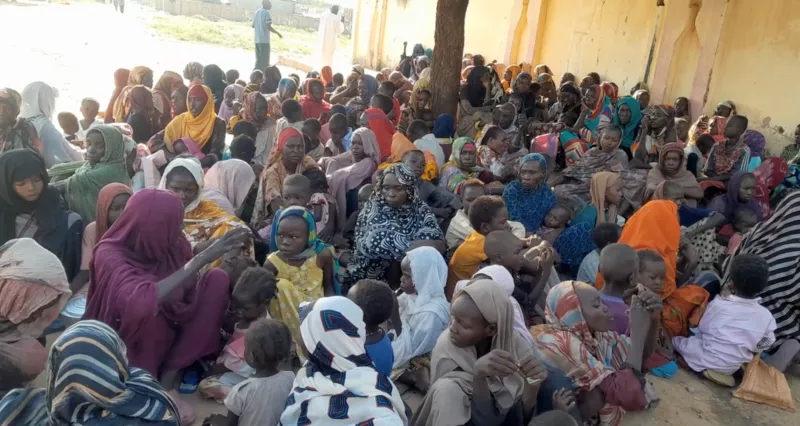
For those caught in the fighting, survival is increasingly tenuous.
Hamida Adam Ali was left immobilized on a road for five days after a shell tore through her leg. She was eventually brought to a displacement camp, where she now lies with an untreated, festering wound. “I don’t know if my husband is dead or alive,” she says. “My children have been crying for days. Sometimes they find food, sometimes they go to bed hungry. I have nothing.”
Initial reports suggested Hamida had died in a subsequent shelling incident. But a BBC journalist later confirmed she had survived, though a woman beside her was killed.
Recent RSF advances have raised fears of a complete takeover. Sudanese military divisions, including the Sixth Infantry, are still defending scattered bases. Soldiers were recently filmed celebrating the arrival of supplies dropped from the air. Yet in the propaganda war, RSF media continues to portray an imminent victory.
Sudanese political analyst Kholood Khair says the strategic value of el-Fasher is immense. Capturing the city would allow the RSF to solidify control across Darfur and reestablish supply routes through southern Libya. “From el-Fasher, the RSF could launch renewed offensives into the Kordofan region and potentially toward Khartoum,” Khair said. “This would significantly strengthen their military position.”
For local militias aligned with the army, known as the Joint Forces, the fight is existential. “If they lose Darfur, they lose their political claim to it,” Khair said. “It’s a battle for their survival.”
But as the military maneuvers continue, civilians are bearing the cost.
Drone strikes — reportedly using equipment supplied by the United Arab Emirates, despite denials, have targeted both military and civilian areas. One verified video shows a drone hitting an informal market. In another attack, more than 75 people were killed when a mosque was struck during morning prayers. The RSF has not claimed responsibility.
Samah Abdullah Hussein buried her young son, Samir, in a mass grave after that mosque strike. He had been hiding in a schoolyard with his brother. “His brain came out,” she says, describing the shrapnel wound that killed him. Her other son survived but was badly injured, as was she.
The United Nations has warned of possible mass atrocities if El-Fasher falls. Thousands have already fled, facing robbery and violence along escape routes. Human rights groups accuse the RSF of targeting non-Arab ethnic groups, including the local Zaghawa community — allegations the RSF denies.
Meanwhile, the RSF is circulating videos showing fighters distributing aid and welcoming fleeing civilians. One refugee watching from abroad was startled to recognize people in the footage, a soccer teammate, a musician, even his own relatives.
“It devastated me,” he said. “I will be worried until I hear they are safe. But it’s not just about my family, it’s about my city, my memories. It’s like a nightmare.”
El-Fasher remains on edge. With food and medicine dwindling, and frontlines closing in, those still trapped can do little but wait.





