

The U.S. Supreme Court on Thursday authorized Texas to implement a newly revised congressional district map crafted to strengthen Republican dominance in the 2026 midterm elections. The conservative majority granted an emergency request from Gov. Greg Abbott, halting a lower-court ruling that concluded Texas lawmakers had impermissibly used race while repositioning district lines.
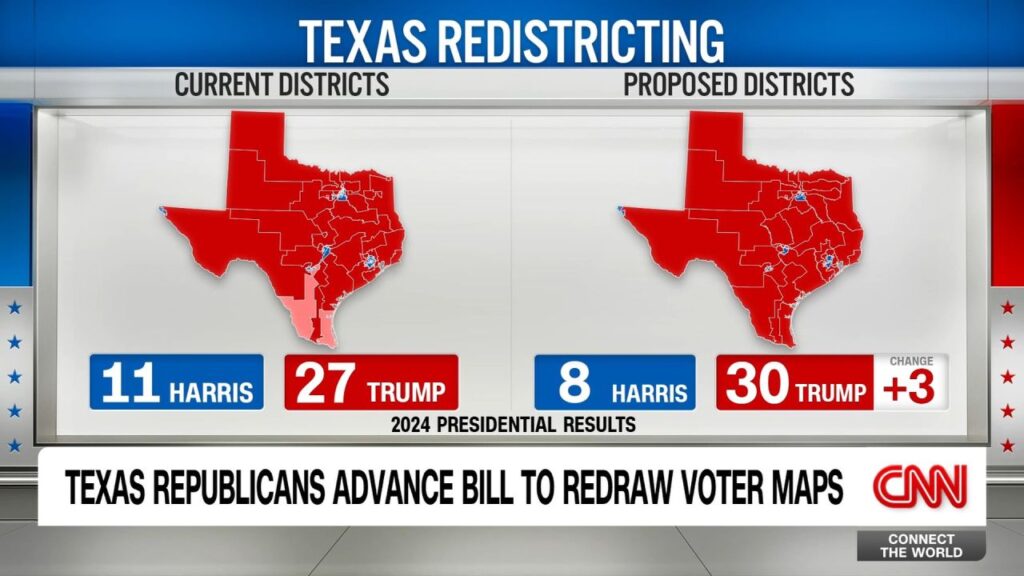
According to the Associated Press, the three-judge panel had determined last month that the map likely violated constitutional protections by sorting voters based on race — a finding that would have forced Texas to revert to its previous post-2020 census boundaries. The Supreme Court’s intervention now gives state officials permission to proceed with the disputed configuration for the coming election cycle.
The Guardian, in its coverage, underscored that the revised map is engineered to yield as many as five new Republican-leaning seats, placing Texas at the center of a broader national push aligned with President Donald Trump. The outlet explained that Trump has been lobbying GOP-controlled legislatures to redraw boundaries outside the typical ten-year census schedule, driven by concerns over the razor-thin Republican margin in the U.S. House.
A directive issued during the Trump administration warned Texas that maintaining “coalition districts” — where a mix of nonwhite voters form a majority — could expose the state to federal challenge. That warning, The Guardian noted, spurred lawmakers to revisit maps that had already been approved for earlier elections.
The lower-court ruling striking down the new map passed on a 2–1 vote, with Judge Jeffrey Brown — a Trump appointee — writing that evidence strongly suggested race played a determinative role. Plaintiffs, including LULAC, the Texas NAACP, and Democratic Reps. Al Green and Jasmine Crockett, argued that the aggressive dismantling of nonwhite coalition districts demonstrated racial targeting rather than partisan maneuvering.
Texas attorneys countered that the map served political objectives, not racial ones, and insisted the judiciary should avoid reworking district lines so close to state election deadlines. In their filing to the Supreme Court, state lawyers maintained, “This summer, the Texas legislature did what legislatures do: politics.”
The ruling highlights a widening judicial divide over the limits of racial gerrymandering claims, particularly in states with rapidly shifting demographics. Texas has added millions of new residents since the last census — growth overwhelmingly driven by Latino, Black, and Asian communities. Yet the newly approved map does not create any additional districts where these voters can effectively elect candidates of their choice. Instead, it restructures urban and suburban regions in a manner that shores up Republican control while diluting minority influence.
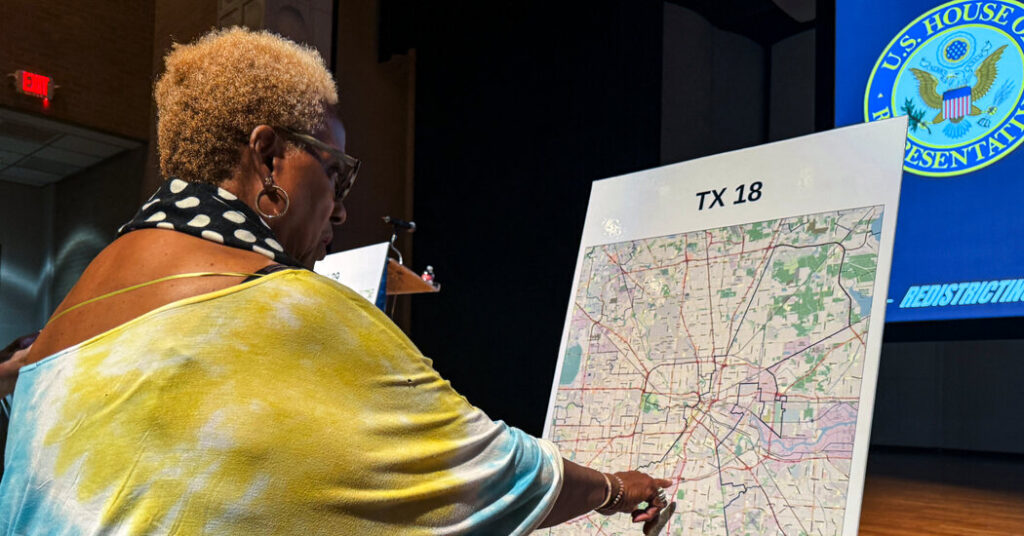
The Supreme Court’s decision also reflects the broader landscape shaped by its 2019 ruling that federal courts cannot police partisan gerrymandering. With that guardrail removed, states can now assert partisanship as a shield against racial discrimination claims — an argument Texas has leaned on heavily. By allowing the state to proceed with this map, the Court appears increasingly comfortable permitting aggressive partisan line-drawing even when it overlaps with racial effects.
This development is poised to have national repercussions. Texas is one of several pivotal states where Republican legislatures are working to cement long-term advantages. North Carolina and Missouri have similarly advanced maps that could add GOP-friendly seats, while Democrats are attempting countermeasures in California and Virginia. Litigation over those maps — including challenges brought by Republicans and the Trump-aligned Justice Department — could eventually reach the Supreme Court as well.
The ruling ensures that Texas Republicans enter the next election cycle with a fortified map, giving Trump another strategic victory in his campaign to reconfigure the U.S. House through aggressive redistricting. But the underlying legal fight is far from over; the plaintiffs’ racial-gerrymandering challenge will continue, setting up a significant constitutional clash over where the line between race and partisanship is ultimately drawn.
Contributions: TheGuardian/AP




