

Russian authorities said Sunday that a suspect in the shooting of a senior military intelligence officer has been detained abroad and transferred to Russia, as investigators probe an attack that fits a growing pattern of targeted violence against high-ranking officials during the war in Ukraine.
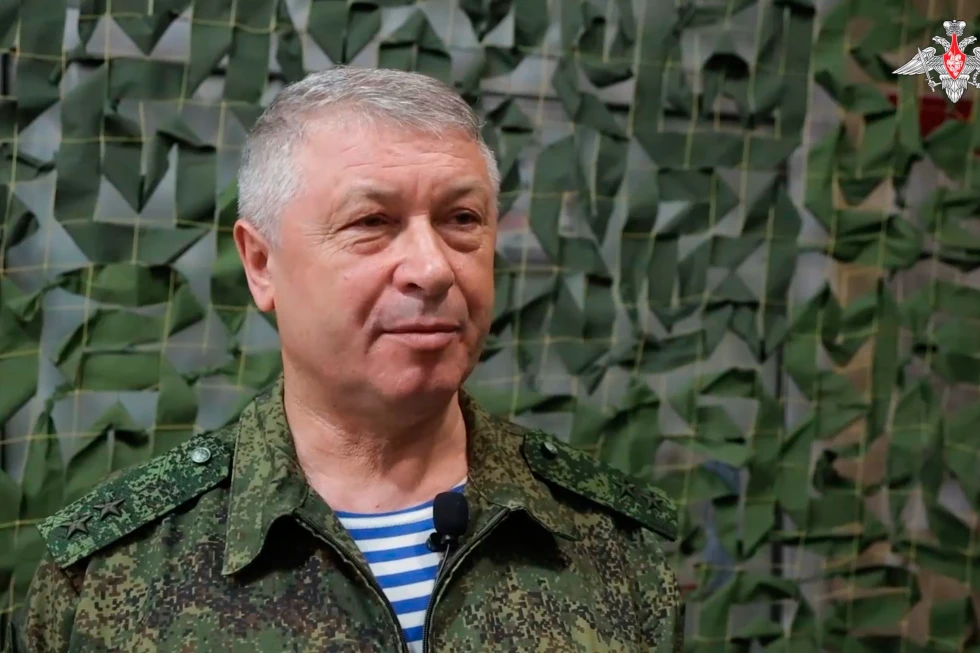
Russia’s Federal Security Service, or FSB, said the man accused of opening fire on Lt. Gen. Vladimir Alekseyev, a deputy chief of the country’s military intelligence agency, was apprehended in Dubai and subsequently handed over to Russian authorities. The agency identified the suspect as Lyubomir Korba, a Russian citizen.
Alekseyev, 64, was wounded Friday after being shot several times at an apartment building in northwestern Moscow. He was hospitalized with gunshot injuries, Investigative Committee spokesperson Svetlana Petrenko said. Officials have not disclosed details of his condition beyond confirming that he survived the attack.
In a statement released through its official website, the FSB said it had also uncovered the involvement of two alleged accomplices. One was taken into custody in Moscow, while the other fled and is believed to have traveled to Ukraine, the agency said.
Russian officials have portrayed the shooting as part of what they describe as a campaign orchestrated by Kyiv to destabilize Russia from within. Foreign Minister Sergey Lavrov, speaking shortly after the attack, said the investigation would be handled by law enforcement bodies but characterized the shooting as an apparent “terrorist act” aimed at undermining diplomatic efforts to resolve the conflict.
Ukrainian authorities did not immediately respond to requests for comment, and Kyiv has neither confirmed nor denied involvement in the Alekseyev shooting.
The attack came just one day after delegations from Russia, Ukraine and the United States concluded two days of talks in Abu Dhabi, in the United Arab Emirates, focused on pathways to end the nearly four-year war. Russia’s delegation to those discussions was led by Alekseyev’s superior, military intelligence chief Adm. Igor Kostyukov, adding diplomatic sensitivity to the timing of the shooting.
Alekseyev has served as first deputy head of Russia’s military intelligence agency, widely known as the GRU, since 2011. Over more than a decade in the role, he has been closely associated with some of Moscow’s most sensitive overseas military and intelligence operations.
He received the Hero of Russia medal for his role in the country’s military intervention in Syria. In June 2023, state television footage showed him in discussion with mercenary leader Yevgeny Prigozhin during the Wagner Group’s brief mutiny, when its fighters seized a military headquarters in the southern city of Rostov-on-Don.
Russian media provided additional details about the shooting. The business daily Kommersant described the attacker as posing as a delivery worker who confronted Alekseyev in the stairwell of his apartment building. The assailant allegedly shot the general twice, wounding him in the foot and arm. Alekseyev attempted to disarm the attacker and was then shot again in the chest before the gunman fled, the newspaper said.
Kremlin spokesman Dmitry Peskov said President Vladimir Putin was informed about the attack. Peskov added that security agencies must strengthen protective measures for senior military officials while the conflict in Ukraine continues.
The Alekseyev shooting follows a series of assassinations and attempted killings of prominent Russian military figures that authorities have repeatedly blamed on Ukraine. Kyiv has acknowledged responsibility for some of those attacks, while remaining silent or ambiguous about others.
In December, Lt. Gen. Fanil Sarvarov, head of the Operational Training Directorate of the Russian Armed Forces’ General Staff, was killed in a car bombing. In April, Lt. Gen. Yaroslav Moskalik, a deputy head of the General Staff’s main operational department, died after an explosive device detonated in his parked car outside Moscow.
In that case, a Russian man who previously lived in Ukraine pleaded guilty and told investigators he had been paid by Ukraine’s security services to carry out the attack. Days later, Ukrainian President Volodymyr Zelenskyy said he had received a briefing from Ukraine’s foreign intelligence chief regarding the “liquidation” of senior Russian military figures, adding that “justice inevitably comes,” without naming Moskalik.
Another high-profile killing occurred in December 2024, when Lt. Gen. Igor Kirillov, head of Russia’s nuclear, biological and chemical protection forces, was killed by a bomb concealed on an electric scooter outside his apartment building. Kirillov’s assistant also died. Ukraine’s security service later claimed responsibility.
Alekseyev himself has long been a target of Western sanctions. The United States imposed penalties on him over allegations of interference in the 2016 U.S. presidential election. The United Kingdom and the European Union also sanctioned him for his alleged involvement in the 2018 poisoning of former Russian intelligence officer Sergei Skripal and his daughter in Salisbury, England, using the nerve agent Novichok.
Beyond the immediate investigation, the attack on Alekseyev highlights the increasingly blurred line between battlefield confrontation and covert operations far from the front lines. The targeting of senior officers inside Russia reflects an escalation in tactics that analysts say is designed to apply psychological pressure on Moscow’s leadership and signal vulnerability even at the highest levels.
The timing of the shooting, coinciding with international talks, is likely to reinforce hard-line voices within Russia who argue against concessions in negotiations. At the same time, it complicates diplomatic efforts by raising questions about trust and security guarantees during dialogue.
For Russia, the detention of a suspect abroad offers an opportunity to demonstrate the reach of its security services and project an image of control. For Ukraine, silence or ambiguity may serve strategic aims by keeping Moscow uncertain about the scope of Kyiv’s capabilities.
As the war grinds on, the pattern of targeted attacks suggests the conflict is increasingly being fought not only with artillery and drones, but through intelligence operations that extend deep into each side’s perceived safe zones — a development that may further entrench the confrontation and make a negotiated end more elusive.
The Associated Press original




