

A bombing inside a mosque during Friday prayers in the central Syrian city of Homs killed at least eight people and wounded 18 others, Syrian authorities said, underscoring the persistent instability gripping the country despite the end of large-scale fighting.
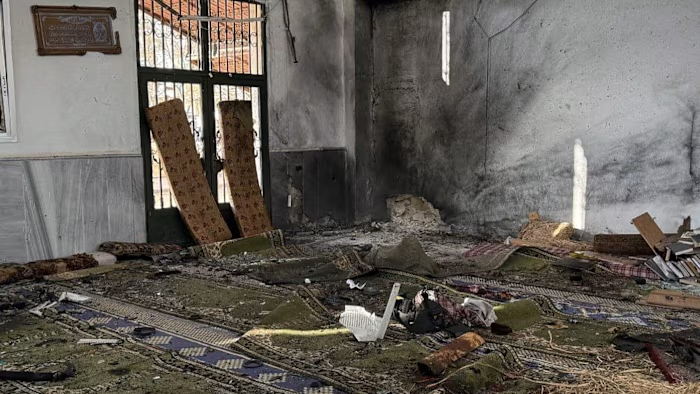
The explosion struck the Imam Ali ibn Abi Talib Mosque in the Wadi al-Dhahab neighborhood, an area largely inhabited by members of Syria’s Alawite minority, in the nation’s third-largest city. Images released by Syria’s state-run Arab News Agency showed bloodstained carpets, shattered windows, blast-scarred walls and fire damage inside the prayer hall.
SANA, citing a security source, said initial findings indicate that explosive devices had been planted inside the mosque. Security forces sealed off the area as investigators searched for those responsible, Syria’s Interior Ministry said.
Local officials condemned the attack, describing it as part of what they called repeated attempts to destabilize the country and inflame sectarian tensions. Syria’s Ministry of Foreign Affairs said in a statement that the government remains committed to combating terrorism “in all its forms and manifestations.”
The bombing comes at a volatile moment for Syria, where deep-seated sectarian, ethnic and political divisions have re-emerged since the fall of President Bashar al-Assad last year. Assad, an Alawite, fled to Russia, and members of his sect have since faced reprisals and heightened scrutiny in several parts of the country.
In March, an ambush by Assad loyalists against security forces set off days of retaliatory violence that killed hundreds of people, most of them Alawites, according to Syrian officials and monitoring groups.
The Syrian information minister said in a post on X that remnants of the former regime, ISIS militants and their collaborators were seeking to undermine the country’s fragile transition. “They share one objective: threatening civil peace and obstructing the path of the new state,” he said.
Regional governments also denounced the attack. Lebanon’s President Joseph Aoun said in a statement that Beirut stands with Syria in its fight against terrorism, while Saudi Arabia, Jordan and other neighboring countries issued similar condemnations.
Friday’s bombing followed renewed clashes earlier this week between Syrian government forces and Kurdish-led Syrian Democratic Forces in mixed neighborhoods of the northern city of Aleppo. Those confrontations forced temporary closures of schools and public institutions before a ceasefire was announced late in the day.
The attack in Homs also adds to a broader pattern of violence across the country. In February, a car bomb exploded on the outskirts of Manbij in northern Syria, killing at least 20 people and wounding more than a dozen, many of them women, local officials and emergency responders said. Mohammad Ahmad, a nurse at the local hospital, told The Associated Press that at least 18 women were among the dead.
Manbij has seen repeated bombings in recent months, including a separate car blast that killed four civilians and wounded nine, SANA reported, citing civil defense officials. Munir Mustafa, deputy director of Syria’s civil defense, warned that the attacks threaten postwar security and economic recovery efforts.
Analysts say the violence reflects the challenges facing Syria’s interim authorities as they try to assert control over a fragmented country still hosting multiple armed factions and foreign-backed forces. The continued presence of ISIS cells, unresolved sectarian grievances and rival power centers have made civilian targets — including places of worship — especially vulnerable.
Syria’s presidency said in a statement that those responsible for the Homs bombing would face the “harshest penalties,” vowing that attacks on civilians would not derail efforts to restore stability.
cbsnews




