

Belgrade (BN24) – Police in Serbia fired multiple rounds of tear gas as violent clashes broke out during protests demanding snap elections and the resignation of President Aleksandar Vucic, marking the most intense escalation in a month of largely peaceful demonstrations.
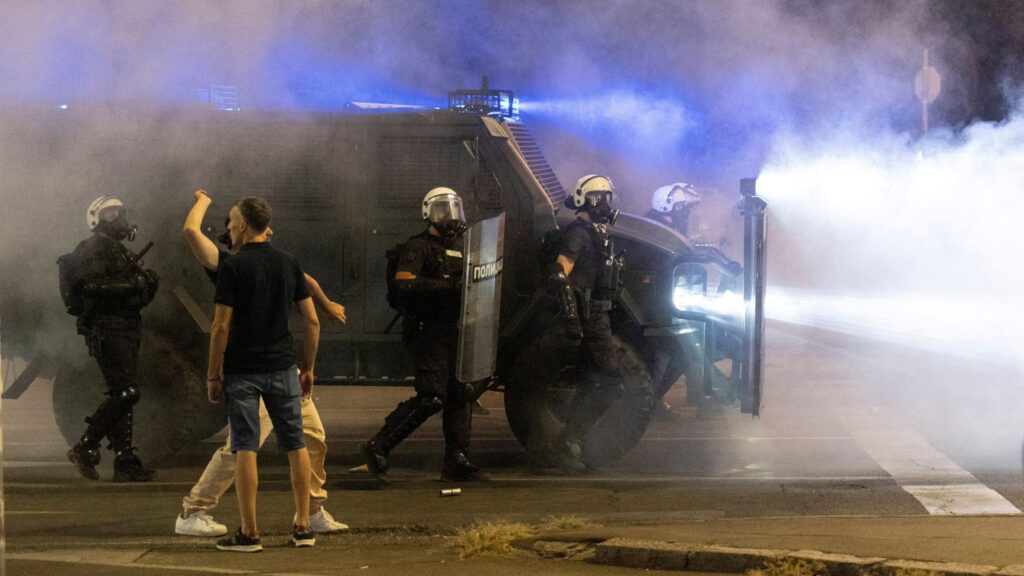
The unrest began Saturday in the town of Valjevo, about 60 miles west of Belgrade, where a group of masked young men hurled flares at the offices of Vucic’s ruling Serbian Progressive Party. Protesters chanting anti-government slogans then set the building on fire before clashing with riot police, who responded with tear gas and baton charges as bottles, rocks, and additional flares were thrown back at security forces.
Similar scenes unfolded in Belgrade and the northern city of Novi Sad, where demonstrators set trash bins ablaze and police again deployed tear gas to disperse crowds. In Valjevo, tensions spiked after police were filmed kicking and beating a young man with batons, prompting thousands more residents to join the demonstrations.
Interior Minister Ivica Dacic confirmed one policeman was injured and said 18 people had been arrested in the latest wave of protests.
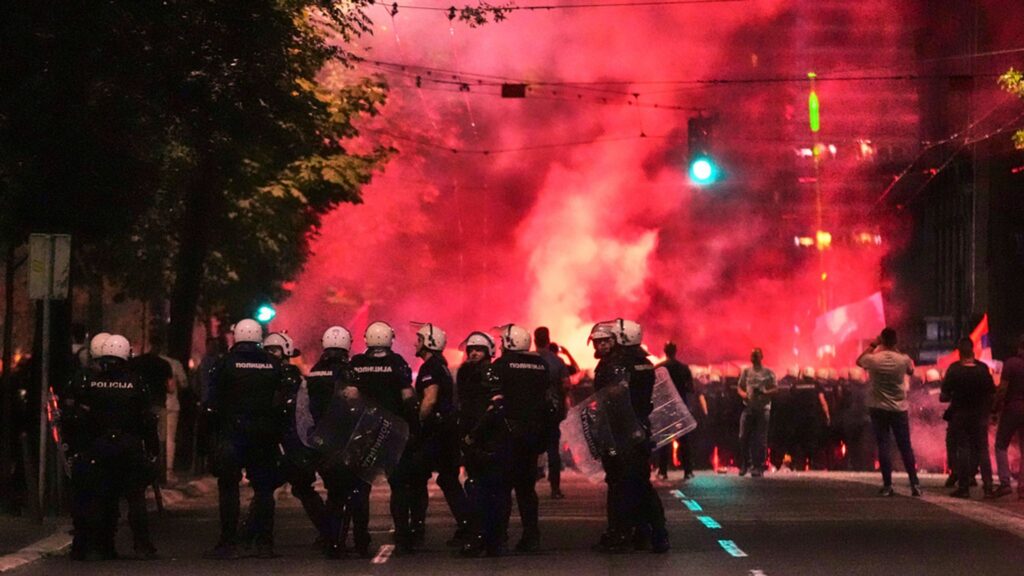
Anger over corruption and authoritarian rule
The protests, led in large part by university students, began last November after a renovated train station canopy collapsed in Belgrade, killing 16 people. Many blamed the disaster on government corruption and negligence in state infrastructure projects, fueling broader discontent with Vucic’s administration.
Demonstrators are calling for snap parliamentary elections and an end to Vucic’s 12-year rule. The president and his Serbian Progressive Party have repeatedly refused early elections, instead accusing protesters of being influenced by foreign powers to destabilize the country.
A former ultranationalist who has tightened his grip on power since becoming president in 2012, Vucic formally supports Serbia’s bid to join the European Union. Critics, however, accuse him of stifling democratic freedoms, suppressing dissent, and deepening ties with Russia and China.
Parliamentary elections are officially scheduled for 2027, but the growing unrest has raised concerns that Serbia could be heading toward a prolonged period of instability.




