

In a momentous ruling that could reshape homelessness policies across the United States, the Supreme Court has rejected a constitutional challenge to ordinances enacted by Grants Pass, Oregon, that punish homeless individuals for sleeping on public property when they have nowhere else to go. The 6-3 decision, split along ideological lines, upholds the city’s right to enforce these measures.
Justice Neil Gorsuch, writing for the conservative majority, stated, “Homelessness is complex. Its causes are many. So may be the public policy responses required to address it.” The Court determined that the Eighth Amendment, which prohibits cruel and unusual punishment, does not grant federal judges the primary responsibility for addressing homelessness causes and responses.
This ruling overturns a 2022 decision by the 9th U.S. Circuit Court of Appeals that had favored a group of homeless individuals. The Supreme Court’s decision means that an injunction limiting Grants Pass’s ability to enforce these ordinances against people sleeping outside with minimal protection will be lifted.
The ordinances in question bar sleeping or camping on publicly owned property, with a focus on individuals who have no alternative due to a lack of homeless shelters in the city. Punishments can include fines of up to several hundred dollars and exclusion orders barring people from public property.
In a sharp dissent, Justice Sonia Sotomayor described the Grants Pass policy as “unconscionable and unconstitutional,” expressing hope that the Court would “play its role in safeguarding constitutional liberties for the most vulnerable among us” in the future.
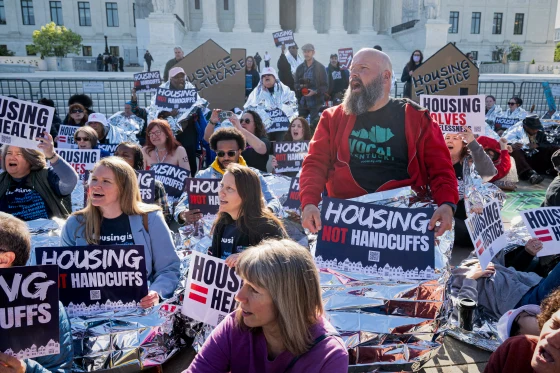
Advocates for the homeless argue that these ordinances punish people for existing when they have no other options and do nothing to address the underlying issue of housing shortages. They warn that such policies may only serve to push the burden of serving homeless populations onto neighboring jurisdictions.
The case has drawn attention from officials in major cities like Los Angeles, San Francisco, and Phoenix, who sought to overturn the appeals court ruling. The Biden administration, while not taking a side, suggested that laws barring sleeping on public property are unlawful if they prevent individuals without available shelter from residing in the jurisdiction.
This decision could have far-reaching implications for homelessness policies across the nation, particularly in states with large homeless populations. It raises questions about the balance between public order and the rights of individuals experiencing homelessness, and may prompt cities to reevaluate their approaches to addressing this complex social issue.
As communities grapple with the aftermath of this ruling, the debate over how to effectively and humanely address homelessness is likely to intensify. The Supreme Court’s decision underscores the ongoing challenges in reconciling public policy, constitutional rights, and the pressing need to address the root causes of homelessness in America.
NBCNews




