

WASHINGTON (BN24) — President Donald Trump’s administration asked a federal appeals court Friday to block a judge’s order that it distribute November’s full monthly SNAP food benefits amid a U.S. government shutdown, even as at least some states said they were moving quickly to get the money to people.
The judge gave the Republican administration until Friday to make the payments through the Supplemental Nutrition Assistance Program. But the administration asked the appeals court to suspend any court orders requiring it to spend more money than is available in a contingency fund, and instead allow it to continue with planned partial SNAP payments for the month.
The court filing came even as the U.S. Department of Agriculture said in a memo to states that it’s working to make funds available Friday for full monthly SNAP benefits.
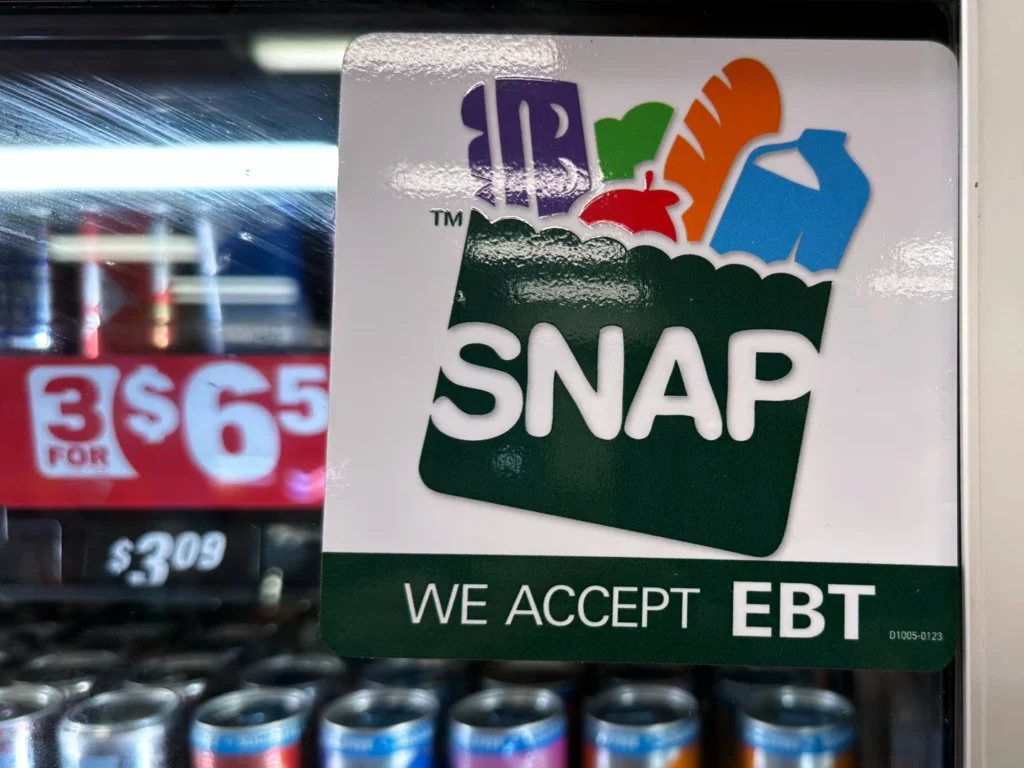
Officials in California, Kansas, New Jersey, Pennsylvania and Wisconsin confirmed that some SNAP recipients already have been issued their full November payments.
“Food benefits are now beginning to flow back to California families,” Democratic Gov. Gavin Newsom said in a statement.
In Wisconsin, more than $104 million of monthly food benefits became available at midnight on electronic cards for about 337,000 households, a spokesperson for Democratic Gov. Tony Evers said. The state was able to access the federal money so quickly by submitting a request to its electronic benefit card vendor to process the SNAP payments within hours of Thursday’s court order to provide full benefits.
Some other states did the same, and yet others said Friday that they were waiting for federal guidance.
The court wrangling prolonged weeks of uncertainty for the food program that serves about one in eight Americans, mostly with lower incomes.
An individual can receive a monthly maximum food benefit of nearly $300 and a family of four up to nearly $1,000, although many receive less than that under a formula that takes into consideration their income.
For some SNAP participants, it remained unclear when they would receive their benefits.
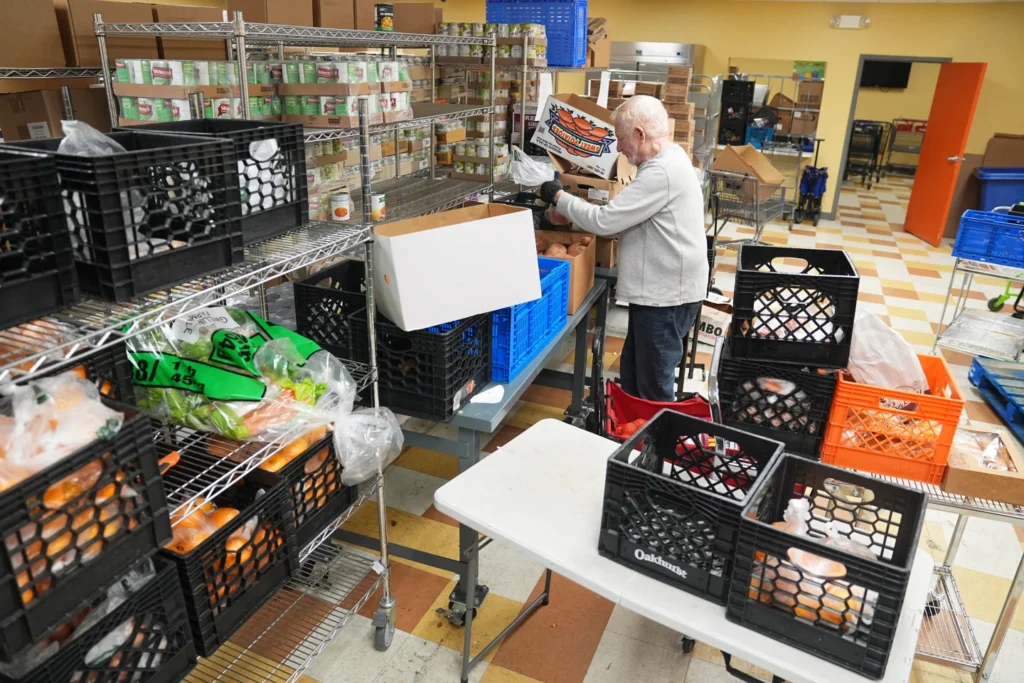
Jasmen Youngbey of Newark, New Jersey, waited in line Friday at a food pantry in the state’s largest city. As a single mom attending college, Youngbey said she relies on SNAP to help feed her 7-month-old and 4-year-old sons. But she said her account balance was at zero dollars.
“Not everybody has cash to pull out and say, ‘OK, I’m going to go and get this,’ especially with the cost of food right now,” she said.
Later Friday, Youngbey said, she received her monthly SNAP benefits.
Tihinna Franklin, a school bus guard who was waiting in the same line outside the United Community Corporation food pantry, said her SNAP account balance was at 9 cents and she was down to three items in her freezer. She typically relies on the roughly $290 a month in SNAP benefits to help feed her grandchildren.
“If I don’t get it, I won’t be eating,” she said. “My money I get paid for, that goes to the bills, rent, electricity, personal items. That is not fair to us as mothers and caregivers.”
Because of the federal government shutdown, the Trump administration originally had said SNAP benefits would not be available in November. However, two judges ruled last week that the administration could not skip November’s benefits entirely because of the shutdown. One of those judges was U.S. District Judge John J. McConnell Jr., who ordered the full payments Thursday.
In both cases, the judges ordered the government to use one emergency reserve fund containing more than $4.6 billion to pay for SNAP for November but gave it leeway to tap other money to make the full payments, which cost between $8.5 billion and $9 billion each month.
On Monday, the administration said it would not use additional money, saying it was up to Congress to appropriate the funds for the program and that the other money was needed to shore up other child hunger programs.
Thursday’s federal court order rejected the Trump administration’s decision to cover only 65 percent of the maximum monthly benefit, a decision that could have left some recipients getting nothing for this month.
In its court filing Friday, Trump’s administration contended that Thursday’s directive to fund full SNAP benefits runs afoul of the U.S. Constitution.
“This unprecedented injunction makes a mockery of the separation of powers. Courts hold neither the power to appropriate nor the power to spend,” the U.S. Department of Justice wrote in its request to the court.
In response, attorneys for the cities and nonprofits challenging Trump’s administration said the government has plenty of available money and the court should “not allow them to further delay getting vital food assistance to individuals and families who need it now.”
Some states said they stood ready to distribute SNAP money as quickly as possible.
Democratic Massachusetts Gov. Maura Healey said SNAP recipients should receive their full November payments as soon as Saturday. In New York, access to full SNAP benefits should begin by Sunday, Democratic Gov. Kathy Hochul said.
Republican New Hampshire Gov. Kelly Ayotte said SNAP recipients should have access to full benefits by this weekend. And Connecticut Gov. Ned Lamont, a Democrat, said full benefits should be available in the next several days.
Officials in North Carolina said they distributed partial SNAP payments Friday and full benefits could be available by this weekend. Officials in Illinois, Kentucky, Louisiana and North Dakota also said they distributed partial November payments.
Amid the federal uncertainty, Delaware’s Democratic Gov. Matt Meyer said the state used its own funds Friday to provide the first of what could be a weekly relief payment to SNAP recipients.
The legal battle represents a fundamental dispute over executive and judicial authority during government shutdowns. The Trump administration’s constitutional argument centers on the principle that Congress alone holds the power to appropriate federal funds, and that courts cannot compel spending beyond what has been authorized by the legislative branch.
The appeals court filing creates additional uncertainty for millions of Americans who depend on SNAP benefits for their basic food needs. While some states have moved forward with distributions based on Thursday’s court order, the appeals process could potentially disrupt those payments or create confusion about future benefits.
The divergent approaches taken by different states highlight the complex federal-state relationship in administering SNAP benefits. Some states acted within hours of the court order, while others waited for clearer federal guidance, and at least one state used its own funds to bridge the gap.
The personal accounts from SNAP recipients like Youngbey and Franklin illustrate the real-world impact of the legal and political disputes. For families living paycheck to paycheck, the difference between full and partial benefits, or between receiving benefits on time versus experiencing delays, can mean the difference between having adequate food or going hungry.
The emergency reserve fund at the center of the dispute contains more than $4.6 billion, but monthly SNAP costs range between $8.5 billion and $9 billion, creating a shortfall that has become the focal point of legal arguments about funding obligations during the shutdown.
The Trump administration’s position that additional funds are needed for other child hunger programs adds another dimension to the dispute, suggesting competing priorities within federal nutrition assistance programs during the shutdown.
As the appeals process moves forward, SNAP recipients across the country face continued uncertainty about their benefits, while states must navigate conflicting signals from federal courts and the executive branch about how to proceed with distributions.




