

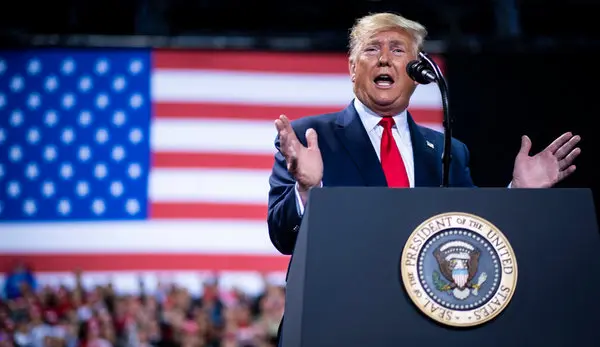
WASHINGTON (BN24)— President Donald Trump announced on Oct. 31, 2025, that he has designated Nigeria a “country of particular concern” (CPC) under U.S. religious-freedom law, asserting that Christians in Nigeria face an existential threat from radical Islamist violence. In a post on his social-media platform, Trump wrote, “Christianity is facing an existential threat in Nigeria. Thousands of Christians are being killed. Radical Islamists are responsible for this mass slaughter. I am hereby making Nigeria a ‘country of particular concern.’”
The move revives a policy originally applied to Nigeria in 2020 before being withdrawn during the previous administration. Under U.S. law, CPC designation signals serious violations of religious freedom and allows for diplomatic and economic consequences, though it does not automatically trigger sanctions. In his post, Trump called on U.S. lawmakers, including Representative Riley Moore and Representative Tom Cole, along with the House Appropriations Committee, to investigate “atrocities” in Nigeria and report back. He emphasised U.S. readiness to protect Christian populations worldwide.
The Nigerian government swiftly rejected the designation, calling the data behind the claims “inaccurate and misleading”. The Ministry of Information stated that violence in Nigeria is not faith-targeted but stems from terrorism, banditry, and communal conflict
Lawmakers in Washington, including Senator Ted Cruz, had urged redesignation of Nigeria, citing reported killings of Christians and destruction of churches. They argued that such action would provide diplomatic tools for pressure, including suspending arms sales until the Nigerian government takes tangible steps to halt the violence.
In Abuja, officials maintained that the narrative of a Christian genocide is part of a coordinated lobbying effort to destabilise Nigeria. A presidential spokesman described the campaign as driven by foreign interests rather than grounded in the country’s complex security reality.
This decision places Nigeria back in the spotlight of U.S. religious-freedom and human-rights policy, and could prompt deeper diplomatic engagement or sanctions if follow-through actions are pursued. As the designation takes effect, observers will watch how the U.S. and Nigeria respond in the coming weeks.





